KINGSTON (JIS) - Jamaica is regarded as a cultural melting pot due to its unique history and the racial diversity that has contributed to the country's cultural heritage.
One such group that is often overlooked are the Tainos, who are featured on the country's Coat of Arms.
"Most people probably handle money with this symbol everyday but probably never give a thought to it and it is ironic that something that is so visible, people know so little about," Senior Research Fellow at the African Caribbean Institute of Jamaica/ Jamaica Memory Bank (ACIJ/JMB), Dr. Julian Cresser, says in an interview with JIS News.
"I do think that more needs to be done, (as) the Tainos are certainly a part of the history syllabus but in terms of just the wider public knowing about them, I do think more could be done to promote knowledge about our indigenous people," he maintains.
The Tainos were the focus of the ACIJ/JMB's recent Open House Programme. "Well throughout our various exhibition programmes we have highlighted various groups that have contributed to the cultural heritage of Jamaica. We have focused in the past on the Chinese in Jamaica, we have looked at German immigration, and this year we decided to look at the Tainos," Dr. Cresser explains.
"What we have realized is that not much attention had been paid to the legacy of the Tainos and so we decided that it would be good for us to have a feature on them," he continues.
The Tainos, who are generally referred to as Arawaks, are recognized as the earliest recorded inhabitants of Jamaica. On this matter, Dr. Cresser notes that there is a distinction to be made between the words Taino and Arawak with the former referring to the inhabitants and the latter to a language.
"We believe the Tainos were the first inhabitants of Jamaica. They would have migrated from South America and reached the Greater Antilles somewhere around 700 to 1000 AD," he informs.
"Most people are more familiar with the name Arawak, we now believe that these groups of people were Arawak speaking people so Arawak refers to a group of languages spoken by these people and you had different groups of Arawak speaking people in the Greater Antilles," he further explains.
In appearance the Taino were short and muscular and had a brown olive complexion and straight hair. They wore little clothes but decorated their bodies with dyes. Religion was a very important aspect of their lives and they were mainly an agricultural people although they did have some technological innovations. Today, some of their practices and different aspects of their culture such as their language, and food, are still in use in Jamaica.
"Some of the things that are definitely part of our cultural heritage today that came from the Tainos are things like the use of cassava, especially the making of bammy that is a very popular part of our food heritage. There is also the use of tobacco, which is not just a part of Jamaica but (is used) right throughout the world. The Tainos used tobacco in a number of their religious ceremonies and rituals and in their daily life for relaxation," Dr. Cresser says.
"The Tainos also cultivated cotton and they had a process by which they wove it and were able to make hammocks. The word hammock is a derivative of a Taino word and so is barbeque, which refers to a way in which they prepared meat. So a number of these things that we see around us we may not realize that it has come down to us from the Tainos," he affirms.
Another interesting aspect of the Tainos is in relation to one of the more popular Jamaican proverbs such as being given "basket to carry water". This proverb generally refers to a situation in which a person is given an impossible task to complete.
However, Dr. Cresser points out that what many people don't realize is that some types of baskets can actually be used to carry water and that this is one such task that was carried out by the Tainos.
"Just recently I was telling somebody that you may hear the phrase "given a basket to carry water" which really means that you have been given inferior tools to do a job. But the Tainos actually used baskets to carry water. They had a process by which they made baskets from very finely woven wreath. And they were able to weave these so intricately to form a water tight basket," he enthuses.
Another important feature of the Tainos was that they had no system of writing and Dr. Cresser cites this as a major reason why Jamaica needs to record its history because to ensure that its done accurately.
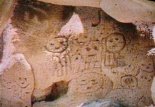
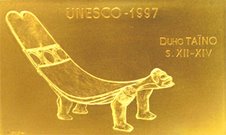
"The Tainos as far as we know had no system of writing. What we know about the Tainos comes from archaeological finds, rock and stone art. They were artists and they made a number of drawings in caves. We would have also learned from the writings of the Spaniards who encountered them, as subjective as those writings may be," Dr. Cresser says.
Additionally, he points out that, "it is also believed that some Tainos made their way into the hilly interiors of Jamaica where they would have met and mixed with the earliest African Maroons and it is believed that some of the practices of the Tainos would have filtered down to us through this interaction with the Maroons".
Although the Tainos became extinct centuries ago, Dr. Cresser remains passionate about keeping their memory alive and asserts that it is important to honour and remember them.
"Just generally it is important to understand the history of Jamaica just to see how we have reached this point. The Tainos are our first inhabitants and their contact with the Europeans played a role in shaping Jamaica and I think it is important that we look at that," he emphasizes.
"Some aspects of Taino life have survived until today and because they have survived they are a part of our cultural identity and I think it is very important for people to be aware of all of those things that make up our identity, it is a part of knowing who we are," he further affirms.
The ACIJ/JMB is a division of the Institute of Jamaica, which serves to examine all aspects of Jamaica's cultural heritage and make this information accessible to the public, through its library as well as exhibition and outreach programmes.
Author: Don Dobson
Source: Jamaica Information Service