By Paul Lewis
The historic Kalinago people of St Vincent are on the ‘brink of extinction,’ said Chief Charles Williams, leader of the Carib Community in Dominica, after he wrapped up a three day visit to St Vincent and the Grenadines on August 6. Williams was warmly welcomed by residents of Sandy Bay as he sought to re-establish the links between the Caribs of Dominica and SVG.
Charles Williams’ visit was prompted by a series of activities in the international indigenous community that have resulted in the passing of the United Nations Declaration of the Rights of Indigenous Peoples and a corresponding protocol that the Organization of American States (OAS) has issued in draft form providing for significant rights, protections and privileges to indigenous peoples world wide. These declarations have important implications for our indigenous peoples in the Caribbean, and his trip to SVG was to re- familiarise himself with local conditions in the Carib community, north of the Rabbaca River, and particularly to link up with descendants of the Kalinago people -- the first people of St Vincent.
On August 4, the Dominican Carib Chief visited the all-important Carib Community in Sandy Bay (population 2,699), on the Windward coast of the island and the home of more that 50% of all people of Carib descent (3, 818), according to the 2001 Population and Housing Census Report. Williams was interviewed there by Winston Baptiste, the host of the local Garifuna Radio Station (a UNESCO gift) before exchanging information and views with several members of the community. Williams expressed his delight in visiting St Vincent, a trip that allowed him the opportunity to meet with his people -- the Kalinagos.
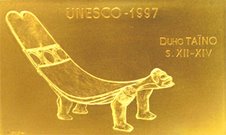
When the Europeans first entered the so-called 'New World' they met two peoples, the Tainos -- located mainly in the Greater Antilles, and the Island Caribs/Kalinagos in the Lesser Antilles. Both groups exited from the northern shores of South America in and around the Orinoco and Amazon River basins. While the older Taino migrations found their way to Hispaniola, Puerto Rico, Cuba, Jamaica and the Bahamas, the later migrations of the Kalinago ensconced themselves mainly in the smaller islands -the Leewards to a smaller degree but much more in the Windward Islands, including the Carib strongholds of Dominica and StVincent.
The Kalinagos were a farming people who cultivated manioc, sweet potatoes and other root crops. They fished and hunted. Their houses were made of natural fibers from the surrounding environment and designed in the shape of round huts for women and large rectangular ones for men’s residences.
Fiercely individualistic, they lived in an egalitarian society that was ruled by a village head/chief, but as a people they eschewed rigid class or military distinctions except when a special person was selected to lead combined communities against the marauding Europeans. Skilled in warfare and in agriculture, they also had a world view, significant features of a religious system, including medicine men (shamans), though this system was not as well developed as their Taino cousins. They were skilled craftsmen and pottery makers, though not as refined the Tainos. The Kalinagos are considered by many researches to be a sub-group of the Taino family. There are so many cultural intersections between the Taino and Kalinago that for all practical purposes they could be considered one people -- the Neo-Indians of the Caribbean.
The Kalinagos began their trek to the Caribbean between 900-1000 AD and were still on the move when Columbus in his quest for God, Gold and Glory stumbled upon the Caribbean Sea. The Kalinagos were the current occupiers of the Lesser Antilles, including the islands of St Vincent and Dominica. They are the first peoples of this land.
Sensitising the community to the importance of the Kalinago story in the history of St Vincent was one of the defining points to Williams’ visit. This feature emerged during a press conference at the Open Campus, University of the West Indies, Kingstown, on Tuesday morning when Williams stressed the need for not only letting indigenous peoples in the region more aware of their rights, but to bring a positive message to those in SVG, especially to the Kalinago who, in his view, appeared to have been left out of the indigenous picture. His intervention comes during the Second Decade of the Rights of the Indigenous People that was proclaimed by the United Nations. Williams noted that through his concern for his indigenous brothers and sisters in the region, especially when today the survival of indigenous cultures were threatened by the forces of globalisation, he felt the need to come to SVG to see for himself under what conditions the indigenous people were living, and in what ways he might be able to assist in their development.
One of Williams’ initiatives was to consult with Professor Hilary Beckles, Principal of the Cave Hill Campus, UWI to secure scholarships for indigenous students. He took this initiative, he said, during a period when Cuba was offering many scholarships to the region and he wanted to know what the university could do to help its own people. The result, according to Williams, was the establishment of an Indigenous Scholarship Programme for the region with early awards going to students in Dominica and St Vincent and the Grenadines, and now to Belize.
Williams received a warm reception from Sandy Bay residents but was taken aback by what he described as ‘serious integration problems’ that was eroding the strength of the Kalinago population. Williams called for efforts to help protect the Kalinago people in the region since it was the Kalinagos who had laid the groundwork for the early preservation of territorial sovereignty in the face of the imperialists’ thrust into the region, a movement that eventually led to the development of the modern state system. However this same state system, now dominated by the afro-Caribbean population, was in turn marginalising the Kalinago people to the point of ‘extinction’. The threat to the survival of the Kalinago was serious, Williams said, and the matter must be arrested before they are erased from the pages of history.
Land is a fundamental issue in Carib-State relations. It is the issue which brought Europeans to these shores in the first place, not gold. Williams noted that the Carib Territory in Dominica which has 3,782.2 acres of land is inadequate for the needs of its 3,500 residents. He was more surprised though to discover that only 29 acres of land have been allotted to the Caribs in the area that he visited. Williams suggested that the Carib community should have more access to land for farming purposes, something they should be given by right. But Williams was not advocating confiscation of private lands but rather the transfer of some unused crown lands to the Carib Community.
Land has always been a ticklish problem for the Caribs in St Vincent. Paul Twinn, in his article, “Land Ownership and the Construction of Carib Identity in St.Vincent,”in Indigenous Resurgence in the Contemporary Caribbean (2006) has noted that “land was the principal element in the creation of Caribs as Caribs.” Not only was it the principal reason for the two Carib Wars, according to Twinn, land was an integral part of the carib psyche that made possession of it essential to the physical and spiritual landscape of the Carib community . The Carib community’s ties to land are unshakeable.
Most people in the community derive their income from the land. But after the dismantling of the Orange Hill Estate, and with the land redistribution scheme of the NDP Administration many Caribs were upset at having to purchase land that they ‘rightfully owned.’ These are sentiments that found much resonance in statements made by Charles Williams in reference to events in Dominica. Paul Twinn noted too that after the 1979 Soufriere eruption and the dismantling of Orange Hill Estate there emerged a new discourse on Carib Rights. However, such this new assertion of Carib rights and indigenous consciousness was short-lived. What is significant though, as Twinn rightly has pointed out, was that these events combined with the 18th century take over of St.Vincent by the British had provided the extra -historical dimension, apart from land as family property, that has made the Carib approach to land different from that held by other Vincentians.
Williams agreed with residents in the area that the Caribs had experienced much hardship due to historical reasons, and continue to suffer today because of the absence of some basic infrastructural needs. High unemployment, very bad roads that hinder movement of goods and people to market; and grossly inadequate telecommunications system, especially in this information have hampered the progress of the community.
But more importantly there was no organization to deal with Carib issues. The Carib Community has always been very insolated from the rest of the island and has suffered as a result, and the 1987 report by Projects Promotion “Still On the Fringes : A Survey of the Conditions of Living in the Carib Community, ” is still valid in its main findings
The Projects Promotion Study attempted to determine the economic and social conditions existing in the community, and to measure the level of social interaction and cultural identity in the area. It concluded that 95.8% of all respondents expressed feelings of not living well, and 73.9% attributed the dissatisfaction to a lack of work, while another 14.2% noted socal problems. Low wages was a big issue then as it still is today. Agriculture is the main economic activity in the area, but today bananas and arrowroot have fallen on very bad times that have impacted negatively on the community. Moreover, the major problems listed in the report such as unemployment, bad roads and government neglect of the areas are still the major issues- though in recent times some corrective measures have been made such as construction of schools, a multi-purpose centre, and Japanese Fishing Complex (unfinished) in Owia. But the major problems persist, and the fact of historic neglect of the Carib area is still valid thesis.
Williams in discussing the Model Carib Cultural Village in the Carib Territory, Dominica, which is a Caribbean Development Bank (CDB) and Government of Dominica Project that showcases the history and culture of his people, suggested that a similar project can be done in the Carib community in SVG. This project would help to uplift the spirit and raise confidence in the people, Williams believed. Moreover, it would instill pride in the history and culture of the Kalinago people and provide employment and revenue to the community.
Williams revealed that while attending international meetings he realised that Indigenous people world wide were the most marginalised of all groups and because of this, the UN has seen it fit to galvanise the international community to put measures in place that would end discrimination against indigenous peoples, and that would assist in protecting their rights to survival and self determination. Kalinago people too must protect their cultural identity as indigenous peoples, especially in this globalised world that threatens to erode the cultural distinctiveness and authenticity of indigenous societies It is question of survival that we must develop defensive mechanisms to protect our people, noted Williams.
Williams’s concern for the mainstay of the Kalinago community within the indigenous discourse found is well founded. The Garifuna story is heavily played out in SVG and rightly so, but to the exclusion of the Kalinago story which is also patently unfair. There is a cultural divide in the Indigenous community between adherents to the Garifuna legacy and those who maintain that they are of Kalinago stock.
The Kalinago believe that they were here long before the creation of the hybrid group- the Garinagu. The accepted beginnings of the Garinagu with the event of the shipwrecked slave ship in 1635, and the subsequent additions of Africans from Carib raids on plantations up the islands and escaped slaves from Barbados, are no justification for omitting the role of the Kalinagos from activities of our early history, according to some residents. Moreover, Ivan Van Sertima claims of Africans being in the region before the indigenous people have been rejected are just ‘theory’ by many in the Kalinago community. For the Kalinago people this 600-700 years difference between their arrival from South America and the emergence of the Garinagu gives them a better claim to indigenous status.
The point is that local Kalinagos resent the extraordinary air time given to the Garifuna to the exclusion of their group. This is a mistake and historically dishonest to exclude the Kalinago from the indigenous discourse. Moreover, rejection of the Kalinago fact does do not auger well for good community relations.
Some residents express alarm that many indigenous radio programmes and celebratory activities for example, are slanted in favour of the Garifuna story. One resident asked quite poignantly: “What has happened to us?” Another noted that “we are getting mixed up with the Garifuna. All of us are classified as Garifuna, which is wrong!” A third suggested: “I am not Garifuna. I am a Vincentian Amerindian!” Such denials of Garifuna identity and assertion of Kalinago allegiance must be acknowledged and recognized by the community and cultural aficionados if we are not to politicize culture and pit one group against another. The question of Carib identity is an unresolved issue, especially today when “everybody wants to be a Carib,” lamented one Sandy Bay resident.
How we deal with the question of Carib identity will be a tricky issue. It cannot be based solely on political or legal grounds for social, cultural and other criteria must be applied to resolve the issue. But the National community can do much to help the Carib community to validate their identity by including them in the general cultural debate. Such an approach must include the teaching of indigenous history and culture in the schools, the establishment of a museum and cultural centre in the community, and the establishment on a broad- based, and politically neural Carib Community Organization. Williams suggestion that the government might assist in helping to fund Carib representatives to attend meetings and regional festivals received some positive vibes from Hon. Rene Baptiste, Minister of Culture, when he paid a courtesy call on her earlier on Tuesday morning. However, the sources for such assistance were unclear.
Another concern of some residents was the lack of representation at overseas events. There was the general complaint that those who represented the Carib community at meetings and conferences never meet with them before or after the meetings .The community is never informed of events in the wider indigenous world and residents are unhappy about that. They feel that such individuals have no mandate to represent them.
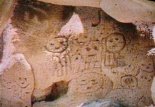
Finally, Caribs feel some disconnect with remnants of the pre-Carib past -- the petroglyphs of St Vincent and the Grenadines. These scattered relics of their culture do not exist within the Carib communities yet they are intimately associated with their prehistory. The Caribs naturally feel alienated from the sites since the relics are not part of their physical landscape. Researcher Timm noted that the Caribs feel doubly slighted because they have not benefited spiritually or materially from the presentation of the sites to visitors and locals alike. And though they have not disassociated themselves from them, they have been physically constrained from appreciating the connections and meanings of those artifacts. The creation of a pre-Amerindian museum within the Carib Community would help to bridge the spiritual and material gaps in the lives of those people, add to the economic growth of the community, and instill pride in their rich heritage.
The visit of Charles Williams has helped to stimulate some degree of Carib consciousness within the community. But idle chatter by talk show hosts Cecil Ryan and P. John on WE FM Radio in trying to put a political spin on Charles’ use of words such as ‘race’ and ‘cultural identity, was reprehensible. They attempted to associate some of Charles’ remarks on intermarriage with “genocide” and “ethnic cleansing”. This is counter productive to the indigenous dialogue. Both men seem to have lost the meanings of those words and have applied them in a particular context that makes them look extremely foolish and petty. The fact that Williams stressed his belief in observing the traditional law -- the wife follows the husband -- a law that indigenous groups in North American communities and elsewhere follow -- appeared to have eluded those talk show hosts.
The Caribs of St Vincent are divided in their connection to either the Garifuna or Kalinago groupings. This fact has remained unrecognised for a long time. It is an uncomfortable fact within the Carib conversation that must be addressed urgently.
Source: http://www.caribbeannetnews.com/news-9788--6-6--.html