Showing posts with label Mayan. Show all posts

4/12/2013

Latin America and the Caribbean Indigenous Peoples Prepare for World Conference


Guatemala City, Guatemala (UCTP Taino News) – Indigenous Peoples from throughout Latin American and Caribbean are meeting in Guatemala to discuss and organize regional perspectives on the upcoming United Nations World Conference on Indigenous Peoples in 2014. Supported by the Government of Guatemala, This preparatory meeting began on April 11 with a Mayan blessing ceremony lead by Felix Sarazua, a Maya Spiritual Guide.  The meeting will end on Saturday, April 13, 2013. 

The Latin American and Caribbean Regional Preparatory Meeting for the World Conference on Indigenous Peoples is a part of a global preparatory process toward the United Nations General Assembly high-level plenary entitled the “World Conference on Indigenous Peoples,” scheduled to take September 2014.  Some of the themes being discussed in Guatemala  include the implementation of the United Nations Declaration on the Rights of Indigenous Peoples; Indigenous perceptions of land and territories; the post-2015 UN Agenda; and the a strategic plan for the World Conference. 

Among the invited delegates attending the meeting in Guatemala is Roberto Mukaro Borrero, President of the United Confederation of Taino People (UCTP). Borrero is representing the Confederation and the Caribbean Amerindian Development Organization (CADO). 

“From the start of this process the UCTP and CADO have been concerned with the lack of effective participation of indigenous Caribbean Islanders during these important preparatory stages” stated Borrero. The UCTP and CADO jointly submitted their concerns to the Latin American and Caribbean Coordinating Committee as well as the Global Indigenous Women’s Caucus.

In its resolution (A/RES/66/296), the UN General Assembly decided that the High-level Plenary Meeting of the General Assembly, to be known as the World Conference on Indigenous Peoples would be held on 22-23 September 2014 in New York at UN Headquarters. A goal of the World Conference is to share perspectives and best practices on the realization of the rights of Indigenous peoples, including to pursue the objectives of the UN Declaration on the Rights of Indigenous Peoples.
    

4/14/2009

Indigenous Summit Begins in Panama

Caribbean indigenous delegates at the 3rd Indigenous Leaders Summit of the Americas being hosted in Panama. From left to right: Roberto Borrero (Taino), Chief Allan Leow (Lokono), Margaret Williams (Kalinago), Chief Charles Williams (Kalinago), and Roger Guayakan Hernandez (Taino). UCTP Photo.

Panama City, Panama (UCTP Taino News) - The 3rd Indigenous Leaders Summit of the Americas opened today with a blessing from Gilberto Arias, a traditional leader of the Kuna Peoples of Panama. Arias asked the Great Spirit, Baba and Nana, Mother Earth, to assist the delegates who arrived for the meeting from South, Central, and North America as well as the Caribbean.

The morning session included remarks from Mr. Betanio Chiquidama representing the Kuna Council; Ms. Beverly Jacobs on behalf of the co-chairs; His excellency Jose Miguel Insulza, Secratary General of the Organization of America States; and Her Excellency, Patricia Langan-Torell, Ambassador of Canada to the Republic of Panama.

After the opening, co-chair Beverly Jacobs of the Native Women’s Association of Canada introduced the planning committee and technical team, including Chief Ed John (Tl’azt’en) of the Assembly of First Nations; Celeste Mckay (Metis/Canada); Albert DeTerville (Saint Lucia); Roberto Borrero (Boriken Taino/Puerto Rico); Damon Corrie (Lokono/Barbados); Carlos Chex (Mayan/Guatemala); Hector Huertas (Kuna/Panama); Azalene Kaingang (Kaingang/Brazil); Jaime Arias (Kankuamo/Columbia); Chief Wilton Littlechild (Cree/Canada); Ellen Gabriel (Mohawk/Canada); Violet Ford (Inuit/Canada); June Lorenzo (Laguna Pueblo/U.S.A.); Ben Powless (Mohawk/Canada); Lea MacKenzie (Canada); and Irene Lindsey (Canada).

After the introductions, an overview of the previous summits and the 3rd summit work plan was presented by Hector Huertas (Kuna) and Grand Chief Ed John.

The purpose of the 3rd Indigenous Summit is to provide an international forum for discussion of indigenous leaders on a range of policy issues related to the work of the Organization of American States and the themes to be addressed during the 5th Summit of the Americas.

The theme of the 3rd Indigenous Leaders Summit is “Implementing the Rights of the Indigenous Peoples of the Americas for Present and Future Generations”.

UCTPTN 04.14.2009

11/05/2008

Native Artist Robby Romero’s Music Single Enters Top Ten


UCTP Taino News - The new single from American Indian songwriter and performer Robby Romero, "Who's Gonna Save You," enters the top ten at #9 on the National Aboriginal Music Charts. The hit single is now is available on Romero’s new album release Painting The World.

"Painting The World" celebrates the historical adoption of the United Nations' "Declaration on The Rights of Indigenous Peoples", a declaration that underwent the longest period of debate and negotiation of any other international human rights instrument in United Nations history. The album features an impressive array of Indigenous artists from around the world and is intended to “bridge the gap between Indigenous Peoples, human rights, and the environment.”

Guest artists featured on Painting The World include Brian Majloa (Zulu), the Gwich’in Children’s Choir (Gwich'in), Yungchen Lhamo (Tibet), Soni Moreno (Mayan/Apache/Yagui), Sofi Jannok (Saami), the P. Town Boyz (Ojibwe), George Gray (Maori), Ataahua Papa (Maori), Sixto Masaquiza (Quichua), Cameron McCarthy (Kuku-Yalanji),and Roberto Mukaro Borrero (Boriken Taino).

More information on the album and Romero’s discography can be reviewed at
http://eaglethunder.com/.

The release of Painting the World took place during the United Nations Permanent Forum On Indigenous Issues Cultural Event on Earth Day April 22 at United Nations Headquarters in New York City with a live performance by Romero accompanied by McCarthy and Borrero.

UCTPTN 11.05.2008

7/24/2008

International Indian Treaty Council Issues Resolutions

UCTP representative Mildred Karaira Gandia meets with Maya spiritual leaders in Chimaltenago, Guatemala.

UCTP Taino News - The International Indian Treaty Council held its 34th annual conference in Chimaltenago, Guatemala from June 19 – 22, 2008. The 275 registered delegates at this conference, representing Indigenous Peoples from North, Central, South America, the Caribbean and the Pacific, adopted by consensus a series of resolutions to guide their work defending the Rights of Indigenous Peoples at the local, national, and international levels.

Among those in attendance, representatives of the United Confederation of Taino People (UCTP) participated in the plenary sessions and working groups as well as during spiritual ceremonies led by the local Mayan traditional spiritual authorities. Naniki Reyes Ocasio of the Caney Quinto Mundo, UCTP Liaison Mildred Karaira Gandia, and youth representative Justin Ziegelasch contributed directly to the drafting of the final conference resolutions via specific working groups. As a result of their participation the Taino People are specifically mentioned in the resolutions on “Land, Territories and Natural Resources, Treaties and the Implementation of the UN Declaration on the Rights of Indigenous Peoples” and the “Sacred Sites”.

The IITC reaffirmed for example the “land rights and self determination of Indigenous Peoples including the Taino, Cree, Dakota, Yaqui and Mayan peoples that are divided by colonial borders”. The IITC also calls upon the “United States Government and the Island of Boriken (Puerto Rico) to recognize the Taino People of Boriken as the original inhabitants and Indigenous Peoples with full rights as recognized by the UN Declaration, including the right to self-determination.

“This much appreciated support from our indigenous sisters and brothers is extremely important for all our Taino People” stated Mildred Karaira Gandia. “It shows that the Taino are indeed part of the larger hemispheric movement defending the Rights of Indigenous Peoples.” Karaira added “Making these connections today as our ancestors did long ago not only unifies us across borders but it strengthens us on a spiritual level.”

Other resolutions adopted at the conference focused on the position of the CANZUS group and the UN Indigenous Rights Declaration, Lakota and Dakota Treaties, The Right to Food Sovereignty, The Rights of Women and Children, and Economic Justice and Migration.

The final resolutions will be posted at the websites of the International Indian Treaty Council and the United Confederation of Taino People in English and Spanish.

UCTPTN 07.24.2008

6/18/2008

Annual International Indian Treaty Conference to begin in Guatemala

Chimaltenago, Guatemala (UCTP Taino News) - The 34th Annual International Conference of the International Indian Treaty Council (IITC) begins this week on June 19-22, 2008 in the city of Chimaltenango, Guatemala. The conference will focus on strategic topics that designed to assist in the promotion and defense of the rights of Indigenous Peoples.

According to a recent IITC news release, the organizers are looking forward to the most diverse, pluralistic participation of representatives and authorities of Indigenous Peoples from the IITC member countries, as well as from all countries whose people have a keen interest in discussing strategies, plans, programs, visions and goals to continue working towards the challenging objective of ending the racism, discrimination, oppression, marginalization, exploitation, and imposition that Indigenous Peoples, are currently facing.

The conference organizers also note that although certain advances have been made in the field of domestic and international law, they are as yet insufficient and Indigenous Peoples are still facing difficult situations worldwide.

A delegation representing the United Confederation of Taino People (UCTP) is now in Guatemala to attend the conference and includes Naniki Reyes Ocasio of the Caney Quinto Mundo, and Mildred Karaira Gandia (UCTP Liaison), and Justin Seiba Ziegelasch, a youth delegate. In an historic moment for Taino People, the UCTP is scheduled to be officially welcomed as IITC affiliates before the assembly gathered in Chimaltenago.

The history and current situation of Mayan Peoples in Guatemala as well as implementing the United Nations Declaration on the Rights of Indigenous Peoples at the local to the international level will be some of the featured issues discussed at the conference. Other topics to be addressed include land and natural resource rights, treaties and agreements, reparations and redress processes, free prior and informed consent, self determination, environmental and racial justice. Dialogs will take place via panels, workshops, commissions, and training sessions.

Communications related to the conference can be directed to Conferencia2008@treatycouncil.org and additional information can be found at IITC website at http://www.treatycouncil.org/.


UCTPTN 06.18.2008

10/24/2007

UN Declaration Assists Caribbean Indigenous Peoples


Belize (UCTP Taino News) - The Supreme Court of Belize, on October 18, cites the recently adopted United Nations Declaration on Rights of Indigenous Peoples to justify its decision upholding the rights of Mayan People to their traditional lands.

The Supreme Court decision involved the Maya villages of Conejo and Santa Cruz and noted that their customary land tenure practices give rise to property rights that are protected under the Constitution of Belize. The Court found that that the failure of the government of Belize to recognize and protect those rights constitute a violation of the constitutional protections of property, equality, life and security of the person. The judgment, which took approximately two and a half hours to read, affirmed that Belize is obligated not only by the Constitution but also by international treaty and customary law - including the recent United Nations Declaration on the Rights of Indigenous Peoples - to respect and protect Maya customary land rights.

The decision is being hailed as a landmark in Belize as well as throughout the Caribbean region and beyond as it is the first judgment applied specifically to the United Nations' declaration, which was adopted Sept. 13 by the U.N. General Assembly.

The victory is expected to result in more protections and land rights for Indigenous People in Belize and potentially affects more than 40 Maya villages. Community leaders are calling it Mayan Independence Day.

6/07/2007

Chichen Itza Among the Leaders of New 7 Wonders contest


LISBON (UCTP Taino News) - Mexico's Mayan city center of Chichen Itza is among the leaders in a competition, ending in one month, to choose the New Seven Wonders of the World, the campaign organizers reported on Thursday.

The winners will be chosen through a global online and phone vote, organizers of the New 7 Wonders of the World (http://www.new7wonders.com/ ) competition. Among the 21 “wonders” selected to the finalist list, three represent ancient indigenous cultural heritage including the Inca city of Machu Pichu in Peru, the monolithic Moai statutes of Rapanui (Easter Island), and Chichen Itza located in the Yucatan peninsula.

Over 50 million people have voted so far in this global competition to produce a 21st century list of the world's greatest man-made heritage sites. The original seven wonders of the ancient world were chosen by the Greeks more than 2000 years ago.
The winning list will be announced in Lisbon on July 7, 2007.

12/19/2006

Want your Opinion to be Heard? Post A Comment...

Mabrika Guaitiao (Greetings Relatives):

It is our hope that this message finds you all well and in good spirit. Since our posting of information/ articles/ commentary etc. concerning Mel Gibson's film Apocalypto, the UCTP has received a large number of response postings from our readers.

As it is not our intention to flood the UCTP Taino News and Information Service (http://groups.yahoo.com/group/Taino_News/) with ongoing commentary on this particular film, we have added a "comments" option to the UCTP blog site, "The Voice of the Taino People" at http://www.uctp.blogspot.com/

The UCTP welcomes your comments on Gibson's film or other articles at this site. We will however not accept any "Anonymous" comments. To post your comment on Apocalypto specifically, please visit the "Boycott Mel Gibson's Apocalypto" page at:

http://uctp.blogspot.com/2006/12/boycott-mel-gibsons-apocalypto.html

We are also adding two comments below as they are representative of the over-all attitude toward Apocalypto, which the UCTP again urges you and your family to boycott and speak out against.

Oma'bahari (With Respect),
Roberto Mucaro Borrero,
President and Chairman,
UCTP Regional Coordinating Office
http://www.uctp. org/


************ ********* ******* ********************

Reader Responses:

1.) From Danny Nieves (New York):

Tao, I have been reading the reviews and the different comments on the Mel Gibson movie "Apocalypto" ; I was able to get a cd copy of the film, which I saw last night. Being that I had read the reviews and the comments from various people on the different forums, I knew what to expect from Mel Gibson's film. I would like to say that I am surprised that no one has criticized the scene where the City Mayans are leading their captives through a village where they encounter a crazed, emaciated old man. The crazed emaciated old man screams out "Salvation" and the antagonist of the movie says, "He has the laughing sickness, he likes you".

I was wondering if someone on this forum could tell me why Mel Gibson would mention a disease that is associated with Cannibalism in the film Apocalpto? It seems to me that Mel Gibson is portraying the Natives as cannibals in this film just like the recent film "Pirates of the Caribbean", but in a more subtle way.

2.) From Rosa John (Canada):

I had already decided not to see it, well before this e-mail, but thank you so much for the review. Unfortunately, it was too late for my husband and daughter (who are in the United States at this time), who insisted, against heeding my better judgments and pleading with them not to see it (even with only the previews), I knew it was more Mel Gibson Bloody, horrific garbage. So, Now what?! Will we sit quietly while people watch this film and feel pleasantly washed away of their sins against humanity during that time of "discovery"? I want to tell the world that these lies and unspeakable horrors happened only at a time when a peaceful people wanted nothing more that to honor visitors.... guests, who later both committed and praised themselves historically about their crimes.

Please excuse the wrath in my words, but it is these public humiliations that have buried the souls of our people for too long. It's time to speak out...not just between ourselves, but to the nations and people who will watch this movie and think it historically correct. Again, accept this as my humble thoughts and inform me if we will as a people rise up against this injustice. Thank you.

12/11/2006

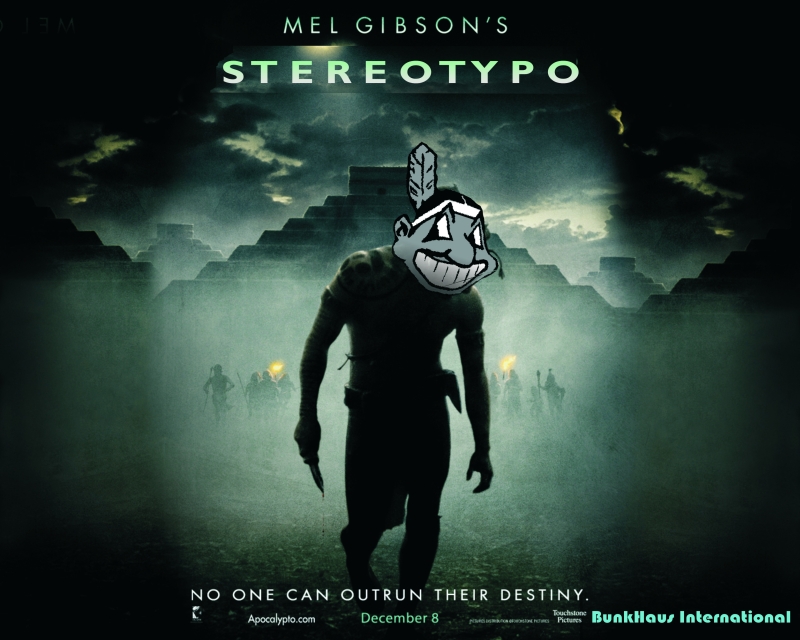
Boycott Mel Gibson's Apocalypto!!!

"To grasp what a racist act Gibson has committed in the making of his new film, it is necessary to understand the world of the Maya as it exists today. Perhaps realizing what has been done to the Maya in the film, Gibson has been seeking allies among Latinos and American Indians. He even went so far as to tell Time magazine, "The fear mongering we depict in this film reminds me a little of President Bush and his guys."

*Related article at The Voice of the Taino People:
http://uctp.blogspot.com/2006/12/mad-mel-and-maya.html

12/06/2006

Mad Mel and the Maya

by EARL SHORRIS

On the Yucatán peninsula, where many of the Maya of Mexico live, there is an often-told story about people like Mel Gibson, whose bloody movie in the Yucatecan Maya language, Apocalypto, will be released December 8. I first heard the story from Miguel Angel May May, a tall man among the Maya, handsome, now in his 40s, with a touch of gray in his hair. He speaks Yucatecan Maya so eloquently that when young people who have begun to lose their language and culture first hear him, they shed tears for what has been and what can be in the Yucatán.

May May tells the story with the kind of rage and pride that Gibson tried to portray with his Scottish heroes in Braveheart and postapocalyptic picaros in Mad Max: "A Maya, of the middle class, like me," May May said, "went into a Ford dealership here in Mérida. He intended to buy a new pickup truck. He was well dressed, but clearly Maya. The dealer offered him ten pesos to wash a truck." It is a common experience for people of color in a white world. The Yucatán is not entirely a white world, yet the Maya suffer the most severe prejudice of any large ethnic group in Mexico. In the language of prejudice in Mexico, the Maya are said to be people with big heads and no brains, too short, too dark and with a strange, laughable Spanish accent. Gibson accepted the stereotype and embellished it.

To grasp what a racist act Gibson has committed in the making of his new film, it is necessary to understand the world of the Maya as it exists today. Perhaps realizing what has been done to the Maya in the film, Gibson has been seeking allies among Latinos and American Indians. He even went so far as to tell Time magazine, "The fear mongering we depict in this film reminds me a little of President Bush and his guys."

In fact, Gibson stepped into a delicate cultural situation and may have shattered much of what has been built by indigenous people, historians and linguists in recent years. Ethnic prejudice is as harsh in the Yucatán as anywhere in the Americas. I have seen it played out in the Maya villages as well as in the cities and on the beaches. When the Clemente Course, which educates indigenous people as well as the poor in seven countries, taught its first class in the Maya language and humanities in the small village of San Antonio Sihó, the students told me that when they took the bus to Mérida (a journey of more than fifty miles) they were afraid to speak Maya, because people would think them stupid Indians (Mayeros). After two years of study, José Chim Kú, the student leader of the class, said, "Now, when I ride on the bus, I speak only Maya." It took two years for the faculty, including May May, to effect the change, for the Maya have internalized their recent history. And like all people who live in the violent mirror of racial and ethnic hatred, they suffer for their suffering. It is the bitterest irony of colonialism.

In the film Apocalypto, which Gibson claims will make the Maya language "cool again," there are many major roles. The lead is a lithe, handsome young man, a dancer from Oklahoma named Rudy Youngblood. He has indigenous ancestors, but he is not Maya, and like most of the other featured players he is not a professional actor. None of the four other major parts went to Maya either. According to Gibson, they are played by people from the United States, and the other featured players are either from Mexico City or Oaxaca. Yet every word spoken in the film is in Yucatecan Maya, a difficult language to learn or even to mimic, because it is both tonal and accented.

It is not as if Gibson had few Mayeros to choose from. There are more than a million Maya in Mexico, and more than 100,000 of them are monolingual Yucatecan Maya speakers. Yet Gibson chose not one Maya for a featured role. In so doing, he has made a film that reinforces the prejudice against the Maya, who have defended their cultural autonomy as fiercely as any people on earth. Twice they repulsed the Spaniard Francisco de Montejo, before he occupied part of the peninsula in 1527. They continued to fight pitched battles against European cultural and political dominance until the end of the Caste War in the early twentieth century. And even now militant organizations deep in the jungles of the state of Quintana Roo practice ancient rituals and resist Occidental cultural and political hegemony, including the Gregorian calendar. But the people have never been attacked by Hollywood.

Like the owners of the resort hotels that line the beautiful beaches of Cancún and Cozumel, Mel Gibson cast no Maya to work on his project, except in the most minor roles. Maya nationalists think the hotels and tourist packages that use the word "Maya" or "Mayaland" (a translation of Mayab) should pay for what they appropriate for their own use. The Maya patrimony, they say, is neither gold nor silver nor vast stretches of rich farmland; they have only their history, their culture, themselves. Like the hotel owners who bring strangers to the Yucatán to do everything but labor in the laundries and maintain the grounds, Gibson has brought in strangers to take the good parts from the Maya. He said in an interview that he chose people who "looked like you imagined they should," but I have seen photographs of Rudy Youngblood, and he does not look like any Maya I ever saw. One can only ascribe the choice of Youngblood and the other non-Maya to stereotypes that Gibson has adopted.

In casting and producing the film Gibson reinforced a colonialist concept of indigenous people that has long existed in Mexico. Ancient Maya culture was extraordinary, as the rest of the world now recognizes. The Maya invented one of the few original systems of phonetic writing (we are familiar with the Chinese system and the one that culminated in Latin script). They worked with the concept of zero long before it was known in Europe. They were superb astronomers. Their art and architecture are now known and studied throughout the world. It is also true that they were warriors and that they engaged in human sacrifice, although not on the grand scale of the Mexica. Their ability to manage large-scale military and civic works was impressive. Maya literature has a long and grand history, from the ancient words incised in stone through the Pop Wuj (Popol Vuh) and the postinvasion books of Chilam Balam to the eighteenth-century poems ("Kay Nicte"--Flower Song--and others) to contemporary works, including brilliant poetry by Briceida Cuevas Cob in Yucatecan Maya and Humberto Ak'abal in Ki'che and Miguel Angel May May's delightful fables.

Culture doesn't sell tickets. Violence does. Gibson has made what he calls "a chase movie." As we saw his Scot disemboweled and his Jesus battered into bloody meat, we will now see a young Maya running through the jungle to escape having his still beating heart torn from his chest. The social philosophy of Jesus found no place in Gibson's Passion of the Christ, and the glory of Maya culture cannot be featured in a "chase movie." "Blood! More blood!" Gibson shouted during the filming.

According to the Maya calendar, the world will end in 2012, but there have already been four creations in the Maya vision of the cosmos, and there is no reason to think they do not expect another. For the title of his movie Gibson chose a Greek word related to the ideas in the Book of Revelation: apocalypse. Gibson has tried to sell the movie as an allegory, using the fall of Maya civilization to limn the war in Iraq. But it is not about Iraq, and the end of the Maya classic period took place many centuries before the period Gibson chose for his film. The only profound meaning one can take away from the film is that there is an intimate connection between racism and violence. The message of the production is that the Maya are unacceptable people; we do not want to look at them as they are now, and we despise them for what they were then.

Earl Shorris is the editor, with Miguel León-Portilla, of In the Language of Kings: An Anthology of Mesoamerican Literature--Pre-Columbian to the Present (Norton). He has received the National Humanities Medal and the Condecoración de la Orden del Aguila Azteca.

*Article Source: http://www.thenation.com/doc/20061218/shorris

12/04/2004

The Guamo Botutu (Fotutu) - Shell Trumpet

by Evelyn Dye-Garcia

For centuries, the many peoples of numerous island cultures, Polynesia, Tahiti, Samoa, Fiji, Guam, Hawaii, seaside civilizations of the Aztec and Maya and our own Taino, Carib, Lucayan and Arawak people of the Caribbean have blown into the conch shell as a form of communication.

Guamo or botutu is translated to "shell trumpet" in the Taino language. The guamo could be heard for long distances in the islands and had an important function in the community. Announcements would be delivered by a messenger whose specific task it was to know how to use the guamo properly in order to relay messages correctly. These messengers would blow the guamo from peak to peak of mountaintops, from hill to valley, from ocean to shore or vice versa, a form of communication that had been devised long before by the ancestors. Different sounds meant different things, different pitches were used, short blasts or long, constant or repetitive sounds, and each sound had a meaning that all people understood.

Guamos were always blown to the four directions during birth, death, naming or marriage ceremonies. They were also used to make announcements such as an arrival or departure, to summon the ancestors or in healing ceremonies.

When a guamo was used in a healing ceremony, the behike (medicine man) would supervise the ceremony. The sick person would lie down and people would circle around singing, chanting, drumming, shaking rattles and playing the guamo. Anything that altered the vibration was believed to heal the sick person.

A guamo would be used to announce the return of or to welcome home travelers, by foot or kanoa. Travelers out on the open sea in the dark could blow a guamo and know if they were near land or not, for if they were near land, the sound would return to them by echoing back, if they were far from land the sound would just fade away. If they were near land their guamo would signal their arrival to their home or another yukayeke (village) and another guamo would answer in greeting or a welcoming home. If you were approaching a village on foot, to either pass through or to visit, you would blow your guamo to signal your approach, this would indicate your friendly intentions and you would not be attacked.

The guamo itself was found in the ocean. Hundreds of years ago some guamos would grow to be huge, bigger than basketballs and could be used for ornamental use only. Guamos can be a little hard to find now, especially the larger sizes, but before the onslaught of civilization, guamos would wash up on shores after storms and literally cover the beaches. The Taino would gather them, eat their meat and then prepare the shell for use. The conch meat is a delicious mussel that is high in protein. It can be eaten raw, boiled in stews or cooked over the barbakoa.

To prepare the guamo for use as an instrument, you would first remove the meat, clean the shell (which would be filled with sand), dry it and then taking the large end with the pointed appendage (which needs to be removed) begin to grind. Today we have hacksaws and can easily saw off this appendage which reveals the hole where the mouth will be placed to blow into the chambers to make the sounds. But back in the day the Taino would break off this appendage first by carefully hitting it against a rock, and then the ragged and sharp edges would be ground against a rock until the opening was smooth. The larger the guamo, the more interior chambers there are on the inside, and the more versatile the guamo will be as an instrument because the
additional chambers create more possiblities for a variety of pitches and sounds. Longer shells give a sharper sound.

Both Taino men and women wore a nagua (loincloth) which was attached with a cord of cabuya (woven hemp/cotton) around the waist. At the end of the guamo, there is a little bent tip, this tip would be tucked under the cord of cabuya and the guamo would be worn there, just under the waist, lying flat against the thigh. Another cord would be tied around the circumference of the shell (you will notice that there is a natural ridge around the shell which makes it easy for the cord of cabuya to fit around) and ensures that the shell will stay put during daily activities.

To play the guamo takes a little practice. First, you hold the guamo in your hand with the large end near your mouth... hold the guamo up and out, not straight up, not straight down, but up and out, no matter if you are right or left-handed. There are natural points around the exterior of the large end of the shell, and your hand should fit there quite comfortably and naturally. Purse your lips and place the guamo against them and blow. It is not as easy as it looks and you can blow til you are blue in the face, but it is not really the force of the air that makes it blow nearly as much as it is the technique with the lips. Once you get the basic blowing sound down, you can practice doing short blasts and long blasts, high and low pitches. A trick you can use to make different pitches is to put your fingers of the hand you use to hold the shell, into the shell opening, which immediately causes the sound of the shell to change. I have a little thing I do that works for my daughter and I, she calls it "the Popeye" because you kind of put your lips halfway on the opening of the shell and blow out the side of your mouth... it works every time! Whatever it takes for you to do it, just be sure to learn it and teach your children, because it is a very important part of our culture.

Contact Evelyn Dye-Garcia at edyega6722@aol.com