Showing posts with label Hispanola. Show all posts

4/22/2007

Caves in Taino Mythology*


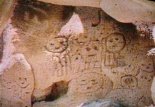
Caves are an important part of Taino mythology and the Taino believed the first peoples of Hispaniola came from two caves in a mountain named Cauta. The ancestral Taino emerged from one cave, Cacibajagua, while the ancestors of the non-Taino peoples came out of another, Amayauna. The Taino [of Hispanola] also believed the Sun and the Moon emerged from a cave called Iguanaboina. Caves were intimately associated with the spirits of Taino ancestors, whose worship was a central element of Taino religion. They believed their universe consisted of three layers united by a vertical axis. The earth’s surfaces lay in the middle, with the celestial vault above. The bottom layer was a watery underworld known as Coaybay or dwelling place of the dead. Access between the earth’s surface and the underworld was by way of sacred caves. These were portals to Coaybay and the ancestors.

The Taino also believed that the island of Hispaniola was a monstrous living beast. The head of the monster was at the eastern end of the island, in the chiefdom of Higuey. Two caves in Higuey were seen as the beast’s eyes. Another connection between caves and the ancestors is that caves are homes to colonies of bats. The Taino believed that the spirits transformed themselves into bats. They would hide during the day and come out at night to eat the fruits of the Guava tree. These spirits of the dead were called opias and the bat is one of the most frequently depicted animals in Taino art.

Article source: http://lisahopwood.com/chicho.html

*UCTP Taino News Moderator's Note: The above information is presented for educational purposes only. The views and opinions expressed within “Caves in Taino Mythology” are not necessarily those of The Voice of the Taino People News Journal, The Voice of the Taino People Online or the United Confederation of Taino People.

3/10/2007

RACISM AND THE CHEROKEE NATION

by William Loren Katz

As President Bill Clinton and others arrived for the 42nd anniversary of Selma's "bloody Sunday" that assured Congressional passage of the 1965 Voting Rights Act, the Cherokee Nation took a different road. It voted overwhelmingly to revoke citizenship rights for 2800 members because their ancestors included people of Africa descent.

Marilyn Vann, president of the Descendants of Freedmen of the Five Civilized Tribes, has long fought racism from both governmental officials and Indigenous figures. In this instance, she claims, Cherokee leaders misled voters by insisting "freedmen don't have Indian blood", "the freedmen were forced on the tribe", "the freedmen do not have a treaty right to citizenship", "the people have never voted on citizenship provisions in the history of the tribe", and "the amendment will create an all Indian tribe." Cherokee voters were also influenced by the racist charge "that the freedmen if not ejected, would use up all of the tribal service monies."

The design of the constitutional amendment, Vann points out, is patently discriminatory. It removes membership from descendants of enrolled freedmen members whose documentation of Indian ancestry was affirmed by the Dawes Commission more than a century ago as well as those without documentation of Indian ancestry. On the other hand it accepts Cherokee members with white blood or even people whose ancestors are listed as "adopted whites."

This development comes at a moment of intense examination of the African and Indian alliances that began after 1492. Governor Nicolas de Ovando of Hispaniola arrived in the Americas in 1502 with a Spanish armada that carried the first enslaved Africans. Within a year Ovando wrote to King Ferdinand that the Africans "fled to the [Taino] Indians and never could be captured." To the fury of Europeans, Native Americans, the first people enslaved in the New World, accepted African runaways. Obviously, Indians saw no reason to face the invasion
alone.

In maroon colonies beyond the European coastline settlements, each group contributed invaluable gifts. As victims of the triangular trade, Africans brought a unique view of European goals, weapons, and diplomacy. Native American villages offered runaways a safe haven for families and a base for operations, and the two peoples of color forged their maroon settlements into the "first rainbow coalition." So ubiquitous were maroons that a French scholar called them
"the gangrene of colonial society." And so threatening were they to white hegemony, that Europeans repeatedly dispatched search and destroy armies.

British colonial officials in what is now the United States required Indian Nations to sign treaties promising the return of Black runaways. (There is no record of any fugitives being returned!) To keep Native American villages from becoming an escape hatch, officials offered Indians staggering rewards for runaways. And finally, British traders introduced African slavery to the Five Nations -- the Cherokees, Choctaws, Chickasaws, Creeks and Seminoles. Once these Nations adopted European-style dress, Christianity and African bondage, they were called "The Five Civilized Tribes." But in the age of Nat Turner's slave rebellion in 1831, southern planters, still frantic about leaks in their labor system, demanded removal of the Five Nations. Presidents Jackson and Van Buren authorized the Army to conduct a Trail of Tears that pushed 60,000 Indians, including black members, to barren lands in Oklahoma. Black and red Cherokees
comforted one other as thousands perished on the painful march.

By then African bondage dominated the social, political and economic life of the Five Nations, and created class and racial divisions that persist today. A minority of Cherokees with white blood owned slaves and claimed a superior status. The majority "pure Indian blood" Cherokees became "inferior." Africans were kept on the lowest rung. However in the 1850s, Heinrich Mollhausen, a noted German artist visited the Indian Territory and described a form of bondage
unlike that practiced on southern plantations:

"These slaves receive from the Indian masters more Christian treatment than among the Christian whites. The traveler may seek in vain for any other difference between master and servant than such as nature had made in the physical characteristics of the races; and the Negro is regarded as a companion and helper, to whom thanks and kindness are due when he exerts himself for the welfare of the household."

In 1860 Cherokees in Oklahoma owned 2511 slaves, and at the outset of the Civil War the Five Nations with 8,000 slaves, pressured by pro-slavery Indian Agents and surrounded on three sides by Confederate forces, agreed to support the Confederacy. However, Opothle Yahola, a wealthy Creek Chief, was able to lead 7,600 people -- including half of the Seminole Nation, Cherokees, Choctaws, Chickasaws, Creeks and others, to federal lines in Kansas. By April 1862 the young men of the multicultural exodus had joined the Union Army, fought early
battles and helped free slaves in Missouri.

The Union victory in the Civil War allowed U.S. officials to scrap its Indian treaties. Whites, who forced African slavery on Indians, suddenly demanded they accept freedom. The Seminoles quickly embraced equality, and elected African members to high office, and the other nations were slower. However, in a few years Black Cherokees ran barbershops, blacksmith shops,
general stores and restaurants, and some became ferryboat operators, cotton-gin managers, teachers and postmasters. O.S. Fox, editor of the Cherokee Afro-American was enthusiastic about the Indian Territory:

"The opportunities for our people in that country far surpassed any of the kind possessed by our people in the U.S. . . . It is nonsense for any Afro-American to emigrate to Africa or anywhere else if he can make a living in the Indian Territory."

In 1879 Cherokees of African descent in petitioning for their rights recalled their legacy in these words:

"The Cherokee nation is our country; there we were born and reared; there are our homes made by the sweat or our brows; there are our wives and children, whom we love as dearly as though we were born with red, instead of black skins. There we intend to live and defend our natural rights, as guaranteed by the treaties and laws of the United States, by every legitimate and lawful means."

In 2007 Cherokees of African lineage still have to fight for their natural rights and against the racial bigotry carried across the Atlantic by the invaders.

____________________________________________________________

William Loren Katz is the author of BLACK INDIANS: A HIDDEN HERITAGE and forty other books. His webwsite is WWW.WILLIAMLKATZ.COM

1/30/2007

Caribbean Love Drink Launches In Time for Valentine's Day*

Today, Don Ramon Mamajuana announced the launch of it's Mamajuana liqueur drink mix in the U.S starting February 27th. This will be the first time that such a product from the Dominican Republic is available for the U.S. market starting.

Miami, Florida ( I-Newswire ), Jan 30, 2007 - Dominican herbal liqueur mix manufacturer; Don Ramon Mamajuana, Corp. has announced the official United States pre-launch of its Dominican love drink: Don Ramon Mamajuana( tm ), beginning February 14th, 2007. Considered a natural Aphrodisiac, this special blend of 20 roots, herbs, and spices native to the Dominican Republic has been used for centuries as a powerful vitality drink. Tourists and natives of the islands have enjoyed this secret drink for years.

Typically, the only way one can get a hold of an authentic bottle of Mamajuana is by traveling to the Dominican Republic. For the first time, it will now be available in the US.

This herbal aphrodisiac beverage first came into existence hundreds of years before Christopher Columbus arrived on the island of Hispaniola. It was initially discovered by Taino Indians who inhabited the island of the Caribbean region and utilized it for its vitality and health advantages.

Today, Mamajuana is considered by Dominican Republic natives as a National drink. It is referred to as; "The Baby Maker" and "The Male Member Enhancer's Drink"*.

Many of the natural ingredients found in Mamajuana are widely used today in western herbal supplements such as Chamomile, Star Anis, Anamú, Brazilwood, Cat's Claw (Uña de Gato) among many others.

Unlike many other traditional Mamajuana found on the islands, Don Ramon Mamajuana is specially prepared to comply with USDA and FDA regulations set for safety and cleanliness of product. Each bottle is tamper-proof sealed and includes mixing and preparation directions.

The official product launch will start this February 27th to commemorate Dominican Republic's Independence day. "We are thrilled that finally American consumers will now have the opportunity to benefit from the ability to enjoy this traditional and long-awaited product," said Ray Payano, 26 year old Co-founder and V.P. of the company. "Mamajuana is an exciting do-it-yourself beverage, that can be custom prepared by the consumer according to their taste preference" said Steve Zabielinsky, Co-founder and President.

Arriving just in time for Valentines Day, Don Ramon Mamajuana is the first product of its kind offering consumers a perfect passion liqueur mixer that will help set the mood for intimate moments and much more.

About Don Ramon Mamajuana, Corp.:

Throughout Canada, Europe, and all over the world, the herbal passion liqueur drink mix Mamajuana is recognized for its naturally vitalizing properties. Don Ramon Mamajuana Corp., headquartered in Miami, FL, offers this old-world product online and looks forward to making it available through local liquor stores, health food stores, ethnic food stores in the U.S.A, and various distinct retailers. Don Ramon Mamajuana, Corp. is also a producer and worldwide supplier of Mamajuana herbs direct to consumers.


Source: http://i-newswire.com/pr88398.html

11/22/2006

En busca de Iguanaboina

Por Carmen Leonor Rivera-Lassén / classen@elnuevodia.com

Los bateyes del Centro Ceremonial Indígena de Caguana cobran un nuevo significado: eran un espacio sagrado para los taínos

“Lo sorprendente de esta obra de arte es que en ambas representaciones de serpientes, el artífice taíno, utilizó, probablemente, de manera intencional, elementos de perspectiva e ilusión óptica”. - Robinson Rosado, arqueólogo

El amigo llegó, papeles en mano, a narrar un hallazgo que por fin podía confirmar. Los bateyes del Centro Ceremonial Indígena de Caguana, entre las montañas de Utuado, cobraban un nuevo sentido. Un sentido que las vincula a un mito compartido por los pueblos indígenas del Caribe, Centro y Suramérica: el mito de Iguanaboina, cuyas iguanas y serpientes emergen de la tierra de Caguana.

En el año 1965, cuando Robinson Rosado tenía 18 años, vio por primera vez la serpiente en las piedras de Caguana. Compartió su observación con algunos compañeros y lo que obtuvo fue risas y comentarios sarcásticos. Con la Sociedad Arqueológica Ciba de Ciales, que fundó, volvió en 1980. No se había olvidado de su serpiente y trató de llamar de nuevo la atención a su observación, sin éxito. Un año después, volvió con otros miembros de la Sociedad y, de nuevo, nadie vio la serpiente.

Esas reacciones lo animaron a estudiar a fondo, por varios años, los mitos indígenas antillanos que podían estar relacionados a las representaciones en piedra como aquellas que nacían de la tierra utuadeña. Lo que más le llamaba la atención al estudioso, y que nadie parecía ver como él, era el arreglo particular de los monolitos y de lo que siempre se conoció como las calzadas en Caguana. En las piedras había algo más que una mujer y el arreglo del batey pudo ser para algo más que el juego de pelota. Rosado investigó y leyó todo lo que llegó a sus manos, entrevistó a antropólogos y arqueólogos, y visitó otros centros ceremoniales en Puerto Rico, la República Dominicana y Centroamérica para sustentar lo que de aquella primera observación parecía convertirse en un importante hallazgo.

“Aunque ya se había descubierto el Centro Ceremonial Indígena de Caguana, la utilización de éste por el taíno no se había podido interpretar adecuadamente. El hallazgo de las iguanas-serpientes representa la llave arqueológica que revela el código secreto que contiene su arquitectura, su arte. Descifra en gran medida el arcano simbolismo de sus petroglifos y la primordial función de este centro ceremonial: el culto a la deidad mítica de Iguanaboina, probablemente representada en el principal petroglifo, la mujer de Caguana”, dice Rosado.

Esto nos recuerda que la aparición de grandes hallazgos arqueológicos y sus respectivas interpretaciones es un fenómeno de los siglos XIX y XX. Tras años de sostenerse las teorías de los descubridores iniciales, surgieron otras interpretaciones que ampliaron los alcances de las mismas. Es así como ahora, al volver sobre los datos arqueológicos, las líneas de Nazca dejan de ser meras incisiones de gran tamaño en la piedra para ser muestra del conocimiento geométrico de los pueblos peruanos; los montículos de Ohio se toman como lugares donde los primeros pobladores de la región celebraron sus ceremonias culturales; cobra importancia como códice de la cultura maya la escalinata jeroglífica en las ruinas de Copán; se establece la ciudadela de Huánuco Pampa como el lugar donde ubica el más grande de los observatorios astronómicos de los incas y se establece que la función de la pirámide maya era como soporte de un templo.

LaREVISTA habló con Robinson Rosado sobre el significado de su hallazgo. Sus contestaciones señalan hacia la incorporación de nuestros taínos a un mapa o ruta de centros de veneración y práctica de rituales mágico-religiosos en las Antillas.

¿En qué consiste el hallazgo?

Consiste en cuatro gigantescas formaciones pétreas que representan serpientes, iguanas o la combinación de ambos reptiles. De las cuatro representaciones de reptiles, las conformadas por las calzadas o aceras de piedra norte y sur son dos representaciones artísticas de serpientes. Las otras dos formaciones probablemente representan iguanas, conformadas por las hileras de monolitos al este y oeste del batey principal.

Con las formaciones pétreas o representaciones de reptiles, el artífice, quien probablemente fue un bohíque o sacerdote taíno, quiso plasmar el concepto híbrido -mitad iguana, mitad serpiente- de la deidad de Iguanaboina. Es probable que las piedras que están ubicadas estratégicamente al final y al principio de cada hilera de monolitos del lado este y oeste, si se combinan de adelante hacia atrás y viceversa, con las calzadas de piedras norte y sur, y con las hileras de monolitos, formen ocho representaciones de reptiles. Cuatro serían de serpientes y cuatro de iguanas. Formarían una especie de muro de reptiles alrededor del perímetro del batey principal.

Postulo que debido al descubrimiento de la imagen de serpientes y de probables iguanas, el petroglifo principal, conocido como “la mujer de Caguana”, es realmente la representación de Iguanaboina. Este petroglifo sería la representación de “la mujer iguana-serpiente de Caguana”.

¿Cómo se dio el hallazgo?

Se dio durante la excursión que realicé en 1965, cuando cursaba el cuarto año de escuela superior, al Centro Ceremonial de Caguana. Fue cuando por primera vez asocié la calzada norte y la primera piedra de la hilera de monolitos del lado este del batey principal con la silueta de una serpiente. A principios del 2004, volví a Caguana y esta vez fotografié la calzada. Al revelar las fotos y observarlas, me reiteré en la idea de que podía ser la representación artística de una serpiente, realizada por los taínos con algún propósito. En enero de 2006, estimulado por el resultado de las fotografías, tomé un video de ambas calzadas y de los monolitos del batey principal. Al observarlo, mi sorpresa fue inmensa, al ver que era evidente el parecido de las calzadas con la silueta de una serpiente. Al observar un acercamiento de la primera piedra de la hilera de monolitos del lado este, me percaté de que además de tener un parecido con la forma casi triangular de la cabeza de un reptil, tenía dos orificios. Podían coincidir con los orificios del ojo y la nariz del reptil. Igualmente, pude observar que la parte superior de la piedra de la posible representación de la cabeza pétrea del reptil presentaba evidencia de haber sido modificada por medio de una devastación intencional, con el posible propósito de lograr un parecido con la cabeza de una serpiente o una iguana.

¿Cuál es la tesis que has desarrollado?

Mi tesis la componen las siguientes premisas:

· La existencia en Caguana de la representación de la deidad Iguanaboina, parte del mito recogido por fray Ramón Pané a finales del siglo XV en La Española.

· Hay una correlación entre el mito recogido por Pané y el hallazgo de las iguanas-serpientes de Caguana.

· Las aceras o calzadas de piedra norte y sur del batey principal son representaciones de serpientes, y las hileras de monolitos este y oeste del batey principal y la hilera de monolitos de la plaza ovalada son representaciones de iguanas.

· El mito de Iguanaboina evolucionó de un culto a la iguana y la serpiente en una cueva, al culto en una plaza ceremonial.

· La plaza principal del Centro de Caguana era el lugar principal donde los taínos celebraban el culto a Iguanaboina. Era un espacio sagrado donde convergían el mito, el símbolo y el rito.

· El culto a la deidad taína de Iguanaboina fue una adaptación antillana del culto de Quetzalcoatl, la serpiente emplumada, de nahuas, toltecas y aztecas, y de su contraparte, Kukulkán o Cucumatz, de la cultura maya-quiché.

¿Por qué estas estructuras no se habían asociado antes a las figuras de las serpientes o iguanas?

Los primeros estudios del Centro Ceremonial de Caguana y de su batey principal fueron realizados entre 1914 y 1915 por el Dr. Franz Boas y un grupo de investigadores. El lugar, además de estar cubierto por maleza, estaba en ruinas y era difícil asociar las estructuras a serpientes o iguanas. Igualmente pasó más tarde con los investigadores John Alden Mason y Robert T. Aitken, quienes tampoco pudieron hacer la asociación debido a las mismas circunstancias.

En el año 1956, el Dr. Ricardo Alegría solicitó a la Asamblea Legislativa los fondos necesarios para adquirir los terrenos donde ubica el Centro Ceremonial, excavarlo y restaurar los monumentos. Gracias a ese extraordinario esfuerzo, este patrimonio cultural se rescató para que las generaciones actuales y futuras pudieran apreciarlo, estudiarlo, disfrutarlo y conservarlo. Alegría y sus colaboradores cercanos hicieron una labor que debemos agradecer y valorar. Pienso que no se percataron de las representaciones de estos reptiles por varias razones. Dada la morfología aparentemente simple de las calzadas norte y sur y de las hileras de monolitos este y oeste, resulta difícil detectarlas y asociarlas a algún símbolo o patrón.

A primera instancia, y más aún viéndolas de cerca, cualquier otro investigador en las mismas circunstancias las hubiese asociado con simples aceras o calzadas de piedra. Solamente pueden detectarse las siluetas de las calzadas y asociarse a serpientes o iguanas desde ciertos ángulos, distancia y perspectiva. Otra razón fue debido a la gran cantidad y calidad gráfica de los petroglifos en el batey principal de Caguana, que podían observarse a simple vista. Estos petroglifos con representaciones antropomórficas y zoomórficas eran tan sugestivos e interesantes que las personas que restauraron las calzadas y las hileras de monolitos se concentraron en ellos. Los investigadores, después de finalizada la restauración del lugar, continuaron concentrando sus estudios en los petroglifos sin prestar atención a las calzadas, ni a la rara morfología de las hileras de monolitos. Continuaron viendo y asociando las aceras o calzadas a una función obvia y práctica de servir para caminar sobre ellas. No asociaron su forma a su otra función, la ceremonial. Lo mismo pasó con los miles de turistas que han visitado el lugar, cuya atención la capturó lo majestuoso de los petroglifos.

Otra razón por la que nadie se percató de la existencia de las formas de las serpientes es que las siluetas no pueden catalogarse como esculturas. Son una especie de instalación o composición. El artífice indígena elaboró la imagen utilizando el elemento natural de la piedra, con diferentes tamaños y posiciones, sobre un soporte de tierra. Lo mismo se puede decir de las representaciones de iguanas-serpientes con las hileras de monolitos. Lo sorprendente de esta obra de arte es que en ambas representaciones de serpientes, el artífice taíno, utilizó, probablemente, de manera intencional, elementos de perspectiva e ilusión óptica. Vistas de cerca, las serpientes o calzadas tienen un ancho aproximado de 5 pies. Cuando se miran desde cierta distancia y de cierto ángulo, en ambas configuraciones se recrea por medio de la perspectiva la morfología exacta de una serpiente. Se puede observar a la perfección que las figuras se vuelven más angostas desde la parte superior hasta reducirse a un ancho de pocas pulgadas, al final de la calzada, lo que correspondería al rabo.

No se puede descartar que el artista taíno haya querido incorporar en las tallas una de las características de las serpientes y de las iguanas, el mimetismo o la habilidad de confundirse con el entorno que les rodea por medio de la coloración o de los diseños de su piel. Por la forma en que están instaladas, las piedras de las calzadas norte y sur se pueden asociar claramente con las escamas de la piel de una serpiente. Las piedras de las hileras de los monolitos este y oeste recrean el lomo de la iguana con sus espinas.

Deseo aclarar que el único investigador que intuyó anteriormente una relación entre calzada y serpiente fue el arqueólogo Osvaldo García Goyco.

¿Quién era Iguanaboina?

Era una deidad taína documentada por Pané, de carácter híbrido. Estaba constituida por los cemíes gemelos Marohu, representado por la imagen de la iguana, y Boinayel, representado por la imagen de la serpiente. Esta deidad, por medio de sus dos cemíes, era adorada en la cueva de Iguanaboina. Representaba para los taínos las poderosas energías de Yocajú Bagua Maorocotí, la deidad principal. Las energías de este dios eran canalizadas a través de la representación de Iguanaboina mediante un culto mágico-religioso. Por medio de éste, los taínos obtenían la fertilidad para sus conucos, para todos los seres vivientes de los cuales obtenían su sustento, así como para los árboles y plantas de donde obtenían la materia prima para elaborar diferentes artefactos de su cultura material, vivienda y productos medicinales.

¿Cómo se relaciona el mito recopilado por fray Ramón Pané a las serpientes de Caguana?

En su segundo viaje a América en el año 1493, el almirante Cristóbal Colón encomendó a Ramón Pané, fraile de la Orden de los Jerónimos, la misión de investigar y documentar las creencias religiosas de los indígenas de la isla de Bohío o Haytí, a la que después se conoció como La Española. Recibió la orden de vivir en el Fuerte de La Magdalena y para aprender la lengua fue a vivir con el cacique Guarionex. Pané terminó su trabajo alrededor de 1498 y cuando Colón volvió a España en 1500, cargó con el documento. En el capítulo 11 de su libro ‘Relación acerca de las antigüedades de los indios’ aparece la mención de Iguanaboina.

¿Qué otras figuras, además de la serpiente, aparecen entre los petroglifos de Caguana?

Aparece la probable figura o petroglifo de un jaguar. Es una hipótesis preliminar que habré de comprobar posteriormente. La probable existencia de ese petroglifo es sumamente importante, pues el jaguar está asociado en la mitología antillana a la serpiente. Es un símbolo que no había aparecido aquí, en el contexto del Centro Ceremonial de Caguana. En Mesoamérica está presente esta asociación de la serpiente y el jaguar; acá reflejaría una influencia maya.

-----------

*Source: El Nuevo Dia - La Revista www.endi.com/

5/25/2004

Dominican, Haiti Floods Kill at Least 363

Ta'kahi Guaitiao (Greetings relatives):

It is with a heavy heart that we forward the stories below. Please keep these families from the Dominican Republic, Haiti, Puerto Rico and Guyana in your prayers as they deal with these tragedies.

Oma'bahari (With respect),
Roberto Mucaro Borrero,
President, UCTP
U.S. Regional Coordinating Office
http://www.uctp.org/

------------------------------------

Dominican, Haiti Floods Kill at Least 363
By PETER PRENGAMAN, Associated Press Writer

JIMANI, Dominican Republic - Sobbing villagers tore through heaps of mud with their bare hands Tuesday, searching for loved ones as the death toll from flooding in the Dominican Republic and Haiti rose to at least 363. Trucks dumped scores of corpses into a mass grave.

An Associated Press reporter counted at least 180 bodies on the Dominican side of Hispaniola island by Tuesday afternoon. Another 100 or so had been dumped in the mass grave, according to Lt. Virgilio Mejia with the Dominican National Rescue Commission.

There were 83 confirmed deaths on the Haitian side, but the toll in both countries was steadily rising.

"I've looked at the bodies in the morgue and couldn't recognize any of them," said Jude Joseph, 30, who came to Jimani from Haiti's capital of Port-au-Prince to sell rice at a border market and visit family members in Bobmita, La Cuarenta and Barrio El Tanque, neighborhoods that were swept away in Monday's floods.

"I don't know what to do. I've been left with nothing," said Joseph, whose nine relatives were missing late Tuesday.

They were among the more than 250 unaccounted for in the Dominican Republic. In addition, 62 were missing in Haiti, mostly in the town of Fond Verrette.

U.S. Marines, who are leading a 3,600-member multinational task force sent to stabilize Haiti since the ouster of President Jean-Bertrand Aristide on Feb. 29, headed to Fond Verrette help in the emergency.

Rain has pelted the region for weeks, but a weekend downpour caused the Solie River to burst its banks, sweeping away the three neighborhoods of wooden shacks built mostly by Haitian migrants working in this impoverished Dominican town. At least 50 of the dead on the Dominican side were Haitians.

"I found them this morning," said Shela Lena, 24, who lost her sister-in-law and 3-year-old nephew Tuesday. She came from Port-au-Prince to work as a maid.

About six miles outside of Jimani, emergency workers in surgical masks and white gloves watched as trucks dumped scores of corpses into a 15-foot ditch.

By late Tuesday, more than scores of bodies filled the grave. No relatives were present for the mass burial. Some on the Dominican side were believed to be Haitian workers living there illegally and therefore afraid to claim the bodies of family
members.

The Dominican government had issued an alert Sunday, warning people that rivers may swell with the rains. But Jimani — more than 100 miles west of the Dominican capital of Santo Domingo — has only limited access to radio broadcasts.

People whose houses still stood on Tuesday scooped water from their living rooms. Chairs and mattresses floated in deep pools of water as dark clouds threatened more rain. Hundreds of houses had been destroyed on both sides of the border.

As rescue workers and families pulled bodies from the mud, medical teams draped work areas with mosquito netting. The insects can carry parasites that cause malaria and dengue fever. Some people were also being given tetanus shots.

"We can't find her anywhere," cried Norma Cuevas, 32, as she desperately searched for her 63-year-old mother among dozens of other families reaching their hands through mud.

Many roads on both countries were still impassable.

Elena Diaz, 42, who lost her daughter in the floods, sobbed as she waited in a long line outside the morgue where she went to look for her son-in-law and three grandchildren.

"They found my daughter. Now I have to see if I have some family left," she said.

The raging water carried some victims away. Bodies were found as far away as six miles downstream, said Maximo Noves Espinal, an emergency official in Jimani.

Haitian officials were struggling to determine the full extent of the tragedy. Interim Prime Minister Gerard Latortue was expected to visit the scene.

Since a three-week armed rebellion pushed Aristide from power, Haiti's interim leaders have struggled to provide basic services to its 8 million people. Left nearly bankrupt, the government has scant resources to deal with natural disasters.

The rains left at least three others dead in other parts of the Dominican Republic while one man was also killed in Puerto Rico. Another man was killed aboard a Guyanese-registered freighter that sank Monday in rough seas.

The floods were some of the deadliest in a decade.

In 1994, Tropical Storm Gordon caused mudslides that buried at least 829 Haitians. More recently, nearly 30 people died in September during floods caused by heavy rain in St. Marc, about 45 miles northwest of the capital, Port-au-Prince.

----------------------
Associated Press writers Amy Bracken and Jose P. Monegro contributed
to this report.

-----------------------

In related news:

Flooding on Monday in Puerto Rico killed at least four people.

Searchers in the capital of San Juan found the body of a 24-year-old man who disappeared Sunday in a flooded lagoon, officials said.

Parts of the island got up to 8 inches of rain, according to the National Weather Service. More than 60 Puerto Ricans were in emergency shelters in schools.

At sea, the rough weather contributed to the sinking of a Guyanese-registered freighter off the north coast early Monday, killing one man, officials said.