The following is a letter to the editor of The Nation Newspaper of Barbados submitted by Norman Faria, Guyana's Honorary Consul in Barbados.
Guyana Honorary Consulate
#19 Pearl Drive, Eden terrace
St.Michael, Barbados
22 February 2010
The Editor
Letters to Editor section
Nation Publications
Fontabelle, St.Michael
Barbados.
To whom this may be presented:
I refer to a news item about the Holetown Festival in your Saturday edition ("Festival to end with a blast", Saturday Sun, 20 February 2010) in which it was printed that a Thanksgiving Service would be held the next day to "mark the first settlement of the island in 1627".
Before I point out your time frame error, I would like to commend the private entity Festival organisers, made up I believe in the main of business owners in the area, for what appears to be another successful Festival. I personally attended during the week and was glad to know that the businesses, including handicraft people and other stake holders were apparently benefiting. Certainly too, this most excellent get together has beome a welcome addition to the island's important tourist product.
It will be recalled that the Festival commemorates the arrival in 1627 of a number of English people and their African slaves who landed at what became Holetown where today a monument is erected to recognise that historical fact.
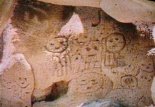
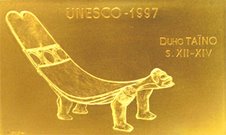
But there were settlers before 1627. These were the Hemisphere's indigenous people, called Amerindians in Guyana. Archealogical excavations here by University of London teams in collaboration with the Barbados Museum and Historical Society show these first settlers had big villages. They had a language and artistic expression and religion.They had material achievements. They had their own civilisation.
They had reached the island in courageous exploratory voyages up the chain of Caribbean islands in large ocean going canoes. They came from what is today Guyana and Venezuela on the north eastern and northern coasts of South America.
The time frame of their alleged absence from Barbados when the first Europeans sighted what was to become Barbados was not that great a gap in historical migration/settler patterns. Indeed, when the first Europeans sighted the island there may still have been indigenous peoples in the densely forested interior. They may have left an agricultural layout for the first settlers to build on. Guyanese indigenous persons were brought from what is today Guyana in the 17th Century to assist the second wave (after the indigenous peoples) of settlers who came in the 1600s.
The website of the private entity Holetown Festival organising committee is also incorrect in stating that Barbados' history began with the 1627 arrival, however noteworthy that happening may be.
Are the first true settlers, the indigenous peoples of the Americas, not worthy of any mention at all? Are their civilisations, past and present , not worth anything?
Their descendants make up sizable parts of the population of several of our Hemispheric neighbours (Bolivia, Guatemala and Mexico for example). It is a wrong message the organising committee is sending , perhaps unwittingly though the Guyana Consulate has offered research assistance in this area. Is this effective re-writing of history the type of thing should be given to school children and visitors to the otherwise commendable Festival?
I personally knew Alfred Pragnell, said to be the originator and motivator when this most useful event started. Alfred was a friend of Guyana and the Americas and I know he would have liked a more objective and well-rounded historical overview of what the Festival celebrates.
Respectfully Yours,
Norman Faria,
Guyana's Honorary Consul in Barbados