Showing posts with label Borikén. Show all posts
2/07/2023
Parte a Soraya el Kasike Martín “CacibaOpil” Veguilla Díaz
Kasike Martín “CacibaOpil” Veguilla Díaz
Declaración conjunta: La Confederación Unida del Pueblo Taíno y el Iukaieke Guainía hacen pausa solemne y se unen en solidaridad y respeto a todos nuestros hermanos del Pueblo Taíno Arawak ante la pérdida física de quien en vida fue el Kasike Martín “CacibaOpil” Veguilla Díaz, líder desde su fundación, del Concilio Taíno Guatú Ma Cú a Borikén.
El Kasike CacibaOpil dedicó décadas de su vida a la reafirmación de la sobrevivencia indígena del Caribe, particularmente la de Borikén. Fue un destacado artesano y su preparación como artista escénico le permitió desarrollar y enaltecer nuestros propios areítos de una manera históricamente precisa tanto para presentaciones culturales a través del archipiélago de Borikén y la diáspora, así como también ceremoniales con nuestra población indígena. Desarrolló sistemas de enseñanza para su comunidad desde historia, prácticas espirituales, culturales y ceremoniales hasta las cotidianas como la agricultura tradicional indígena, las medicinas y modos de vida.
Expresamos nuestras más profundas condolencias a toda la Comunidad Guatú Ma Cú, reconociendo que muchos veían al Kasike CacibaOpil como un padre y cariñosamente lo apodaban “Viejo”, término de cariño que normalmente se utiliza para los padres.
Deja una huella indeleble en el aniki (mente, corazón y espíritu) tal como nuestros propios ancestros nos dejaron los petroglifos. Nos quedan sus composiciones musicales que honran y enaltecen nuestra amada cultura y que ahora marcan la historia de nuestro Pueblo Vivo mientras los ancestros le reciben en amor y alegría y lo acompañan hasta el lugar sagrado que llamamos Soraya y/o Koaibei.
CUPT/IG 7.02.2023
Labels:
Arawak,
Borikén,
CacibaOpil,
CUPT,
Iukaieke Guainía,
Kasike,
Taíno,
UCTP
2/18/2020
Opinion: Boriken’s National Patrimony- A Diminishing Experience
![]() |
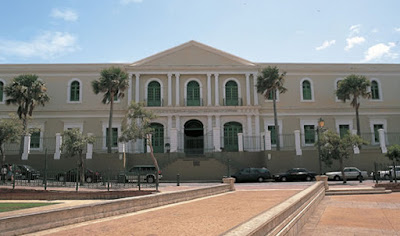
| The Institute of Puerto Rican Culture, or ICP, San Juan, Borikén (Puerto Rico) |
By Nichole Bodin
As the Institute of Puerto Rican Culture (ICP) slowly disappears as an artifact of a new administrative debt-ridden speculative revenue plan, few find hope for fixing Caribbean history. An alternative could be within the horizon to positively create a better future for the few remaining legitimized Caribbean institutions along with the unborn cultural foundations and academies of Puerto Rico. Beautiful collections and strong archaeological evidence of the Island’s cultural fusion will lose its photos, postcards, petroglyphs, ceramics, songs, poems, and more, while the impending duplicity of the patrimony’s mission fails once again to conserve and preserve Puerto Rico’s culture.
The ICP is currently located at the old colonial Spanish Welfare House in Old San Juan, and soon it will become a hotel. The Hotel San Felipe is expected to be rehabilitated with an estimated investment of $20 million. The concept is a boutique Hotel development that is proposed through the politicized conservation of the ICP’s historical structure while adding a restaurant, a bar, two luxury spas, and different hospitality and service areas.
After an unjustifiable transaction was endorsed on December 27, 2016, (three days after the administration of past Governor Alejandro García Padilla ended) a lease agreement was signed by Arnold Benus under the company Gran Hotel San Felipe del Morro, and then Director of Land Administration- Luis Rivero Cubano. This agreement states that a rent of $5,000 per month will be paid during the hotel’s construction process, $85,000 annual fee the first three years of operation, and $100,000 annual the rest. After 10 years, the rent will be increased 15% of the base or 3.5% of the profit of the hotel operation every five years, while after the fourth year of rent, they will only pay 5% of the net earnings after taxes.
In order to transform the historic Asilo de Beneficencia building, the headquarters of the Institute of Puerto Rican Culture, the Gran Hotel San Felipe del Morro development company must have the approval of the Puerto Rico National Park Company, as the use of the structure is still intended for a public purpose from its transfer to the island by the United States Government.
The biggest concern is how the $10 million assigned for or ICP’s headquarters recovery funds from the Federal Emergency Management Agency (FEMA) after Hurricane Maria are going to be used, and how this audacious orchestration will end up in the hands of the already overly indulged private sector. El Castillo San Felipe del Morro is located on the northwestern point of the islet of Old San Juan, steps from the ICP, and has been recognized as a UNESCO World Heritage Site by the United Nations since 1983. With at least 2 million visitors yearly, the fortification is one of Puerto Rico’s leading tourist attraction, as well as the hotel’s expectations.
But for now, San Juan’s current corrupt political leaders and government administrators have clearly coordinated again some last-minute oppressive and vicious acts to an already injured nation. With no real government functioning under Puerto Rican colonialism regime now, and with the possible dislocation of the ICP, Old San Juan is becoming a tourist attraction destined to respond to a culture of Disney characters dressed up as “Pirates of the Caribbean” while offering secret and private tour guides. This continuous cultural disinformation and distorted social image do not represent the Institute’s mission of years of work and study for the protection of the legacy and preservation of the Island’s National Treasures and historic patrimony. Old San Juan is already crammed with fancy hotels and numerous Airbnb’s functioning from historic buildings, and some already need restorations from the legal or illegal activities that helped acquire a level of wealth that allowed these businesses to live extravagantly within the National Historic Landmark District of Viejo San Juan.
By not recognizing these cultural urgencies, a sense of annihilation creates a continuous and distasteful cultural and educational slaughter that noticeably encourages an interminable loss of historic knowledge from the Island’s ancestral contrast in history, its memorable cultural advances and tribal technology legacy.
Every day, archaeological sites around the world continue to be destroyed through wars and political conflicts. In 1990, NAGPRA (Native American Graves Protection and Repatriation Act) declared that museums require to transfer human remains and any associated burial objects to culturally affiliated tribes. Nevertheless, Puerto Rico’s tourism process and absurd land exploitations through infrastructure development have always found itself in the middle of these juridical and patrimonial debates.
It has been speculated that while Roosevelt Roads Naval Station operated in Ceiba, P.R. (1941-2004), the U.S. Armed Forces took at least 70,000 archaeological artifacts that were probably dated around 600 a.d., as these artifacts could be returned if an exemplary and modern depositary that operates within federally established norms is finally built in Puerto Rico.
While President Donald Trump’s impeachment discrepancies keep proceeding, the political and economic relationship that Puerto Rico has with the United States will create a bigger and even more longstanding cultural hold-up, with more long-lasting identity damages. The Island’s everlasting jurisdictional oblivion and ethnic miscegenation have definitely created a more than ever alienated community.
Indigenous movements around the world reflect their ‘cultural distinctiveness’, an important part of the post-colonial struggles for ethnic identity. The role of Latin American and Caribbean's social science has deconstructed Indians not as aboriginal, but as people that have been mediated by colonialism for hundreds of years. These reconstructions of mythological traditions, cultural identity, and social representations of traumatic experience of domination and colonialism have successfully deconstructed the superiority version of history and power. Borikén's (Puerto Rico's) Taíno and other self-identified Indigenous Peoples consists mostly of the genetically mestizo population of mixed European and Amerindian, while the ‘one-drop’ ruled principle of "invisible blackness" has loudly created a long history of violent racial interaction, slavery, and social segregation.
A sense of urgency arises quickly when the most important cultural institution in a country is going to become a tourist hotel instead of a prestigious archaeological repository. Just as political corruption hits around the global news nowadays, Puerto Ricans question now the same interrogation since their first revolution: when is PR’s history going to be fixed?
Museums and cultural activities are meant to promote unity and diplomacy in all societies by using their resources to ensure a better understanding of worldwide traditions with full knowledge of historic appreciation that will engender between peoples and nations. The future of the ICP’s artifacts is in danger, as new traditions develop quickly with a predilection aimed to naively annihilate the culture against tourism development.
Although early museums were elitist and the general public was excluded, today’s museums and repositories have the mission to become agents of change and development that can foster peace, with strong ideals of democracy and transparency in their governance in order to include every group in the society. With the memory and recognition of the history of a culture, its different sectors, ages and how these community interests have created a way of life, the portrayal of customs and artistic manifestations will sustain, defend and preserve all forms of socio-cultural identities of the Circum-Caribbean Indio Old and New World experience.
Nichole Bodin is a recent graduate from the Caribbean Archaeology Master's Program from the Center of Advanced Studies of Puerto Rico and the Caribbean. Along with her B.A. in Humanities with a minor in fine art photography and a A.D in Audiovisual Communication, she has worked as a community and union organizer and has experience as a grassroots newspaper community journalist. Her shared observations on Puerto Rico's National Patrimony is of interest to our community of thinkers.
12/13/2019
Emergencia Arqueológica en Río La Plata, Dorado Borikén (Puerto Rico)
Comunicado de Prensa para difusión Inmediata (13 de diciembre de 2019) - La Confederación Unida del Pueblo Taíno, conocida como UCTP, por sus siglas en inglés, envió hoy una carta dirigida a la Sra. Valerie Hauser, Directora de Asuntos Nativo-Americanos del Consejo Asesor sobre la Preservación Histórica (ACHP, por sus siglas en inglés), en Washington, D.C. y con copia a un sinnúmero de oficiales de agencias federales en E.E.U.U. y en Puerto Rico, miembros de la comunidad indígena, arqueólogos, entre otros, incluyendo al Instituto de Cultura Puertorriqueña.
Dicha carta hacía referencia a: la violación de Derechos de los Pueblos Indígenas de Tribus que no son federalmente reconocidas y sobre diálogo y seguimiento entre la Sra. Hauser y Tai Pelli, Oficial de Relaciones Internacionales y Derechos Humanos de la UCTP, luego de que ésta presentara una intervención ante el Foro Permanente sobre las Cuestiones Indígenas de las Naciones Unidas, exponiendo la falta de cumplimiento de parte de Estados Unidos en la consulta y la implementación de la Declaración de las Naciones Unidas sobre los Derechos de los Pueblos Indígenas, y presentado prueba de dicho incumplimiento.
Aunque las agencias federales declaran que no necesitan hacer consulta “porque en Puerto Rico no hay Tribus Federalmente reconocidas”, parece que pocos, aparte de el mismo Pueblo Indígena, conocen sobre nuestros derechos. La Sra. Hauser indicó que sí existen instrucciones de cómo gestionar consulta con tribus que no son federalmente reconocidas. Poco después, la oficina de Programas de Agencias Federales envió una carta con instrucciones claras a la agencia pertinente federal en Puerto Rico, de cómo gestionar la consulta con la UCTP, de acuerdo a los protocolos existentes en las agencias federales para la Consulta con tribus que no son federalmente reconocidas. Dicha agencia jamás se comunicó con la UCTP.
Surge otro hallazgo cuyas condiciones aparentan ser, de acuerdo a conocedores en la materia, como uno peor que Jácanas en Ponce hace años atrás.
Como parte de 3 lugares donde la SHPO ha otorgado permisología para la canalización de ríos, y cuyos contratos alegadamente serían otorgados a la misma compañía, comienza el proceso en el primer sector, Río La Plata en Dorado, PR este pasado septiembre 2019. Poco después surge que en el lugar hay un yacimiento arqueológico significativo en tamaño, que incluye entierros de seres humanos, vasijas, etc. El Cuerpo de Ingenieros contrata a la compañía SEARCH y ésta se encarga de la excavación.
Supimos que se había encontrado restos humanos pertenecientes a 8-10 personas. No fue sino hasta que recibimos fotos de vecinos del área recientemente, que supimos la magnitud del caso y cuestionamos la manera en que se está trabajando el área; hay pedazos de vasijas rotos regados por el lar, máquina digger en el área de yacimiento y 7 restos humanos sufriendo la vergüenza de lo que han sufrido miles de Borikuas por los huracanes: ¡que nuestros ancestros también estén tapados con toldos azules sucios dados a los elementos! Desconocemos si éstos son adicionales a los que se habían mencionado y encontrado inicialmente.
Hemos sabido que la arqueóloga que había sido contactada para que su laboratorio hiciera los estudios geo-arqueológicos del yacimiento, por su gran preocupación ética por la manera en que se estaba llevando a cabo esta operación, renunció al proyecto efectivo de inmediato ayer 12 de diciembre de 2019, en la tarde.
La UCTP y miembros de la comunidad indígena, le han pedido a la más alta oficina a nivel federal a que le pongan un alto a esa permisología, y que se investigue y se corrija esta situación lo antes posible, amparándose en sus derechos, como han sido expresados en la Declaración de las Naciones Unidas sobre los Derechos de los Pueblos Indígenas.
Por este medio hacemos un llamado a la comunidad indígena caribeña así como la Internacional y a nuestros simpatizantes no-indígenas a que expresen y apoyen nuestro Pueblo Indígena y finalmente pongamos fin a este abuso que se continúa cometiendo contra el patrimonio indígena, nuestros yacimientos arqueológicos, y nuestros sitios sagrados, ahora en Borikén y a través del mundo.
Para mayor información, favor de comunicarse con Tai Pelli, Oficial de Relaciones Internacionales y Derechos Humanos, Confederación Unida del Pueblo Taíno (United Confederation of Taíno People) a: taipelli21@gmail.com.
7/24/2019
Puerto Rico’s Governor Expected to Resign Today
![]() |
| Some of the indigenous community members participating in the mass mobilization in San Juan on Monday, July 22, 2019. (Photo courtesy of Bibi Aya Joanna Aviles Soto) |
Hundreds of thousands of islanders have been taking part in demonstrations for over 10 days calling for Rossello’s resignation after the Center of Investigative Journalism published a series of leaked chat messages between the governor and his senior staff that included degrading "jokes" about victims of Hurricane Maria, as well as homophobic and misogynistic language about political opponents and government officials.
The leaks were published on July 13, which was the same week the FBI arrested Education Secretary Julia Keleher and Angela Avila Marrero, executive director of the island's health insurance administration as part of a federal corruption investigation. Rosello’s Chief of Staff, Ricardo Llerandi Cruz submitted his resignation on Tuesday, July 23. If Rossello does resign, he would be replaced by Justice Secretary Wanda Vazquez.
The demonstrations brought out Puerto Ricans from all sectors including members of the island’s indigenous peoples. Ahead of the massive action on July 22, a diverse coalition of Taíno and other indigenous peoples of the island published a declaration on July21st affirming solidarity with the public actions calling for Rossello’sresignation.
Indigenous solidarity was not limited to within the island as support actions took place across the Diaspora with Taíno people participating in these actions and in online "#RickyRenuncia" campaigns.
![]() |
| Taíno supporting the actions in solidarity from New York City. (Photo courtesy of Bohio Atabei) |
UCTP Taíno News 7/24/2019
7/21/2019
Declaración de parte de miembros de los Pueblos Originarios de Borikén y de todo su territorio ancestral
Hoy, por este medio deseamos expresar como miembr@s de los Pueblos Originarios de Borikén, Pueblos Indígenas en toda su manifestación incluyendo la territorial ancestral y en la diáspora, unimos nuestras voces y apoyo al reclamo del Pueblo Borikua y Puertorriqueño para exigir la renuncia del actual gobernador de Puerto Rico, Ricardo Roselló Nevares.
Es en éste momento histórico, donde como miembr@s de la comunidad originaria de Borikén y quienes por siglos hemos sido recipientes de la opresión de un sistema impuesto colonial, decimos presente en un acto de solidaridad con tod@s nuestr@s herman@s.
¡Basta ya! La resiliencia y reivindicación de toda nuestra gente es la que ha permitido que hayamos enfrentado los retos más difíciles y que podamos decir de frente y de pie; ¡Aquí estamos y estaremos! La colectividad de abusos; como lo son la destrucción de nuestros modos de vida; el costo de vida inalcanzable y los sueldos que no suben a la par; el tener que habernos despedido de nuestros seres amados por verse obligad@s a cruzar el océano para tratar de protegerse del abandono social y el saqueo económico, mientras tras bastidores se buscaban medios de cómo lograr enriquecer a algunos a costillas del pueblo; los atropellos a nuestr@s niñ@s al cerrar escuelas; los atropellos a la salud de nuestra gente; donde las enfermedades no-contagiosas como cáncer, alta presión, enfermedades respiratorias, niñ@s que nacen con malformaciones sigue en aumento y donde los medios de atención médica siguen mermando; donde se ha abusado y continúa abusando de nuestra Madre Tierra con deforestación, contaminando nuestro aire, agua y tierra, y quien la defiende es criminalizad@, con el gobierno favoreciendo y utilizando la fuerza policiaca para defender las acciones de quienes nos matan poco a poco con sus contaminantes y prácticas.
Somos originari@s de un sistema matrilineal, donde siempre ha existido el respeto y la integridad a la mujer, al igual que a tod@ miembr@ de la comunidad. Somos un pueblo que brinda respeto a sus muert@s. Somos un pueblo donde la integridad y la dignidad preceden nuestras acciones.
Es por ésto y muchísimas razones más que despedimos a Ricky Roselló, determinamos que renuncie a su puesto. Consideramos que es el mejor modo de ponerle un fin a la incertidumbre, indignación que vivimos tod@s ante su empeño de permanecer en un puesto donde no lo queremos. ¡Que renuncie y se vaya de nuestro territorio! Que piense en sus hij@s que no merecen crecer en un ambiente en donde su padre es despreciado; Ell@s no merecen tener que vivir ésto; pero el pueblo tampoco, ni el cuerpo policíaco de Puerto Rico. Sabemos que algunos se hallan entre la espada y la pared, como también que algun@s se prestan para hacer daño a sus propios compatriotas. Sin embargo, reconocemos que no se puede catalogar a tod@s en general. De manera que tanto ell@s como sus familias también han de ser considerad@s.
La Representación Indígena no se va a detener, como tampoco ningún Borikua o Puertorriqueño que ya esté cansado de los atropellos y un futuro incierto. ¡No nos pararán!
¡¡¡ Descolonización ya !!!
3/07/2019
Taíno Elder Hector “Barakutei” Gonzalez Crosses into the Spirit World
![]() |
| Taíno elder Hector Barakutei Gonzalez displays a traditional Taíno drum |
Groton, Connecticut (UCTP Taíno News) – Taíno Elder Hector “Barakutei” Gonzalez Benitez, 71, a member of the Elders Advisory Council of Guainía Taíno Tribe and a Liaison Officer of the United Confederation of Taíno People (UCTP) crossed into Koaibei, the Spirit World, on Friday, February 22, 2019.
In a condolence message sent to the Gonzalez family, UCTP President, Roberto Múkaro Agüeibaná Borrero stated “Arokoel Barakutei, was a Taíno guaribo (warrior) who now has a special place among the ancestors.”
Elder or arokoel Barakutei was a veteran of the 19th and 20th Special Forces Group, which are the two National Guard groups of the United States Army Special Forces. Gonzalez was also a retired security officer of the Mashantucket Pequot Tribal Nation. As Liaison Officer for the Confederation, he consistently sought out ways to raise the visibility of the indigenous Taíno Peoples and regularly gave talks on Taíno culture. A passionate flute player, he often voluntarily performed for children at local area hospitals.
“The passing of this dear brother leaves a profound feeling of sadness in our hearts, as he was a beloved community member, a warrior, yet a gentle loving man who loved this Taíno Family and all Native American Peoples” stated Angel Lionheart Ortiz, a UCTP Liaison Officer in Connecticut.
Barakutei Gonzalez is survived by his 4 children Michelle Cruz, Myree Allen, Melody DaSilva, and Marc Gonzales, as well as 13 grandchildren, and 1 great-grandchild. His is also survived by his mother, Francisca Gonzalez Benitez and his brother, Julio Gonzalez Benitez.
A memorial service will be held on Saturday, March 9th from 11am-1pm at the Byles-Groton Memorial Home, 310 Thames Street, Groton, CT.
UCTPTN 03.7.2018
1/03/2019
El Grito de Koaiuko (Coayuco)
5/01/2017
Taíno Join May Day Demonstration in NY
![]() |
| Members of the Bohio Atabei and Taíno iukaieke Guainia were some of the Taíno community members present at the May Day Rally in New York's Union Square |
In New York, protesters in Union Square and Washington Square Park chanted, played instruments and waved signs with various slogans in English and Spanish, such as “Workers united will never be defeated.”
Among the demonstrators at Union Square, Taíno community members joined the rally in solidarity with the thousands of protesters who blocked roads and marched in Borikén (Puerto Rico) to bring attention to the decade-long economic crisis and looming austerity measures. Taíno community members were also amongst the mass of protestors in Borikén.
Both on the island and in New York demonstrators denounced the U.S. territory's leaders as well as the U.S federal control board overseeing its finances.
UCTPTN.05.01.2017
5/08/2012
11th Indigenous Peoples Forum Opens at United Nations
United Nations, NY (UCTP Taíno News) – The 11th session of the United Nations Permanent Forum on Indigenous Issues opened on Monday at United Nations Headquarters in New York. Almost two-thousand representatives of Indigenous Peoples, non-governmental organizations, and academia have per-registered to attend the two-week session. The special theme for the year is the “The Doctrine of Discovery: its enduring impact on indigenous peoples and the right to redress for past conquests.”
The session opened in the General Assembly Hall with a traditional welcome greeting from traditional Onondoga spiritual leader Sid Hill and a ceremonial Mayan blessing. In the afternoon, various statements were made concerning the special theme “The Doctrine of Discovery” by governments, UN agencies, and Indigenous Peoples. Several conference room papers were circulated that highlighted the history of the Doctrine of Discovery and cited examples of its specific impact on Indigenous Peoples.
The Doctrine of Discovery is a concept of public international law used to support judicial decisions invalidating or ignoring aboriginal possession of land in favor of colonial or post-colonial governments. The Doctrine is linked to Christian expansionism being in 1452 and again in 1493 with Columbus in the Caribbean. Among the Indigenous Peoples attending the historic session are Caribbean Indigenous Peoples representatives from Barbados, Boriken (Puerto Rico), Guyana, and Waitikubuli (Dominica).
The opening of the Forum was however not unmarked by controversy as changes in accreditation did not allow all the registrants to attend the opening session. The issuance of secondary passes and pass limits added to confusion and frustration many attendees experienced upon their arrival to UN headquarters. According to the Secretariat of Permanent Forum on Indigenous Issues the use of secondary passes is suspended for Tuesday, May 8th.
UCTPTN 05.08.2012
9/09/2011
Editorial: What’s in a name - Arawak or Taíno?

There is widespread confusion concerning the application of the term Arawak on Caribbean Indigenous Peoples. This is not surprising given our disparate state across the islands and into the Diaspora. As descendants of the first Indigenous Peoples in the Western hemisphere to be labeled Indians, our communities are dealing with over 500 years of colonization and misinformation via educational institutions promoting ideologies that were established by the colonizers.
Roberto Múkaro Borrero is a Borikén Taíno historian, artist, and activist who currently serves as President of the United Confederation of Taíno People. He can be contacted at mukaro@uctp.org or at www.uctp.org.
3/28/2011
U.S. Census Shows Increase in Borikén’s Indigenous Population
Borikén/Puerto Rico (UCTP Taino News) - The 2010 U.S. Census count for Borikén (Puerto Rico) had some significant surprises. The census reveals a 48.8 percent gain over the last 2000 census in the American Indian category, which is a verifiable resurgence of indigenous affirmation among families on the island. With DNA research documenting the continuation of the pre-Colombian indigenous Taino gene-pool and the increasing visibility of active Taino community organizations and cultural manifestations – the myth of extinction is finally being dispelled.
The Director of the United Confederation of Taino People’s Borikén Liaison Office, Roger Guayakan Hernandez attributes the increase in the census count to expansion of information and communications technologies available today.
"We have always been here but recently there has been an explosion of pertinent information regarding Borikén's indigenous heritage. The difference is that now there are more ways to get the information to the people" stated Hernandez.
Hernandez noted that the Confederation, an official Census partner, used the increased focus on Taino heritage as well as new technologies like social networks in its campaign to raise awareness about the census process.
With the 2010 U.S. Census counting 19,839 individuals living in Puerto Rico officially claiming American Indian heritage, the Taino community is indeed becoming visible after two centuries of near invisibility.
Hernandez continued stating that "the whole chapter on the Caribbean's Amerindian history is being reexamined and supports the affirmation of indigenous descendant families on and even off the island”.
A 1790 Puerto Rican Census count in an area called “Las Indieras” documented fewer than 3,000 ‘Indios (Indians)’ on the western side of the island. Since then, with official census terminology changing to discount the indigenous population, a reversal has taken place revealing how Taino families see themselves in the 21st Century.
"Colonial history may have counted us out in Puerto Rico, but today the Taino People have clearly counted ourselves back in" declared Hernandez.
UCTPTN 03.28.2011
3/18/2011
LATIN AMERICAN ARTS FESTIVAL in NY
The American Museum of Natural History's Latin American Arts Festival highlights the richness and diversity of creative art forms practiced in various Latin American cultures. Experience Aztec dances, mariachi, Andean and Taino music performances, poetry, and an instrument-making workshop, and meet contemporary artists in the Museum’s cultural halls.Saturday, March 19, 2011
FREE and open to the public.
Program Schedule
- Opening Ceremony, Noon: A 'Call to the 4 Directions' by Atl-Tlachinolli at the 77th Street entrance and art tables open in the Hall of Mexico and Central America and the Hall of South American Peoples.
- Cuatro Music Presentation, 12:30 pm, Hall of Mexico and Central America: La Rondalla de Cuatros de la La Casa de la Herencia Cultural Puertorriqueña, a cuatro music ensemble highlights this stringed instrument used in Puerto Rico and throughout Latin America.
- Aztec Dance, 1 pm, Hall of Mexico and Central America: Atl-Tlachinolli, a Mexica dance group, performs the centuries-old indigenous ritual dance traditions of the Aztecs using pre-Columbian instruments, rhythms, and regalia.
- Spoken Word, 1:35 pm, Hall of Mexico and Central America: Acclaimed poets “La Bruja” Caridad De La Luz and Taina Padro will present a special spoken word set linking ancestral heritage to contemporary identity.
- Mariachi Music Presentation, 2 pm, Hall of Mexico and Central America: Directed by Alvaro Paulino Jr., members of the Mariachi Tapatio de Alvaro Paulino and the Mariachi Mano a Mano promote the beauty and splendor of mariachi music.
- Workshop: Ceramic Instrument-Making, 2:30 pm, Hall of South American Peoples: Patricia Aranibar leads participants through an adventure with clay to create whistles and ocarinas (clay flutes).
- Songs from Borikén, la Isla del Encanto, 3 pm, Hall of Mexico and Central America: Margarita Nogueras-Vidal (Taíno) presents songs from the mountains of Borikén (Puerto Rico).
- Cantos quechuas/ Songs from the Quechua Traditions, 3:30 pm, Hall of South American Peoples: Milagros Albrecht, accompanied by musicians from AbyaYala Arte y Cultura, brings to life the sounds and the feeling of the Peruvian Andes through Quechua songs.
- Andean Musical Procession, 3:45 pm, Hall of Mexico to Hall of South American Peoples: Tahuantinsuyo, a group of traditional Andean musicians, will lead a pre-Columbian style Andean music procession. The procession will introduce audiences to the sounds and instruments used in the days of the Incas through modern times.
- Andean Music Performance, 4:15 pm, Hall of South American Peoples: Tahuantinsuyo will perform music from the ancient Incan empire, now the countries of Peru, Ecuador, Chile, Argentina, Bolivia, and Colombia.
Programs are subject to change.
This program is co-presented with Cultura Mexicana Sin Fronteras; PR Dream/Media Noche; United Confederation of Taíno People; Latinos NYC; La Diva Latina Magazine; La Casa de la Herencia Cultural Puertorriqueña, Inc.; Kichwa Nation; and Abya Yala Arte y Cultura
Source: amnh.org
3/16/2011
Earthquake of the Coast of Kiskeia and Boriken

UCTP Taino News - At 9:43 AM Atlantic Standard Time on March 16, an earthquake with preliminary magnitude 5.4 occurred of the coast of the Kiskeia (Dominican Republic), 80 miles/129 Km northwest of Mayaguez, Borikén (Puerto Rico) . The magnitude is such that a tsunami will not be generated. The location and magnitude are based on preliminary information. Further information will be issued by the United States Geological Survey or the Puerto Rico Seismic Network.
UCTPTN 03.16.2011
UCTPTN 03.16.2011
2/11/2011
Opinion Editorial: Native Blood in Borikén (Puerto Rico)
UCTP Taino News - Many of us are by now aware that in the year 2000 a DNA study was done that proved scientifically the continued presence of Native American descendants in Borikén (Puerto Rico). The results of the study showed that approximately 62% of the island's population is of indigenous descent on via their maternal line. This news created an uproar - mostly from those who denied that our indigenous ancestors had survived the Caribbean 'holocaust'. On the positive side however similar studies were then conducted in both Cuba and the Dominican Republic. Surprisingly to some the results of those tests showed that 20% to 30% of the current populations of those islands were also of Native American/American Indian/Indigenous descent.
The persons who argued against Taino survival were very quick to counter that `thousands' of Natives from various parts of the mainland were transported to the Greater Antilles to be sold as slaves. The skeptics claimed that this was what was showing up as Indigenous DNA. Based on this theory they argued that DNA testing could not be taken into consideration as `proof' of Taino survival. Well, these 'naysayers' were wrong again; at least in Borikén.
In 2010, deeper investigation into the DNA of the current population in Borikén have shown that out of all the samples taken on the island only 16% were from an outside source. Without any doubt the results of the studies show that 84% of the DNA material comes from the original population or a 'single tribe' of the island.
One of my personal spiritual teachers always said "that we can all trace our roots to the Great Tree of Peace." Again, the DNA studies have shown that the islands of the Caribbean were a crossroads where many different Native nations encountered each other and blended. This blending between peoples from the North American Continent and the Central and South American Continent was already taking place before the European invaders landed on our shores.
It is true that Indigenous Peoples were taken by the thousands from Mexico, Colombia, Venezuela as well as the USA and sold all over the Caribbean and beyond. In my view this unfortunate situation only contributed to an already ancient mix. Add to this blend, some European, African, and even Asia components and there we are. Welcome to the Caribbean. When I reflect on these things what I find most incredible is that despite the incoming waves of outside genetic material, our ancestral Taino linage remains strong and in much larger percentages then ever suspected.
Of all the Taino homeland islands today, Borikén seems to retain the highest Taino survival rate according to the data so far. This should not be considered a mystery simply because the island was not a main point of the Spanish colonial enterprise when compared to Cuba or Kiskeia (Dominican Republic). It is well known that the Spanish conquest of the Borikén did not begin until 15 years after that of Kiskeia. Compared to other regions, there was never much gold and due to its size and mountainous terrain, Borikén was not considered the best candidate for a full plantation economy. As a result, fewer colonists arrived on our shores during the first few hundred years after the Spanish invasion. In fact, it was not until the beginning of the 19th century that large numbers of colonists of European decent began to move into the interior of the island. This was a result of virtual neglect from Spain. What is important to remember about this situation is that it also allowed Taino survivors the opportunity to live in relative peace - as long as they could be considered Christians and spoke Spanish.
This is the reason why we find so many Boricua Taino people on and off the island with much larger percentages of Taino linage when a review of their autosomal DNA is conducted. Here numbers range from anywhere between 17% to 45%.
While these results may have their place in our struggle, I am of the opinion that the tests should not be used to divide our communities. I know many who would not want to see a situation created where `blood quantum' becomes a divisive issue for us. We can see how much damage and pain that system has created for others. Our ancestral lineage comes through our descent, and it is my view that this fact should be enough. In the meantime, we must continue to spread the news of our survival and work together to reclaim our rights as the true descendants of a proud and noble people.
Author: Domingo "Turey" Hernandez
Source: UCTP Taino News 02.11.2011
Domingo "Turey" Hernandez is a Borikén Taino whose family comes from Arecibo. He is registered with the United Confederation of Taino Peoples' Taino Population Census and Inter-Tribal Registry and is a member of Iukaieke Guaina and the Caney Indigenous Spiritual Circle.
1/17/2011
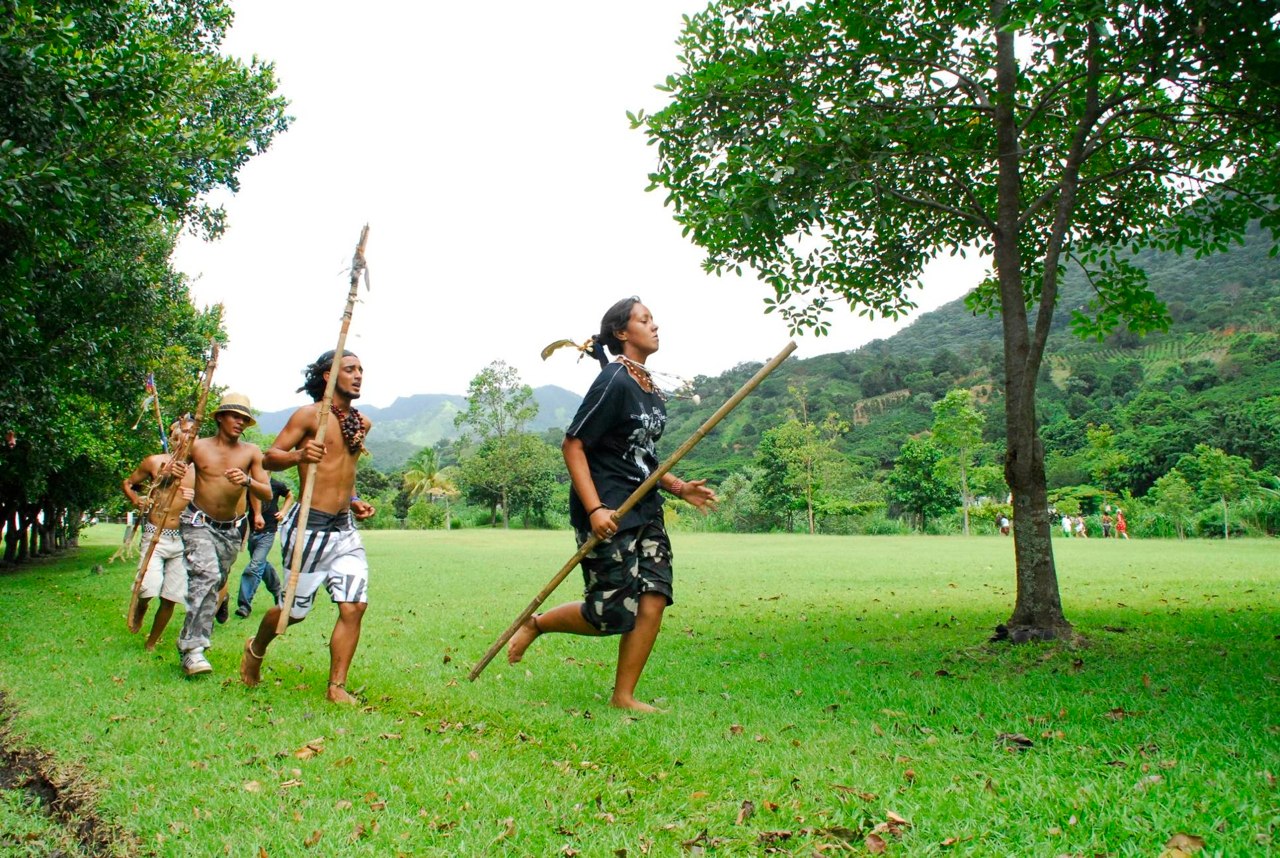
Taino Planning Ceremonial Run in Kiskeia
Kiskeia (UCTP Taino News) - After a successful two-week ceremonial run last summer in Borikén, organizers are hoping the momentum will continue in Kiskeia ( Dominican Republic ) later this year. The run in Borikén was organized, in part, to raise awareness about sacred sites and indigenous Taino culture. A similar focus would be the basis of the proposed spiritual run on the neighboring island.
“The Borikén 2010 run was connected to the Peace and Dignity Journeys. These are continental runs organized in response to an ancient prophecy that calls for the relationships of Indigenous Peoples of the Americas to be strengthened for the sake of our future generations.” said Vanessa Inarunikia Pastrana.
Pastrana was a visionary behind the Caribbean run. During these runs, sacred staffs representing Indigenous Peoples and their prayers from throughout the Americas are carried ceremoniously by the participating runners.
“These runs are fulfilling the prophecy of the eagle and the condor – the coming together of our Peoples” she continued. “Now the guaraguao, the Caribbean hawk is a part of this sacred circle.”
The Borikén 2010 Run marked the first time the sacred ceremonial staffs carried during the continental runs were presented in the Caribbean.
Pastrana has already met with several Kiskeia Taino community members in the United States such as Roman Guaraguarix Perez to provide some orientation on the process. She shared logistical information as well as stressed the spiritual nature of the run. Perez has agreed to lead the effort for the Kiskeia run and is now in contact with potential local organizers.
“As Borikua Taino we are here to support our guaitiao (relatives) from Kiskeia.” said Pastrana. “The organization of this ceremonial run however should be led by the local community.”
UCTPTN 01.17.2011
12/22/2010
Taíno Celebrate Rare Solstice Event
UCTP Taíno News – Over the weekend and through Tuesday December 21st, Taíno people acknowledged the winter solstice with gatherings and areito (ceremonies) in their island homelands and the Diaspora. This year’s winter solstice was even more significant as it coincided with a total lunar eclipse and a full moon. The last time an eclipse took place during the solstice was in the year 1638.Acknowledging the significance of this celestial event and the associated Taíno areito, Miguel Sobaoko Koromo Sague stated “Our ancestors are watching for signs that we are committed to bringing back these powerful traditions.”
Commenting from Borikén (Puerto Rico) on Tuesday a young Taíno woman, Yari Sierra stated “Today is a day to heal and reflect on the incredible gift the great Mother has give us, which is one we will not experience again... I only hope people will come to value these gifts the universe has shared.”
The next eclipse to coincide with a solstice will occur in 84 years.
UCTPTN 12.22.2010
12/16/2010
Taíno Author Releases New Children’s Book
New York (UCTP Taíno News) - Inspired by the true story of how the people of Borikén (Puerto Rico) saved Bieke (Vieques) from environmental destruction, author Rafael Landrón has written a bilingual children’s book entitled “Beba and Little Sister Island” published by Campanita Books. The story focuses on a young manatee named Beba who is summoned by her animal friends to travel and discover the origin of the thunderous noise they keep hearing from other side of their beautiful island home. Illustrated by award-winning artist María Antonia Ordóñez, the story is a timeless tale of courage, solidarity, love, and justice set in the beautiful waters of the Caribbean.In Beba and Little Sister Island, the animals play the role of the real-life heroes whose courageous acts tipped the scale and literally saved the island. Much of Bieke (affectionately called la Isla Nena - translated in the book as Little Sister Island) had been turned into a radioactive, polluted, devastated landscape. With the departure of the U.S. Armed Forces the island is on its way to recovery, but it will be decades before the damage is reversed.
“The story never makes direct reference to where the big ships come from, or what they are doing there”, explained Landrón. “I wanted the message to be universal”.
A Borikén Taíno, Rafael Landrón is a Professor at Boricua College in New York, as well as an emerging poet, performer, and writer. Beba and Little Sister Island is his first children's book and is available at Amazon.com.
UCTPTN 12.16.2010
11/16/2010
Taíno Arts Matriarch Crosses into Koaibei
Morovis, Borikén/Puerto Rico (UCTP Taino News) – The Taíno community is mourning the loss of master ceramicist Evarista Chéverez Diaz who crossed into koaibei (the spirit world) on November 4, 2010. Known affectionately as “doña Varin,” Chéverez was a symbol of the revival of Taíno style coil rolled pottery in Borikén. She is remembered for her humor and wit as well as her knowledge of local medicinal plants and remedies.“Doña Varin will be sincerely missed by many people of all walks of life on the island and beyond” stated Roberto Múkaro Agueibaná Borrero, a representative of the United Confederation of Taíno People. “She was a proud Taíno woman and she will remain an important part of the contemporary history of our people.”
Born in Morovis on November 16, 1933 Chéverez would have been 77 years old today. She is survived by her husband of 55 years, don Pablo Chéverez and her children Hector Luis, Felix Manuel, Pablo Alberto, Esthel Violeta, Juan Jose, Maria Janette, Nydia, Antonio, Alice Daisy, and Javier as well as a number of grandchildren.
UCTPTN 11.16.2010
10/28/2010
Confederation Commended for Census Campaign
Ponce, Boriken/Puerto Rico (UCTP Taino News) – Last week Victor Vassallo, a representative of Puerto Rico’s House of Representatives, commended the Boriken Liaison Office of the United Confederation of Taino People (UCTP) for their work promoting the 2010 U.S. Census. In an official partnership with the U.S. Census Bureau, the Confederation organized events, produced literature, and developed an online campaign to promote Taino participation in the 2010 Census.
The United States conducts an official census every 10 years. While the UCTP was an official partner with the U.S. Census Bureau for its campaign in 2000, this year’s activities included a major event at the Tibes Indigenous Ceremonial Center in Ponce. The activity featured local Taino cultural presenters Wakia Arawaka Taina and was attended by the general public as well as U.S. Census Bureau officials from Washington D.C. and Boston, Massachusetts.
Vassallo not only praised the Confederation’s work increasing the visibility of Taino descendants but its work promoting the protection of indigenous sacred sites in Boriken. In particular, Vassalllo thanked the UCTP for bringing the issue of the Jacanas ceremonial site to his attention. Vassallo has since introduced formal legislation to protect the Jacanas cultural area.
Expecting more than 15,000 households to identify themselves as Taino in the Census, UCTP Boriken Liaison Director Roger Guayakan Hernandez stated "The U.S. Census is a mechanism for Boriken’s indigenous families to be recognized officially.”
He continued stating that in his opinion "Tainos must be responsible to make themselves count because nobody else will."
The UCTP also administers an alternate Taino Census Registry not affiliated with the U.S. Census Bureau.
UCTPTN 10.28.2010
8/10/2010
Taíno People Featured at United Nations Indigenous Day
Secretary-General Ban Ki-moon addresses UN Headquarters' event in observance of the International Day of the World's Indigenous Peoples. At right is Roberto Múkaro Agueibana Borrero, Master of Ceremonies for the event.(UN Photo/Evan Schneider)
UNITED NATIONS (UCTP Taíno News) - The United Nations celebrated the International Day of the World's Indigenous Peoples on August 9, reaffirming indigenous rights and presenting several short films produced by indigenous filmmakers. Caribbean Indigenous Peoples, the Taíno in particular, were a featured part of the event commemorated at UN Headquarters.
The program was called to order with the sounding of the guamo (conch shell horn) by Roberto Múkaro Agueibana Borrero (Taíno) who served as the program’s Master of Ceremonies.
A welcoming song by Native American singer Kevin Tarrant and opening statements by UN dignitaries including UN Secretary-General Ban Ki-moon were presented. The participation of the UN Secretary-General highlighted the event’s high-level profile.

Four short films were presented during the event including "Taíno Indians: Counted out of Existence" by Alex Zacarias (Taíno). Zacarias is an Emmy-award winning documentary film maker whose family comes from Bieke (Vieques). His film deals with the Taíno People's struggle for recognition in Borikén (Puerto Rico).
“Film is a great way of communicating people's stories” stated Zacarias.
Sylvia Kaonamahakuio Marrero, a Borikén Taíno who attended the program agreed.
“It was an honor to be part of this important event and share with others; not only our Taíno people but also with other Indigenous Peoples” said Marrero. “The program was very educational.”
UCTPTN 08.10.2010
Subscribe to:
Posts (Atom)