Showing posts with label Caribbean. Show all posts

5/01/2021

Decolonizing Indigenous Grounds

By Nichole Bodin, MPA

The Effect of Indigenous National Parks in Modern History 

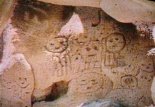
The Caguana Indigenous Ceremonial Center in Utuado is one of the Caribbean's most important Taíno archeological sites.


Artifacts created by Indigenous Peoples are an essential part of any basic archaeological research necessary for sociocultural and historic reattachment. In this modern era, there is incredibly limited information in relation to most Taíno historical aspects and our Indigenous ancestor’s circle of life dated before colonial times. Because of that, material cultural studies of Indigenous heritage are underappreciated. In order to understand the history of Borikén (Puerto Rico), which began over 6,000 years ago, worldwide recognition is needed to diffuse the authentic revelation that the so-called New World had an organized and complex society with an enriched culture. 

During the 1950s, the idea of a Caribbean sociocultural evolution intrigued some American archaeologists like Gordon Childe, Robert Redfield, Julian Stewart, and Leslie White. Their works manifested different and diverse points of view. A great number of North Americans traced sequence units of sociocultural development and they called them archaeological epochs, levels, or stages. A decade later, new studies by Herbert Spencer and Lewis Henry Morgan added advanced dimensions with regard to the understanding of the processes involved. For the past 20 years, some evolution and classification models have been deeply criticized, causing investigators to use alternative terminology. These topics related to artifacts (also called material culture) have to help to define educational and intellectual concepts in fields like visual arts, literature, architecture, urban design, and traditional popular culture. 

But somehow, the pre-colonial or pre-Colombian history of Borikén and the Antilles are still a part of practical connections of production styles that are artistic guesses over artifact interpretation. These interpretations are based on research made without any type of verification concerning their social and practical uses within the archaeological findings. As a result, the historic framework used in National Parks during their conceptualization process should have adopted a greater responsible vision to inform, preserve and interpret a more complete structure of the complexity of the human experience. This would assist in the comprehension of the past in a more coherent and intelligent manner that respects our ancestorial community and their legacy. The majority of the scholastic approaches have only allowed moldable flexibility for archaeological researchers for easy identification of a specific region into supposedly appropriate descriptions based on race interaction, ethnicity, class, and genre (in and between topics) within the broader timeline of Caribbean studies. 

The historic designation of Indigenous National Parks in Borikén falls into the same category with regard to their legitimacy in relation to the jurisdictional lines that this colony suffered at hands of Spain and the USA for hundreds of years. For instance, some of the cultural assessments for historic buildings and sites and their designations don't consider the strong relationship that a National Park has with state-sponsored museum projects. Even though these are two different aspects of historic conservation, parks and museums are bound together and their current status with local community involvement is crucial for their sustainability. 

The area that stands out as the most important restored archaeological site in Puerto Rico is located in the Caguana neighborhood of Utuado, formerly known as Capá, a part of a region of important indigenous archaeological remains. The Caguana Ceremonial Center park consists of 10 restored bateys surrounded by a variety of stones with petroglyphs. It was rediscovered as a part of an archaeological project, with a survey done at the beginning of the XX century that was sponsored by academia and its institutional scholars from the Scientific Survey of Puerto Rico and the Virgin Islands. This project was organized by Dr. Franz Boaz. This study was intended to create an inventory site from 1200 AD with different aspects of the recently acquired American colony. Because of that, current ongoing concerns about the possible lack of efforts for investigation, accompanied by the high precipitation conditions that affect the sites located at the mountainous inner center of the Island make preservation efforts deeply overlooked. The progressive deterioration of the remaining material culture found in these areas is an ongoing, unresolved topic. Caguana is an important region because it is considered that it has significant cultural resources that not only could provide clues about the social and political developments, but also it can be eligible for potential recognition within the framework of worldwide historic places. 

On July 25th, 2005, the United Confederation of Taíno People (UCTP) and other local Indigenous groups manifested their cultural concerns with disgust regarding the deteriorating condition and management of the park to the administration of the Caguana Ceremonial Center. The Taíno people called this historic action "El Grito de Caguana" and demanded social justice for the restrictions that were imposed at the Center including their policies related to the restrained use of the site during certain hours. This resulted in a peaceful 17-day protest and hunger strike that brought international attention to the conditions that were perpetuated by maintaining colonial dependency on historic antiquity. As the issues of genocide and dominant colonialism emerged during these firm protests, the real question is why these burial grounds aren't protected from certain development damages while the real descendants of the ancestors fight for the proper preservation and protection of the site. The ideal effort for cultural recognition would be a more active public involvement that fights for constant renewal and strong revival for Indigenous parks in Borikén. But what about the restoration of museums and the historic designation that does not involve any acquisition of resources for reexamining history after colonial genocide? What kind of jobs are created in order to continue and remodel an obsolete model created by an alteration of events that needs recovery and systematic healing? 

Caguana is not the largest ceremonial center, nor the only one to display petroglyphs, but it is undoubtedly unique in the Caribbean. It is located on a small terrace adjacent to the upper reaches of the Tanamá River, in the central-western mountain range, west of Utuado in Borikén. When facing to the South, it borders the igneous-plutonic massifs typical of the area, while to the North it faces unique karst formations with conical tertiary limestone dotted with small details. The 22 petroglyphs of the principal plaza has zoomorphic traits that can symbolize the ancestors of the chiefs and can be related to the sociopolitical activities done there. An in-depth study about the sociocultural aspects of the petroglyphs and artifacts that are at Caguana's museum could reestablish the lost identity of those affected by the everlasting colonialism that has perpetuated through the continuous cultural exploitation that the Caribbean still suffers. 

A way to accomplish real social justice for the victims of slavery, genocide, and racial discrimination in the Caribbean is to create new discussions on Caribbean reparations that approach the problem within the Taíno context due to the ongoing violation of Indigenous rights. How the State responds to its liable responsibility of Indigenous rights matters is more about the obsolete jurisdiction laws of land management. This situation has created a dilemma regarding the genocidal stigma and abusive exploitations, which continue to be committed against Indigenous Peoples by the same States who are alleging to represent them. The concept of national patrimony has to be revisited. The only way that academia can help resolve their ongoing misappropriation within their museum curation is by acknowledging past wrongs with a deeper process that involves ‘cultural reparations’ and community involvement.

Nichole Bodin has a Masters in Caribbean Archelogy from the Center of Advanced Studies of Puerto Rico and the Caribbean. 


4/15/2021

Volcano eruptions in St. Vincent Creating a Humanitarian Crisis

Ash coats a hillside on St. Vincent on April 11, 2021. (Photo by UWI-Seismic Research Centre, Prof. Robertson)

St. Vincent and the Grenadines (UCTP Taino News) - La Soufrière, a volcano on the Caribbean Island of St. Vincent began a series of intense eruptions last Friday. For close to a week, subsequent eruptions have covered the island in volcanic ash. Super-heated gas and lava flows have gushed down the mountainside. Thousands of residents in the affected “Red Zone” area are now displaced or have been evacuated. A humanitarian crisis is now emerging as islanders are left without clean water and electricity. Several news sources are reporting that government officials fear the situation will also exacerbate the COVID-19 pandemic.

“These are the times we need to be ready to support our relatives” stated Irvince Auguiste, a co-President of the Caribbean Amerindian Development Organization (CADO). Auguiste is a member of the Kalinago (Carib) Nation of Dominica and a former Chief of the territory. He continued by stating “CADO and the United Confederation of Taíno People (UCTP) will be collaborating on a relief effort for the Indigenous Kalinago community and others in St. Vincent.”

The dome of the volcano was completely destroyed during the periodic eruptions. Reports estimate that more than 460 million cubic tons of earth and rock have jettisoned into the atmosphere from the eruptions. The wind is carrying the volcanic ash to St. Vincent’s island neighbors such as Barbados, Grenada, and Saint Lucia. Eruptions and seismic activity are expected to continue over the next few days.

UCTPTN 04/15/2021

8/18/2019

UCTP Liaison Officer Angel Oritz attends Mohegan Wigwam Festival

Connecticut (UCTP Taíno News) - The second day Mohegan Wigwam Festival is taking place today, August 18th, 2019 at Fort Shantock in Uncasville, Connecticut. The annual festival is free open to the public and coincides with the corn harvest. The gathering will feature traditional Mohegan and other American Indian food, music, jewelry, vendors, and dancing. Hundreds of dancers are expected to attend. UCTP Liaison Officer Angel "Lionheart" Ortiz will represent the UCTP carrying the UCTP flag in the Grand Entry that starts the dancing each day at 12noon. The festival opens at 10AM and concludes at 7PM. 

UCTPTN 08/18/2019

9/25/2017

Taíno Confederation Launches Update Page on Hurricane Relief


Borikén/Puerto Rico (UCTP Taíno News) – In support of hurricane relief efforts around the Caribbean, The United Confederation of Taíno People recently launched a dedicated webpage to post up-to-date information concerning Borikén (Puerto Rico) and other Caribbean Islands. The page will be updated regularly and compliments similar efforts on the UCTP’s social media network. The “Hurakan Maria Updates” page can be accessed at http://bit.ly/2wBNPP5. The Confederation is also considering a campaign for financial donations that would assist specific families who will need assistance beyond what local and federal programs can provide. 

UCTPTN 09.25.2017

8/30/2017

A Taíno Kasike joins other Indigenous Leaders at Historic Gathering in Peru

Kasike Roberto Múkaro Borrero (at left) with Chief Caleen Sisk (Wintu - at center) and Casey Campy (Ponca - at right) at the Pachacamac Ceremonial Center in Peru

Pachacamac, Peru (UCTP Taíno News) –
Indigenous leaders from throughout the Western Hemisphere gathered in Peru from 23-25 August 2017 in recognition of the 10th anniversary of the adoption of the United Nations Declaration on the Rights of Indigenous Peoples. The events where organized by the indigenous organization Chirapaq and the agenda included a ceremonial gathering at the sacred ceremonial center of Pachacamac and a two-day conference, which focused on the history of the global indigenous movement including a current assessment of state of Indigenous Peoples around the world. Among the respected delegates invited was Roberto “Múkaro Agueibaná” Borrero, chief of the Guainia Taíno community and President of the United Confederation of Taíno People. Borrero was representing the International Indian Treaty Council and invited to share information on the United Nations Sustainable Development Goals and Post2030 Agenda.

Before the two-day conference, participants gathered at the sacred ceremonial center of Pachacamac, which
is about 40 kilometres southeast of Lima, Peru in the Valley of the Lurín River. While the ancient ceremonial complex is now designated as a museum, Indigenous Peoples from around Peru continue to use the ceremonial grounds for spiritual purposes at various times during the year.  In earlier times, the area was used by pre and post-Inca cultures after being first settled around A.D. 200. It was named after the "Earth Maker" Creator Pacha Kamaq and its role as a significant ceremonial center flourished for about 1,300 years until the Spanish invaded.

The ceremony held on August 23rd was led by indigenous women and it focused on peace and the health of Indigenous Peoples’ communities. Borrero was the only male who was invited to share a statement and a ceremonial song at the historic gathering.

UCTPTN 08.30.2017

6/02/2017

Caribbean Indigenous Peoples Condemn Trumps withdrawal from the Paris Climate Agreement: A Joint statement from the United Confederation of Taíno People and the Caribbean Amerindian Development Organization


The United Confederation of Taíno People and the Caribbean Amerindian Development Organization condemn the shameful June 1st, 2017 announcement made by the President of the United States that his government will withdraw from the Paris Climate Change Agreement. 

Indigenous Peoples around the world, including the Indigenous Peoples of the Caribbean are on the frontlines of the global climate crises. Our communities contribute the least to global warming, yet we are and will continue to be affected the most by its negative impacts. 

In the Caribbean region, the effects of climate change are real. We are experiencing erratic and shifting weather patterns, rising sea levels, increased intensity of tropical storms and hurricanes, negative effects on local fauna, as well as the bleaching of coral refers, which are integral component of the Caribbean Sea and its ecosystem. All these biophysical impacts will continue to evoke significant economic, social and political consequences in the near and distant future in the region and beyond. 

While the Paris Agreement did not fulfill all our aspirations and by itself, will not solve the global climate crises, it is an important step forward that includes the “rights of indigenous peoples” in its framework. 

The U.S. government’s withdrawal from the Paris Agreement is an irresponsible act that not only supports an immoral anti-environmental agenda, but also it also threatens the well-being of our future generations. We therefore call upon the U.S. government to reconsider its current position and convert this injustice into an historic opportunity to ensure a safer future for our children’s children.

Signed: 

Roberto Múkaro Borrero, President 
United Confederation of Taíno People 

Damon Gerard Corrie, President 
Caribbean Amerindian Development Organization

2/14/2016

UCTP President to Speak at Gaming Conference

A scene from Arrival: Village Kasike
Brooklyn, New York (UCTP Taino News) – The President of the United Confederation of Taino People, Roberto Borrero will join CEO of Raindrop Games, Josh Samuels on a panel focusing on Indigenous Peoples and video game development at the Different Games conference on Saturday, April 9th, 2016.

After community consultation, the Confederation entered into a collaboration with Raindrop Games, which resulted in the production and release of the game “Arrival: Village Kasike” in 2012. The game is currently available at the App Store for iPhone, iPad, and iTouch. According to Raindrop Games, plans are now being made to release Arrival: Village Kasike on other platforms, possibly as early as next year. A recent UNESCO report highlights Arrival: Village Kasike as a best practice initiative with regard to Indigenous Peoples and Information and Communications Technologies (ICTs).  


Different Games is New York City’s first conference on diversity and inclusivity in games culture, drawing more than 700 attendees to NYU’s Downtown Brooklyn campus, in addition to more than 100 arcade games and 150 presenters and speakers! The fourth annual Different Games Conference will be held over 2 days, April 8-9, 2016 at NYU MAGNET in Brooklyn.

See more information at the Different Games website: http://2016.differentgames.org/


UCTPTN 02.14.2015

3/05/2015

World Conference on Indigenous Peoples Follow-up: Deadline April 6


Indigenous Peoples around the world are invited to provide their valuable input in responding a questionnaire on the follow up to the World Conference on Indigenous Peoples 2014 by 6 April 2015 at:

 https://www.surveymonkey.com/r/WCIP

9/13/2014

Treaty Council Commemorated 40th Anniversary in Oklahoma

UCTP President R. Mukaro Borrero; Alabama Quassarte Ceremonial Ground Mekko Bobby Yargee; UCTP Liaison Officer Tai Pellicier; and Bonnie Deere attend the historic 2014 IIITC Conference 

Muscogee Nation Territory, Oklahoma (UCTP Taino News) - The 40th anniversary  conference of the International Indian Treaty Council (IITC) took place in Muscogee (Creek) Territory on September 10-12 at a newly constructed roundhouse dedicated to the late, revered Muscogee spiritual leader and activist Phillip Deere. The IITC conference was entitled “40 Years Defending the Rights and Recognition of Indigenous Peoples.”  

The IITC conference addressed the ongoing challenges faced by Indigenous Peoples throughout the Americas, the Caribbean, and the Pacific such as racism, food sovereignty, environmental health, climate change and reproductive health, among others. Campsites and meals were provided to the local and international participants. Two buffalos were donated from the Inter-tribal Bison Cooperative one from South Dakota and one from the Cheyenne and Arapaho Nation, to feed attendees at the conference.
Various dynamic issues panels were convened and conference participants adopted a number of resolutions for IITC work focus for the next year and beyond. Three organizations requested and were approved as IITC affiliates by the conference general assembly; among them was the Caribbean Amerindian Development Organization (CADO).
The International Indian Treaty Council is an organization of Indigenous Peoples from North, Central, South America, the Caribbean, the Arctic, and the Pacific working for the Sovereignty and Self-Determination of Indigenous Peoples and the recognition and protection of Indigenous Rights, Treaties, Traditional Cultures and Sacred Lands. Since 1977, the IITC has been recognized by the United Nations as a category II Non-governmental Organization (NGO) with Consultative Status with the UN Economic and Social Council, making it the first indigenous NGO to gain such status.

UCTPTN 09.13.2014