11/04/2023

Taino Continue to use the U.S. Census to say “We are Still Here.”


UCTP President, R. Mukaro Agueibaná Borrero (center) with 
Robert L. Santos (at left), Director, U.S. Census Bureau, and Leila Dickerson (at right), 
NY Regional Director, U.S. Census Bureau (UCTP Photo)

New York, NY (UCTP Taíno News) – The U.S. Census Bureau recently released the 2020 data sets on American racial and ethnic origins in a report entitled “Detailed Demographic and Housing Characteristics File A.” The reporting is the culmination of an analysis of 350 million detailed responses to the race and ethnicity questions that were collected in the 2020 Census. A significant population increase is noted, 85% from 2010, among American Indians including the Indigenous Taíno. The overall number of Americans claiming Indigenous heritage increased from 5.2 million in 2010 to 9.6 million in 2020. 

The increase is significant, especially for the Taíno whose total recorded population number in 2022 is 112,682. This means that according to the U.S. Census, the Taino are the 10th largest American Indian population of all the recorded American Indian groups. In Borikén (Puerto Rico) 50,114 identified themselves in the Census as Taíno, while over 26,000 identified themselves as Taíno in New York. Other large Taíno population areas on the U.S. mainland include Florida and Connecticut. 
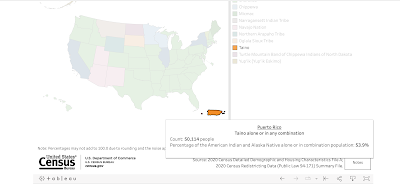

Click on Image to make larger

The United Confederation of Taino People (UCTP) has maintained an official partnership with the U.S. Census for the last 3 Census counts. One of the UCTP’s principal request to the U.S. Census Bureau was that they highlight “Taíno” as a separate Tribal Category in lieu of more ambiguous terms such as "Spanish Indians.” The UCTP also requested that search options for “Taíno” be as accessible as it is for other Indigenous Nations. 

“The new report from the U.S. Census Bureau indicates that they have finally taken our continuous requests seriously” stated R. Mukaro Agueibaná Borrero, the current President of the UCTP and a kasike (chief) of the Guainía Taíno Tribe. Borrero continued stating “We presented what we view as the past discriminatory interpretations of the Census data to the highest level of the Bureau. We also indicated our serious concerns with continued reports of field officers – Census data collectors – in Borikén (Puerto Rico) who allegedly urged community members to identify themselves as White or told individuals that they could not identify as American Indian on the Census.” 

On behalf of the UCTP, President Borrero met with Robert L. Santos, Director, U.S. Census Bureau, and Leila Dickerson, NY Regional Director, U.S. Census Bureau, and other Bureau officials earlier this year.

Roger Guaiakan Hernandez, a board member of the UCTP, noted that "In 2010, the UCTP’s Liaison Office in Borikén launched a campaign to increase Taíno participation in the Census. The campaign resulted in the local Census Officials on the island recognizing our work during a special event held at the Tibes Ceremonial Center in Ponce. This had a positive effect on our Census-related efforts in both Puerto Rico and the Diaspora.” 

Hernandez continued stating “Our efforts and the significant increase in the number of people who identified as Taíno in 2010, is connected to the recent increase that we see in the report results of the 2022 Census. That means that our strategies as the UCTP are working.” 

UCTPTN 11/04/2023

9/18/2023

Taino Highlighted at Springfield, MA Puerto Rican Parade

UCTP Liaison Officer, Chalinaru Dones with Grand Marshall Waleska Lugo DeJesus 
during the 33rd Annual Puerto Rican Day Parade in Springfield, Massachusetts

Springfield, MA (UCTP Taíno News) –
On Sunday, September 17, 2023, hundreds marched through downtown Springfield to celebrate the 33rd annual Puerto Rican Parade. Puerto Rican flags were waved by the thousands of spectators who lined the streets while Latin Music filled the air. The 2023 Parade theme was “Nunca Olvides Tus Raices, Never forget your roots.” 

The parade's Grand Marshall, Waleska Lugo DeJesus was featured atop a large float decorated in the style of a tropical forest from Borikén (Puerto Rico) that was presented to pay respect to the Indigenous Taíno Peoples of the Caribbean. A Liaison Officer for the United Confederation of Taíno People (UCTP), Chalinaru Dones, was invited by the Grand Marshall to not only accompany her on the special float, but to also open the Parade with a Taíno prayer. Dones is a citizen of the Guainía Taíno Tribe. 

Lugo DeJesus stated “I wanted to bring authentic representation to help educate that we still exist and Chalinaru reminded me that when we don’t acknowledge our history we can be erased.” 

Waleska Lugo DeJesus is the CEO of Inclusive Strategies and the founding director of the Healing Racisim Institute. She is widely known for her anti-racism advocacy and for identifying educational strategies to create equity.

UCTPTN 09182023

9/13/2023

Taino Confederation Joins Over 700 orgs along with high profile Activists and Actors in Sending Pres. Biden Letter Ahead of NYC March

Edward Norton, Jane Fonda, Mark Ruffalo, Rosario Dawson, Don Cheadle, Alyssa Milano, Marisa Tomei, Alicia Silverstone; join climate leaders in sending letter 

NEW YORK, NY (UCTP Taíno News) – Excitement is building ahead of this Sunday’s "March to End Fossil Fuels" taking place in New York City. Today, actors, activists, and climate leaders today joined more than 700 organizations in sending a letter to President Biden urging him to take action to end fossil fuels. The United Confederation of Taíno People is among the letter’s signatories and a registered endorser of the March. 

The letter is signed by actors and outspoken climate activists Jeremy Strong, Edward Norton, Jane Fonda, Mark Ruffalo, Don Cheadle, Rosario Dawson, Alyssa Milano, Marisa Tomei, Alicia Silverstone, Alysia Reiner, Dallas Goldtooth, V (formerly known as Eve Ensler), and Susan Sarandon in addition to UNICEF Goodwill Ambassador Vanessa Nakate, Youth Advisor to UN Secretary-General Ayisha Siddiqa, and author ​​Naomi Klein, along with many other Climate leaders including R. Múkaro Agueibaná Borrero, UCTP President and Kasike of the Guainía Taíno Tribe. 

“The world is burning before our eyes in a record-breaking summer of extreme heat and climate disasters. Scientists around the world are gravely alarmed about how rapidly climate change is accelerating. The oceans are boiling, workers and poor communities, disproportionately Indigenous communities, and people of color, are dying from extreme heat and dehydration, and floods and wildfires are raging across the planet,” the letter begins. 

The letter and the March to End Fossil Fuels come just days ahead of the United Nations Climate Ambition Summit also being held in New York City on September 20th. It is first-such summit being promoted as dedicated to ending the fossil fuel era. The letter calls on President Biden to make the commitments necessary to participate in the summit, “We ask that you step through those Summit doors and commit to stop approving fossil fuel extraction and infrastructure, phase out existing production, and declare a climate emergency to accelerate a just transition off fossil fuels.” 

“For Caribbean and other Indigenous Peoples who are on the Frontlines of the Climate Crisis, we need to be visible, heard, and fully and effectively participate in the development of policy and international, national, and local strategies to combat manmade temperature rise, which is fueling the degradation of the environment, increasing natural disasters and extreme weather events as well as food and water insecurity and conflict,” said Kasike R. Múkaro Agueibaná Borrero.

The representatives of the United Confederation of Taíno People and the Guainía Taíno Tribe will be present at the March to End Fossil Fuels, which will begin at 1:00 PM ET in New York City on Sunday, September 17. Organizers are predicting this will be largest climate mobilization since the start of the pandemic as thousands of participants from across the globe will march together to urge President Biden to phase out fossil fuels and declare a climate emergency ahead of the UN Climate Ambition Summit.

UCTPTN 09.13.2023

9/10/2023

2nd Prayer Walk Held to Raise Awareness on Radioactive Roads Bill


Some of the participants of the walk held on September 9th

Florida (UCTP Taíno News) – A group of Indigenous Peoples and allies held a prayer walk to bring awareness to the so-called “Radioactive Roads Bill” and the Climate Crisis. The 8 mile walk was held on September 9th and was organized by Garrett Stuart and Betty Osceola of Miccosukee Tribe. The walk was supported by the United Confederation of Taíno People (UCTP).

Commenting on the prayer walk, UCTP Florida Liaison Officer Robert Rosa stated, “It’s important to connect people with nature as well as to bring attention to the fact that we are only killing ourselves when we allow the destruction of the environment.”

The controversial “radioactive roads” bill was lobbied for by the fertilizer giant Mosaic and signed by Florida Republican Governor DeSantis in June 2023. The bill allows for roads across the State of Florida to be made with "radioactive" mining waste that has been linked to cancer. The measure allows phosphogypsum to be added to the list of "recyclable materials" used for road construction. Phosphogypsum are the remains left behind from mining phosphate, which is described by the EPA as being a "radioactive material" because it contains "small amounts" of uranium and radium. 

Phosphate is used to create fertilizer and as the leftover material, phosphogypsum, decays it produces radon, which is a potentially cancer-causing, radioactive gas. The Clean Air Act requires that phosphogypsum be managed in specialized process to prevent it from coming in contact with people and the environment. Because of the danger it poses, phosphogypsum, it is not stored in landfills. 

While the bill has been signed by DeSantis, the Florida Department of Transportation will need to conduct a study to "evaluate the suitability" of its use. This study will need to be completed by April 1, 2024.

UCTPTN 09.10.2023

6/06/2023

Taíno Leaders Attend Stonebreakers Premier in NYC


At the Stonebreakers premiere at the Brooklyn Film Festival, (L to R), Joselyn Kaxyek Borrero, UCTP President R. Mukaro Agueibaná Borrero, Film director Valerio Ciriaci, Wanda Anainaru Hernandez, and Guainia Taino Tribe Council member, Heriberto Guaraguaniki Martinez

Brooklyn, NY (UCTP Taíno News) – The documentary film, Stonebreakers, made its New York debut at the Brooklyn Film Festival on June 3, 2023. Stonebreakers documents the controversy around public “monuments” that arose during the George Floyd protests and around the 2020 presidential election. The film highlights advocacy toward the removal of statues of Columbus, Confederates, and Founding Fathers as well as community-led initiatives to highlight alternative historic and community icons.

Stonebreakers film will continue to be screened at various festivals throughout the year. The premiere in Brooklyn also featured a Q & A session after the screening that included the film’s producers, as well as film Director Valerio Ciriaci, Folklorist Joseph Sciorra, and R. Mukaro Agueibaná Borrero, President of the United Confederation of Taíno People and Kasike (chief) of the Guainía Taíno Tribe of Boriken. Both Sciorra and Kasike Borrero appear in the film. The film credits also thank the United Confederation of Taíno People among many other entities. 

“I commend the filmmakers on a powerful and important work. It is my hope this film will be seen by many as I feel it can help those who don’t understand this issue, perhaps building more empathy and support for the removal of racist icons such as Columbus statues” stated Kasike Borrero.

Information on additional screenings can be found on the Awen Films website.

UCTPTN 06.06.2023

2/07/2023

Kasike Martín "CacibaOpil" Veguilla Díaz departs to Soraya


Joint Declaration: The United Confederation of the Taino People and Iukaieke Guainía solemnly pause and unite in solidarity and respect to all our sisters and brothers of the Taino Arawak People over the physical loss of Kasike Martín "CacibaOpil" Veguilla Díaz, leader of the Taino Council Guatú Ma Cú a Borikén since its founding.

 Kasike CacibaOpil dedicated decades of his life to the reaffirmation of the Indigenous Caribbean survival, particularly that of Borikén. He was an outstanding artisan and his training as a performing artist allowed him to develop and exalt our areítos in a historically accurate manner both for ceremonial gatherings, as well as for cultural presentations throughout the Borikén archipelago and the diaspora. He developed teaching systems for his community on topics such as history, spirituality, cultural, and ceremonial practices to everyday ones such as traditional indigenous agriculture, medicines, and ways of life.

We express our deepest condolences to the entire Guatú Ma Cú Community, recognizing that many viewed Kasike CacibaOpil as a father and affectionately nicknamed him "Viejo", a term of endearment normally used for fathers.

He leaves an indelible mark on the aniki (mind, heart and spirit) just as our own ancestors left us petroglyphs. We are left with his musical compositions that honor and exalt our beloved culture and now mark the history of our Living Peoples, as the ancestors receive him in love and joy and accompany him to the sacred place we call Soraya and/or Koaibei.

UCTP/IG 7.02.2023

Parte a Soraya el Kasike Martín “CacibaOpil” Veguilla Díaz

Kasike Martín “CacibaOpil” Veguilla Díaz

Declaración conjunta: La Confederación Unida del Pueblo Taíno y el Iukaieke Guainía hacen pausa solemne y se unen en solidaridad y respeto a todos nuestros hermanos del Pueblo Taíno Arawak ante la pérdida física de quien en vida fue el Kasike Martín “CacibaOpil” Veguilla Díaz, líder desde su fundación, del Concilio Taíno Guatú Ma Cú a Borikén.

El Kasike CacibaOpil dedicó décadas de su vida a la reafirmación de la sobrevivencia indígena del Caribe, particularmente la de Borikén. Fue un destacado artesano y su preparación como artista escénico le permitió desarrollar y enaltecer nuestros propios areítos de una manera históricamente precisa tanto para presentaciones culturales a través del archipiélago de Borikén y la diáspora, así como también ceremoniales con nuestra población indígena. Desarrolló sistemas de enseñanza para su comunidad desde historia, prácticas espirituales, culturales y ceremoniales hasta las cotidianas como la agricultura tradicional indígena, las medicinas y modos de vida.

Expresamos nuestras más profundas condolencias a toda la Comunidad Guatú Ma Cú, reconociendo que muchos veían al Kasike CacibaOpil como un padre y cariñosamente lo apodaban “Viejo”, término de cariño que normalmente se utiliza para los padres.

Deja una huella indeleble en el aniki (mente, corazón y espíritu) tal como nuestros propios ancestros nos dejaron los petroglifos. Nos quedan sus composiciones musicales que honran y enaltecen nuestra amada cultura y que ahora marcan la historia de nuestro Pueblo Vivo mientras los ancestros le reciben en amor y alegría y lo acompañan hasta el lugar sagrado que llamamos Soraya y/o Koaibei.

CUPT/IG 7.02.2023

1/27/2023

Short Film on Taíno Chief Premiers at Venezuelan Embassy in Barbados


Barbados (UCTP Taíno News) - A short film, highlighting the bravery of Taíno Kasike (chief) Guamá premiered at the Venezuelan Embassy in Barbados on Friday, January 27, 2023. The work of First Nations Productions, a fledgling Indigenous media group, led by Lokono Hereditary Chief, Damon G. Corrie was the first ever to feature the chief’s story.

The 23-minute film was premiered along with ”The Last Arawak Girl of Barbados,” another film short by First Nations Productions in collaboration with Poste Creativo based in Venezuela. It was the first and only film ever made entirely in the ancient Lokono-Arawak language. First Nations Productions again collaborated with Poste Creativo on the Guamá project.

 “As Indigenous Peoples we need to tell our own stories,” said filmmaker Damon Corrie. “This is a story that needed to be told. We’ve started with this short, G-rated presentation, but our goal is to make a feature film on Kasike Guamá, as well as other Taíno chiefs.” 

The Guamá film project was financially supported, in part, by the United Confederation of Taíno People, and grassroots donations. The project was commended by the Cuban government, as well as one of the remaining Taíno communities in Cuba, the Ramirez-Rojas clan. Guamá will be available on the Eagle Clan Arawaks’ You Tube Channel on January 28, 2023.

UCTP Taíno News 01.27.2023

8/23/2022

THE UNITED NATIONS COMMITTEE ON THE ELIMINATION OF RACIAL DISCRIMINATION REVIEWS THE UNITED STATES AND QUESTIONS ITS RECORD OF RACIAL DISCRIMINATION AGAINST INDIGENOUS PEOPLES

IITC Delegation includes UCTP Representative, Tai Pelli

Geneva, Switzerland: From August 9 through 13, 2022 four delegates representing the International Indian Treaty Council (IITC) participated in the long-awaited review of racial discrimination in the United States (US) by the United Nations Committee on the Elimination of Racial Discrimination (CERD) during its 107th Session in Geneva Switzerland.  CERD is the Treaty monitoring body for the International Convention on the Elimination of Racial Discrimination (ICERD), to which the US is a State Party.


The CERD’s review will assess US. compliance with its legally binding obligations under the ICERD to eliminate racial discrimination.  This was the first review of the US since 2014 since the previous US administration chose to ignore the due date for submission of its report in November 2019. The current US report was submitted in June 2021, and representatives from 10 US government agencies participated in the review.


On August 9, the CERD provided the opportunity for Indigenous Peoples and Civil Society delegations to make statements about the US lack of compliance with the ICERD and to provide examples of unaddressed and unreported racial discrimination. Summer Blaze Aubrey, IITC Staff Attorney, summarized IITC’s written “Shadow Report” which addressed historic and ongoing violations of the Treaties concluded by the US with Indigenous Nations and the many forms of racial discrimination and human rights violations taking place as a result. There were also two informal breakfast meetings on August 10 and 11 in which Indigenous Peoples and Civil Society again had a chance to speak with Committee members regarding the US’s lack of compliance with the Convention.


The IITC also credentialed Chief Gary Harrison, Chickaloon Native Village Alaska, and IITC Consulting Attorney June Lorenzo, Laguna Pueblo and Diné. IITC Board member Tai Pelli also participated, credentialed under her organization, IITC affiliate the United Confederation of Taino People (UCTP). The Western Shoshone Defense Project and the Changing Woman Initiative were among the other Indigenous delegations represented at the session.


The Committee carried out its formal review and questioning of the US on August 11 and 12. Mr. Mehrdad Payandeh, CERD member from Germany, focused on Indigenous issues for the review.  He questioned the US about key issues that had been raised by the Indigenous Peoples delegations, including:

  • The negative impacts of colonialism on the enjoyment of human rights, highlighting that “human rights violations of Indigenous Peoples are a persistent legacy of colonialism.”
  • The concrete implementation of the January 2021 Presidential memorandum on “Tribal Consultation and Strengthening Nation-to-Nation Relationships,” including efforts to give effect to Tribal Treaties.
  • The US implementation of dialogues with Indigenous Peoples and traditional and Tribal leaders including Indigenous Peoples of insular territories, such as for example, the Taíno, as well as other unrecognized Indigenous Peoples.
  • The failure of the US to implement CERD General Comment 23 regarding the full and non-restrictive implementation of Free, Prior and Informed Consent and the significant and direct impacts on Indigenous Peoples rights and way of life.
  • The question of free, prior and informed consent and rights of Indigenous Peoples in regard to their land, territories, sacred sites, and way of life, including the adverse effects of the activities of the extractive industries including extraction of transition minerals, infrastructure projects, and the construction of border fences and walls.
  • US response to early warning and urgent action procedures submitted by the Lipan Apache, Native Hawaiian, Gwich’in, Anishinaabe, and Western Shoshone Peoples.
  • Concerns over jurisdictional complexities impacting cases of violence against Indigenous persons, especially in cases of sexual violence.
  • Concerns over transnational corporations and private security companies and violations of human rights of Indigenous Peoples.


Based on his questions, it was clear to the IITC delegation that the Committee and Mr. Payandeh in particular had heard the concerns presented by Indigenous Peoples.  IITC looks forward to the CERD’s concluding observations regarding the US which are expected to be released before the end of the current session on August 30th.


Tai Pelli reflected on the power of the Indigenous Peoples delegations’ contributions in Geneva: “The strong and united collaboration of all the Indigenous delegations made a victory out of our participation.  The Committee members took into account all of the issues presented by Indigenous Peoples in their questions to the USA.”


The IITC’s  alternative report submitted to the CERD can be found here.  The United States’ periodic report can be found here.

Press Release courtesy of the IITC

6/22/2022

Native America Calling: Indigenous resistance to gentrification in Puerto Rico

 Today on Native America Calling, 1PM ET, Shawn Spruce speaks with Roberto Múkaro Borrero (Taino), president of United Confederation of Taino People; Gualterio Alomar (Taino), president of the Organization for Culture of Hispanic Origins; and Tai Pelli (Taino), International relations and Human Rights Officer for the United Confederation of Taino People. https://www.indianz.com/News/2022/06/22/native-america-calling-indigenous-resistance-to-gentrification-in-puerto-rico/


6/18/2022

Taíno Perform at Framingham Multicultural Festival

Members of the Kasibahagua Taíno Cultural Society at the Many Cultures, One Heart” Festival.  In photo from left to right are Tati Barahona (7), Krystal Barahona, Chali'naru Dones, and Diego Barahona (14).

Framingham, MA (UCTP Taíno News): On Saturday, June 18 from 10:00am to 3:00pm, a free, multicultural festival celebrating the artistic and ethnic diversity was held in the Centre Common Historic District of Framingham, Massachusetts. A cultural presentation by members of the Kasibahagua Taíno Cultural Society was among the featured programs. The event was entitled “Many Cultures, One Heart” and it was organized a part of a public art project designed to highlight the artistic and ethnic diversity of Framingham through a series of heart sculptures painted by local artists and placed around the Cultural District and the City of Framingham. 

"We are here to keep our culture alive one day at a time, with harmony, honor, and respect, " stated group leader Chali'naru Dones, who is member of the Guainía Taíno Tribe and a representative of the United Confederation of Taíno People.

All of the new public art statues were unveiled during the “Many Cultures, One Heart” Festival. This presented a perfect opportunity for the public to see each piece "up close and personal." There were dozens of arts & crafts booths and several free craft projects. In addition to the Kasibahagua Taíno Cultural Society, other presented included CJT Dream Dance, The Brothers Walk Band, MOHI Parivar, Ezekiel's Wheels Klezmer Band, Phoenix Orchestra, Tarciso Alves Band, Los Sugar Kings, and Heavey Quinn Academy of Irish Dance. The artists on this project represent the many communities that call Framingham home, and include Black, Indigenous, Asian, Brazilian, Latino, white, multiracial, Jewish, LGBTQ+, and disabled artists from all walks of life, ranging from teens to seniors.

UCTPTN 06.18.2022

4/08/2022

Declaración sobre el Parque Ceremonial Indígena de Caguana en Utuado


8 de abril de 2022 – La Confederación Unida del Pueblo Taíno (CUPT), junto a otros hermanos y hermanas indígenas de Borikén, hacemos la siguiente declaración sobre la controversial disputa sobre si nuestro Parque Ceremonial Indígena de Caguana en Utuado, Puerto Rico, queda en manos del Instituto de Cultura Puertorriqueña ó si se cambia a que éste quede bajo la tutela y autoridad del Municipio de Utuado y lo cual le permitiría brindar titularidad a terceras partes.

Cabe aclarar que aunque estamos bajo un sistema colonial a manos de Estados Unidos, éste finalmente adoptó la Declaración de las Naciones Unidas sobre los Derechos de los Pueblos Indígenas en diciembre de 2010. Entre los compromisos de los signatarios de dicha Declaración está el de la implementación. Aclaramos que Estados Unidos también adoptó la Declaración Americana sobre los Derechos de los Pueblos Indígenas de la OEA. El que no hayamos sido reconocidos por el Estado o Federalmente no le resta al hecho de que tenemos nuestros derechos, que incluyen el derecho a la libre determinación y el cual incluye la auto-identificación, y el derecho al Consentimiento Libre, Previo e Informado.

Artículo 11
1. Los pueblos indígenas tienen derecho a practicar y revitalizar sus tradiciones y costumbres culturales. Ello incluye el derecho a mantener, proteger y desarrollar las manifestaciones pasadas, presentes y futuras de sus culturas, como lugares arqueológicos e históricos, objetos, diseños, ceremonias, tecnologías, artes visuales e interpretativas y literaturas.


2. Los Estados proporcionarán reparación por medio de mecanismos eficaces, que podrán incluir la restitución, establecidos conjuntamente con los pueblos indígenas, respecto de los bienes culturales, intelectuales, religiosos y espirituales de que hayan sido privados sin su consentimiento libre, previo e informado o en violación de sus leyes, tradiciones y costumbres.


Artículo 12

1. Los pueblos indígenas tienen derecho a manifestar, practicar, desarrollar y enseñar sus tradiciones, costumbres y ceremonias espirituales y religiosas; a mantener y proteger sus lugares religiosos y  culturales y a acceder a ellos privadamente; a utilizar y controlar sus objetos de culto, y a obtener la repatriación de sus restos humanos.


2. Los Estados procurarán facilitar el acceso y/o la repatriación de objetos de culto y de restos humanos que posean mediante mecanismos justos, transparentes y eficaces establecidos conjuntamente con los pueblos indígenas interesados.


Exigimos un "¡ALTO!" a este proceso y que se cumpla con nuestro derecho al Consentimiento Libre, Previo e Informado, haciendo un llamado para una reunión con representantes de los Pueblos Indígenas de Borikén y que cada agencia nos demuestre su propuesta de un Plan de Manejo Eficiente y la seguridad de que el Patrimonio de Borikén, en este caso nuestro Centro Ceremonial Sagrado no sea titulado a manos privadas; y la garantía de que dicho lugar sagrado no vaya a ser profanado de ninguna forma.


Al Gobierno de Puerto Rico le consta que tiene comunidades indígenas y también sabe que los Indígenas de Borikén han estado defendiendo sus sitios sagrados y sus derechos desde siempre: dentro de plataformas locales, estatales, regionales e internacionales.


Recordemos el Grito de Caguana el 25 de julio de 2005, cuando en símbolo de protesta por el descuido y deterioro de Caguana del Instituto de Cultura Puertorriqueña, miembros de la comunidad Taíno se parapetaron en el Centro Ceremonial llegando hasta a una huelga de hambre por una de nuestras más respetadas abuelas. Dicha abuela terminó siendo removida ante armas largas que amenazaron su seguridad estando ella en defensa de nuestro patrimonio y libre de armas. Fue también objeto de la infame práctica colonialista de Criminalización a Los Defensores de Derechos Humanos.


La presencia del Pueblo Indígena de Borikén, que es representado por decenas de miles de personas Indígenas, también ya consta en los censos federales, por lo tanto, exigimos se respeten nuestros derechos y que se cumpla con los compromisos hechos ante las Naciones Unidas, Convenios, Tratados y Declaraciones Internacionales, y por supuesto con los compromisos de las agencias cuyos mandatos son el proteger el patrimonio del Pueblo Borikua y Puertorriqueño.


Para más información puede comunicarse con Tai Pelli, Oficial de Relaciones Internacionales & Derechos Humanos, CUPT,  al (321)444-1386 o escribiendo a: taipelli21@gmail.com . 

2/07/2022

Taíno Elder Mildred Karaira Gandia Crosses Over Into Koaibei (Spirit World)


Miami, Florida (UCTP Taíno News) – Taíno elder, Mildred “Karaira” Gandia Reyes de Ziegelasch crossed over into Koaibei (the spirit world) on Sunday, February 6, 2022, due to complications arising from COVID 19. A long-time representative of the United Confederation of Taíno People (UCTP), and a member of the Guainía Taíno Tribe of Borikén, Bibi (Grandmother) Karaira was beloved across Taíno communities through the islands and the Diaspora. Karaira was an alumnus of Tribal Link Foundation’s Project Access Global Capacity Building Workshop for Indigenous Peoples, a human rights activist, an avid gardener, a spiritual advisor, and a devoted mother and grandmother. 

“We are greatly saddened to learn about Bibi Karaira’s passing and the Confederation will pause in its work to honor and her commitment not only to the UCTP but to all Taíno Peoples” stated Kasike R. Múkaro Agüeibaná Borrero, President of the UCTP and a leader of the Guainía Taíno Tribe. Borrero continued by stating “Bibi Karaira had strong opinions, a big generous heart, and a great pride regarding our ancestors and our culture. She will be missed in this physical world and our sincere condolences extend to her immediate and extended family around the world.” 

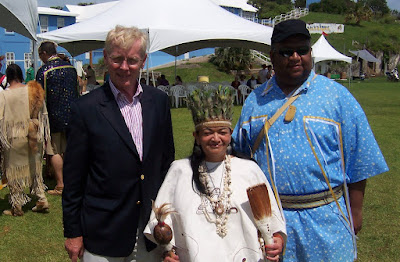
During her time as a liaison for the Confederation, she participated in many community and international gatherings. Karaira helped to organize the Taíno delegation to the 32nd Anniversary International Indian Treaty Council Conference hosted by the Independent Traditional Seminole Nation of Florida in 2006, was a UCTP delegate to the IITC's Guatemala Treaty Conference in 2008, and was the main delegate and a signatory on a treaty between the Confederation and the St. David's Indian Community of Bermuda in 2009. In 2016, Bibi Karaira represented the UCTP at the panel on Climate Change organized by the City of Hialeah.  

The Honorable Governor of Bermuda, Sir Richard Gozney, UCTP
Liaison Mildred Karaira Gandia, and Stephen Tucker, Chairman of the
St. David’s Islanders and Native Community in Bermuda, 2009. (UCTP Photo)

Bibi Karaira made her home in Miami, Florida with her family and was on extended medical leave from her liaison responsibilities from the UCTP. She continued to mentor and offer spiritual counseling to many. 

Behike Miguel Sobaoko Koromo Sague of the Caney Indigenous Spiritual Circle stated “The hupia (Spirits) have welcomed a new soul into their community of Koaibei, and even as we mourn the loss of this beautiful grandmother, we know that she will continue to guide and advise us from the spirit realm.”

Bibi Karaira blessing Behike Miguel Sague in 2017. 


Bibi Karaira is survived by her two sons, Jose Richard Cruz Gandia Jr. and Justin “Seiba” Ziegelasch Gandia and her husband Roland Ziegelasch.

UCTPTN 02/07/2022 

12/30/2021

Taíno Confederation calls for Investigation into Archeological Site Destruction

Luquillo, Borikén (Puerto Rico) – In a recent communication to the Puerto Rican Institute of Culture, the United Confederation of Taíno People (UCTP) called for an investigation to determine the damage to an Indigenous archeological site in Luquillo. The UCTP was made aware of the issue after a video report made by advocate Eliezer Molina surfaced on social media. Molina’s video documents extensive damage to ancient pottery as a road was being made into the area's wetlands. 

In the communication to Nancy Santiago, Director, Archeological and Ethnohistory Program at the Puerto Rican Institute of Culture (ICP), the Confederation stated the site was “considered of significant cultural importance to Taíno Peoples and archeologically.” 

Upon initial inquiry, the UCTP has so far determined that the damage caused by heavy machinery is linked to developer Federico Stubbe. The construction is related to a proposed hotel tied to the Marriott company.

“The UCTP is calling on the Institute of Puerto Rican Culture and the government of Puerto Rico to implement the applicable laws for the protection of cultural patrimony in Puerto Rico and immediately halt the construction,” said R. Múkaro Agüeibaná Borrero, President, United Confederation of Taíno People. He continued, stating that “the Confederation is also calling for an in-depth cultural and environmental impact study, including an assessment of the damage, and of the legality of the construction permitting process.” 

The UCTP’s communication to the ICP also notes that what is occurring in Luquillo is a “recurring tragedy on the island as development projects are continuously fast-tracked” regardless of the damage to the archeological record or the concerns of Taíno Peoples. “UCTP representatives are in touch with and support local protests concerning the site. A group of concerned individuals have set up a camp near the area called Campamiento Cangrejo,” stated Tai Pelli, UCTP Human Rights and International Relations Officer. “They have also established a petition that the UCTP supports. 

Evidence shows that the archeological site is connected to wetlands that were protected for decades. The damage could be in violation of several laws including Puerto Rican Public Law 112, July 20th, 1988, which is supposed to protect archaeological sites. Additionally, the damage documented by Molina and others appears to violate U.S. Federal Laws including the Endangered Species Act and the Clean Water Act, Section 404, which is the primary vehicle for Federal regulation of activities that occur in wetlands.

For more information, contact oirrc@uctp.org

Confederación Taíno pide una Investigación sobre Destrucción de Sitio Arqueológico

Luquillo, Borikén (Puerto Rico) – En un comunicado reciente al Instituto de Cultura Puertorriqueña (ICP), la Confederación Unida del Pueblo Taíno, CUPT (UCTP, por sus siglas en inglés) pidió una investigación para que se determine el daño a un sitio arqueológico indígena en Luquillo. La CUPT fue alertada sobre el hecho a través de un video del defensor Eliezer Molina que surgió en las redes sociales. El video de Molina documenta daño extensivo de alfarería antigua, según se va construyendo una carretera hacia las áreas de humedales.

En la comunicación dirigida a la Sra. Nancy Santiago, Directora del Programa de Arqueología y Etnohistoria del ICP, la Confederación declaró que "considera este lugar como uno de gran importancia cultural para el Pueblo Taíno, como arqueológicamente."

Tras una investigación inicial, y hasta ahora, la CUPT ha identificado que el daño causado por equipo pesado está vinculado al desarrollador Federico Stubbe. La construcción está relacionada a un propuesto hotel vinculado a la compañía Marriott.

“La Confederación Unida del Pueblo Taíno hace un llamado al Instituto de Cultura Puertorriqueña y al gobierno de Puerto Rico a utilizar las leyes correspondientes para la protección del patrimonio cultural en Puerto Rico y a detener de inmediato la construcción”- dijo R. Múkaro Agüeibaná Borrero Presidente de la Confederación Unida del Pueblo Taíno. Seguidamente declaró que “la Confederación también está pidiendo a que se conduzca un estudio de impacto a profundidad incluyendo la evaluación de los daños ambientales y culturales así como la legalidad del proceso de permisología de dicha construcción.”

La comunicación de la CUPT al ICP también denota que lo que está ocurriendo en Luquillo es “una tragedia recurrente en la isla ya que los proyectos de desarrollo son continuamente acelerados por vía rápida” independientemente del daño al archivo arqueológico ni a las inquietudes del Pueblo Taíno.

“Representantes de la CUPT estamos en comunicación y apoyamos las protestas locales relacionadas con este lugar. Un grupo de ciudadanos ha establecido un campamento en el área, llamado Campamento Cangrejo.” indicó Tai Pelli, Oficial de Relaciones Internacionales y Derechos Humanos de la CUPT. “También se ha establecido una petición en línea la cual la CUPT apoya.” 

La evidencia demuestra que el sitio arqueológico está conectado a humedales que han sido protegidos por décadas. El daño pudiera estar en violación de varias leyes, incluyendo la ley Pública PR 112 del 20 de julio de 1988, la cual se supone proteja los sitios arqueológicos. Por otra parte, el daño documentado por Molina y otros aparenta violar leyes federales de E.E.U.U. incluyendo la Ley sobre Especies Amenazadas y la Ley de Agua Limpia, sección 404, la cual es la medida primordial de la regulación federal sobre algunas de las actividades que ocurren en los humedales. 

Para obtener más información, communíquese con oirrc@uctp.org

12/04/2021

Indigenous Mona Island Rock Art Dated By Researchers

Photo courtesy of University of Leicester

Mona Island (UCTP Taíno News) - Researchers documented pre-Hispanic rock art in a vast cave system on Mona. According to Hannah Osbourne at Newsweek, the works date back to at least the 13th century. The research was published in the Journal of Archaeological Science. The study includes the first dates for the rock art and speculative interpretations of some of the thousands of drawings and etchings found in the island’s 30 cave systems. Mona is the third-largest island of the Puerto Rican archipelago, after the main island of Borikén (Puerto Rico) and Bieke (Vieques).

UCTPTN 12/04/2021