Showing posts with label Dominican Republic. Show all posts

3/16/2011

Earthquake of the Coast of Kiskeia and Boriken


UCTP Taino News - At 9:43 AM Atlantic Standard Time on March 16, an earthquake with preliminary magnitude 5.4 occurred of the coast of the Kiskeia (Dominican Republic), 80 miles/129 Km northwest of Mayaguez, Borikén (Puerto Rico) . The magnitude is such that a tsunami will not be generated. The location and magnitude are based on preliminary information. Further information will be issued by the United States Geological Survey or the Puerto Rico Seismic Network.

UCTPTN 03.16.2011

7/21/2010

Divers find ancient monkey fossil

Scientists have examined fossilised remains of a tiny, extinct monkey that were retrieved from an underwater cave in the Dominican Republic.

Dominican Republic - The researchers believe the fossil to be around 3,000 years old, but say the species itself could be very ancient.

This reveals clues about the origin of primates in the region.


It also suggests that many ecologically valuable treasures could be discovered by the unusual field of "underwater palaeontology".

Dr Alfred Rosenberger from Brooklyn College in New York, US, led the examination of the creature's bones, the results of which were published in the Royal Society journal Proceedings B.

He explained that the bones, which included a skull that was almost complete, were found by a team of scuba divers who were exploring an underwater cave in the area.

"It's miraculous that they even saw it," he told BBC News.


"When they discovered it, they were fearful the bones were exposed, so they moved the material to a little nook to protect it."

Having sought official permission to remove the fossil from the cave, Dr Rosenberger returned to with the scuba divers to retrieve it in October of last year.

The divers packed the skeleton into tupperware boxes in order to bring it safely to the surface.


'Stout little monkey'


Dr Rosenberger said the monkey - only the second specimen of the species Antillothrix bernensis ever found - probably measured about 30cm (12in) from head to toe.

But the shape of the legs came as a surprise.


"Its femur or thigh bone was very thick. So it had sort of stout legs, which is something we didn't expect.


"We don't really have any living examples of New World monkeys that have stout legs like that."

Dr Rosenberger thinks the creature went extinct relatively recently.

He said that it may have behaved similarly to a koala - clinging to the trunks of trees, rather than leaping from branch to branch.

"That's a very rough analogy, he said.
"But there's something very interesting about the ecological niche it inhabited."

The fossil also adds to evidence that there were several lineages of primates in the Caribbean, instead of one ancestor that moved into the region millions of years ago from which all modern species evolved.


Dr Rosenberger said it was likely that several species travelled "over the water" to inhabit the island of Hispaniola.

"And even though these particular bones might be relatively young, we're pretty sure that the arrival of these animals occurred well over 10 million years ago.

"That's an exciting part of the story - if you compare the dental remains of our monkey to other fossils that we know of, we see strong similarities with Patagonian fossils that are around 15 million years old."

Dr Sam Turvey, a researcher from the Zoological Society of London in the UK, said the discovery emphasised how much we still had to learn about the "original mammal fauna" of the Caribbean.


"It's now possible to reconstruct what this mysterious animal looked like and how it evolved," he said.

"The Caribbean islands have experienced the world's highest level of mammalian extinction over the past 10,000 years.

"With this improved knowledge of a recently extinct species, it might be possible to understand what caused it to disappear from Hispaniola."

Author: Victoria Gill
Source: BBC News

4/22/2009

International Mother Earth Day Adopted at the United Nations

Celebrating the adoption of International Mother Earth Day at United Nations Headquarters, Tonya Gonnella Frichner, Josephine Tarrant, Muriel Borst, and Roberto Borrero. (Photo: Miguel Ibanez, Habitat Pro)

UNITED NATIONS (UCTP Taino News) --
In a resolution adopted Wednesday, the United Nations General Assembly officially designated April 22nd as International Mother Earth Day. The assembly recognized that “Mother Earth” is a common expression for the planet earth in a number of countries and regions, and invited all member states, international and regional organizations and civil society to observe the day annually.

Acting in consensus, the assembly proclaimed that the “Earth and its ecosystems are our home” and stressed that in order to achieve a just balance economically, socially, and environmentally it is necessary to promote “harmony with nature and Earth.”

In a special event celebrating the adoption of International Mother Earth Day, the gathering was called to order with the sounding of the Guamo (conch shell) by Roberto Borrero, a Boriken Taino representing the United Confederation of Taino People. The call to order was followed by a welcome address on behalf of the Onondaga Nation presented by Tonya Gonnella Frichner, the North American Regional Representative to the United Nations Permanent Forum on Indigenous Issues.

In his presentation at the event, United Nations General Assembly President Miguel D'Escoto Brockmann thanked President Evo Morales Ayma of the Plurinational State of Bolivia for initiating International Mother Earth Day and for attending the meeting. He noted that President Morales has “proven himself to be fully committed to the transmission of the great spiritual and moral values of our South and Central American and Caribbean ancestors.”

The 63rd GA president further noted that these “values are greatly need to help our world out of the neo-liberal quagmire of greed and social irresponsibility in which we find ourselves.”

Addressing the gathering, President Evo Morales Ayma who is of indigenous Aymara origin thanked all those who supported the Declaration and noted that western thought has long viewed the Earth as a commodity and not as a “living being that has rights”. President Morales also took the opportunity to request that those gathered support a call for the development of an additional declaration on the “Rights of Mother Earth.”

The event continued with a special performance by the Silver Cloud Singers, an intertribal Native American singing and dancing troupe and an expert panel including Leonardo Boff (Brazil), Tariq Banuri (UNDSA), Juanita Castano (UNEP), Thanh Xuan Nguyen (WEDO), Jan McAlpine (UNFFS), and Maude Barlow (Canada).

The International Mother Earth Day resolution was co-sponsored by 50 states, including several Caribbean countries - Antigua and Barbuda, Barbados, Cuba, Dominica, Dominican Republic, Haiti, and Saint Lucia.

UCTPTN 04.22.2009

4/08/2009

Dominican ecologists vow to protect the mountains


SANTO DOMINGO. – Despite that Dominican Republic’s major rivers are born in the Cordillera Central (Central Mountain Range), and the Caribbean’s most extensive hydrographic system is in such a state of sustained deterioration, the public policies envision and citizens perceive it as something alien and distant.


For that reason, the environmental group Pro Cordillera Voluntary Society plans to collaborate with a campaign to rescue and to protect the Central Mountain Range.


In a statement, Pro Cordillera announced the start of the media campaign to make the citizens aware and to stir their feelings of identity and ownership of the mountains where the Yaque North and South, Yuna, Artibonito, Nizao, San Juan, Haina, Ocoa, Camú, among others rivers are born.


The Cordillera is the source of so many rivers, the Taino Indians dubbed it "Mother of the Waters."


Source: Dominican Today

3/04/2009

Surprising colonists of La Isabela

Burials excavated at the earliest European settlement in the New World, established by Christopher Columbus in 1493, have surprised archaeologists by including women and children. It had been thought from documentary evidence that the settlers had all been men.

La Isabela, on the north coast of Hispaniola, in what is now the Dominican Republic, was founded by Columbus, pictured below, late in 1493 on his second voyage. The camp at La Navidad, now in Haiti, established on his first voyage in 1492, had been abandoned by the time he got back, and he moved eastwards along the coast of Hispaniola until he found a suitable location for a permanent settlement.

Substantial traces of La Isabela survive, including Columbus's own house and the foundations of a church, all enclosed within a defensive wall. Next to the church, consecrated in January 1494, was a small cemetery in which the casualties of confrontation with the Taino were buried, together with those who had died of famine, diseases and exhaustion.

New excavations in the cemetery by a team of Dominican, Italian and Mexican archaeologists and biological anthropologists have recovered nearly 50 skeletons. What surprised the investigators was that the burials included at least five children of different ages, as well as four women.

One woman was clearly European, while a second seems to have been a Taino, because of her culturally shaped skull, modified by cradle-boarding in childhood. Metabolic diseases, broken teeth and physical stress due to heavy labour were noted in the skeletons, but there was no sign of syphilis or yaws: if any of the settlers had acquired such diseases, they had not yet progressed enough to show in the bones.

There was also no sign of battle wounds, suggesting that relations with the Taino had not produced early casualties.

DNA analyses and isotopic studies of diet are in progress, and the team hopes to find out whether Columbus's crew included Africans: recent studies in Mexico have shown a surprisingly early African presence in early burial grounds in Yucatán.

Author: Norman Hammond
Source: The Times Online

11/26/2008

Farmers ravage virgin forests in Dominican Southwest, El Dia reports

PEDENALES, Dominican Republic. - Thousands of hectares of the Sierra de Bahoruco National Park (southwest), in the area known as Los Brocosis, are being ravaged by farmers, with the Environment Ministry’s indifference, reports newspaper El Dia.

The farmers are lumbering virgin forests untouched even by the Taino Indians, said the biologist Nicolas Corona, who affirmed that more than protected area, the Bahoruco is becoming farmland. “Unfortunately the park is disappearing day by day, minute by minute. Right now they are cutting down thousands of tareas every year, and everything stays the same.”

Interviewed by newspaper El Dia, the scientist said farmers from the communities Pedernales, Las Mercedes, Aguas Negras and El Mogote participate in the activity, which he affirmed has already destroyed Bahoruco almost entire southwestern section, including Los Arroyos, Aguas Negras “and as rains erode the vegetal cover, those places no longer produce much, and so they destroy other places.”

After calling the practice a crime, Corona said 22 wildfires have occurred in the mountain range so far this year from farmers making clearings, especially in the higher part of Las Mercedes. “The farmers who are in Los Brocosis already depredated Los Arroyos, Las Mercedes, Aguas Negras, La Compañia, La Altagracia and Las Abejas.”

Source: Dominican Today

11/12/2008

Punta Cana Resort inaugurates Taino Underwater Park

Santo Domingo - The destination Punta Cana Resort & Club took the first step to create the Underwater Park Igneri / Taino, in Playa Bonita, with the laying of the first two sculptures of a total of 12 that will complete the exhibit.

The project is headed by the artist Thimo Pimentel, with the support of the Punta Cana Group's Ecological Foundation.

Source: Dominican Today

10/10/2008

New Study Confirms Taino Ancestry Among Dominicans

Dominican Republic (UCTP Taino News) - According to a new DNA study conducted in the Dominican Republic a large segment of the country’s population retains indigenous Taino ancestry through their mother’s bloodline. The study, conducted by the University of Puerto Rico, reveals that approximately 15-18% of Dominicans have Native American Mitochondrial DNA out of a population of nearly 10,000,000.

The research is based on 1200 DNA samples taken throughout the island with some test areas revealing 90% of the subjects with Native ancestry. While the percentages are lower than similar studies conducted on the neighboring island of Puerto Rico, the estimates defy “popular” accounts that the Indigenous Peoples were completely exterminated on that island.

“This study is a confirmation of what we have already known and promoted for years” stated Roberto Borrero, a representative of the United Confederation of Taino People. “Our people continue to exist within the multi-cultural mosaic that is the Caribbean despite the genocidal campaigns that began against us 516 years ago with the arrival of Columbus.”

One interesting aspect of the study is that individuals tested in the Cibao region seem to have a different DNA sequence than those tested in the southern part of the island. While both sequences are indigenous the variants could shed some light on ancient migrations. The study also reveals that the Taino descendants from the Cibao area could have been relatively “un-mixed racially” until more recent times.

UCTPTN 10.10.2008

8/07/2008

Scientist: World's smallest snake in Barbados


In this photo taken in 2006 and released on Sunday, Aug. 3, 2008, by U.S. scientist S. Blair Hedges, an evolutionary biologist at Penn State University, the globe's tiniest snake is shown curled up on a U.S. quarter. Hedges said Sunday he has discovered the globe's tiniest species of snake in the easternmost Caribbean island of Barbados, with full-grown adults typically less than four inches (10 centimeters) long. He named the diminutive snake 'Leptotyphlops carlae' after his herpetologist wife, Carla Ann Hass.
(AP Photo/Penn State University, S. Blair Hedges)


By DAVID McFADDEN, Associated Press Writer

SAN JUAN, Puerto Rico - A U.S. scientist said Sunday he has discovered the globe's tiniest species of snake in the easternmost Caribbean island of Barbados, with full-grown adults typically stretching less than 4 inches (10 centimeters) long.

S. Blair Hedges, an evolutionary biologist at Penn State University whose research teams also have discovered the world's tiniest lizard in the Dominican Republic and the smallest frog in Cuba, said the snake was found slithering beneath a rock near a patch of Barbadian forest.

Hedges said the tiny-title-holding snake, which is so diminutive it can curl up on a U.S. quarter, is the smallest of the roughly 3,100 known snake species. It will be introduced to the scientific world in the journal "Zootaxa" on Monday.

"New and interesting species are still being discovered on Caribbean islands, despite the very small amount of natural forests remaining," said Hedges, who christened the miniature brown snake "Leptotyphlops carlae" after his herpetologist wife, Carla Ann Hass.

The Barbadian snake apparently eats termites and insect larvae, but nothing is yet known of its ecology and behavior. Genetic tests identified the snake as a new species, according to Hedges. It is not venomous.

Zoologist Roy McDiarmid, curator of amphibians and reptiles at the Smithsonian's National Museum of Natural History in Washington, said he has seen a specimen of the diminutive creature. He saw no reason to argue with the assertion that it is the world's smallest snake.

McDiarmid said the Barbados creature is a type of thread snake, also called worm snake, which are mostly found in the tropics. "We really know very little about these things," he said in a Sunday telephone interview from his Virginia home.

Finding the globe's tiniest snake demonstrates the remarkable diversity of the ecologically delicate Caribbean. It also illustrates a fundamental ecological principle: Since Darwin's days, scientists have noticed that islands often are home to both oversized and miniaturized beasts.

Hedges said the world's smallest bird species, the bee hummingbird, can be found in Cuba. The globe's second-smallest snake lives in Martinique. At the other end of the scale, one of the largest swallowtail butterflies lives in Jamaica.

Scientists say islands often host odd-sized creatures because they're usually inhabited by a less diverse set of species than continents. So island beasts and insects often grow or shrink to fill ecological roles that otherwise would be filled by entirely different species.

6/20/2008

Museum Recognizes Caribbean Heritage


Photo: Several works by Arawak artist Foster Simon of Pakuri Territory in Guyana will be exhibited at the American Museum of Natural History’s Caribbean Festival.


New York, NY (UCTP Taino News) - The American Museum of Natural History will host a Caribbean Heritage Festival in recognition of the region’s cultural legacy and diversity on Sunday, June 22, 2008 from 12 noon – 5:00 p.m. The celebration will highlight the region's contributions and cultures through family friendly programs with guest presenters, performers and films. A Caribbean art display will be featured in the Museum’s Grand Gallery with artists representing Haiti, Jamaica, Trinidad, Guyana, Puerto Rico, and the Dominican Republic. Caribbean indigenous artists Aguilar Marrero and Reina Miranda of Taino Spirit as well as acclaimed Lokono Arawak artist Foster Simon of Guyana will have works exhibited. The program is presented in collaboration with the Haitian Centers Council, Inc. and is free with suggested Museum admission.

UCTPTN 06.20.2008

3/27/2008

Batu: The ancient game lives on


by: Jorge Estevez / Guest columnist


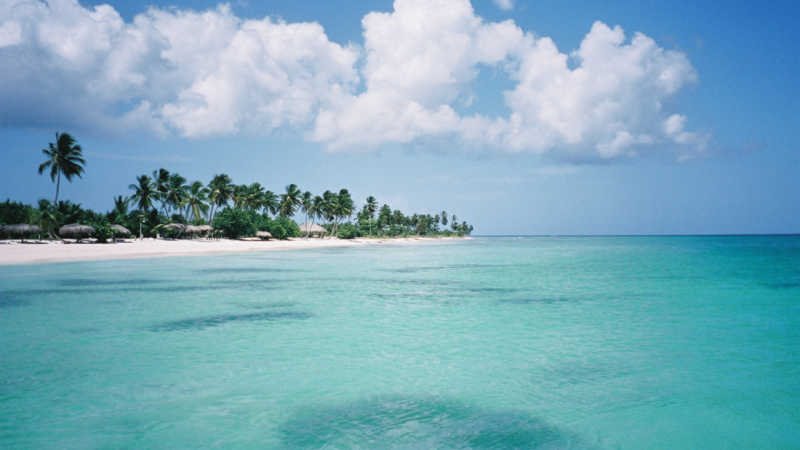
Imagine traveling back in time, 500 years to be exact, to the islands of the Caribbean. There you find beautiful sandy beaches with turquoise waters, palm trees, warm weather, soft winds and green mountainous landscapes.

In the distance, you hear the sounds of drums and maracas. You follow the pulsating music and reach the outskirts of a village. The people you meet are moving about excitedly in preparation for a ball game they call batu.

The game is played in a rectangular playing field called a batey. The batey is surrounded by huge stone slabs with carvings that bear a semblance to those found in other regions of the Americas, yet these are distinctly unique to the Caribbean. Two teams of players enter the batey. The teams have come together from different communities - perhaps to cement their political or social bonds, or just simply for the love of the game.

In any event, these games are central in the Taino social structure. The villagers begin praying and chanting to Koromo, Achinao, Rakuno and Sobaoko, the four directions. The rules of the game have long been established, but the players are reminded once again that one cannot touch the ball with their hands or feet. Only hips, elbows, shoulders and head are allowed. A heavy rubber ball is tossed in the center ... and the game begins.

After contact with the Spaniards in 1492, the Taino Indians of the Caribbean were enslaved and prohibited from continuing this ancient tradition. Just as our North American cousins who were forced into boarding schools, our people were forced into missions by the Catholic priests. Our Native customs and traditions were subsequently denied to us. Hence, our ancestors were unable to continue playing.

How and why we competed was gradually forgotten. Only in historical records do we find descriptions of how this Native sport was played. Today, archaeologists are continually finding remnants of these playing fields.

Huge bateys have been found in Kiskeya (Dominican Republic), Haiti and a few of the lesser Antilles. But the island of Boriken (Puerto Rico) has yielded the highest number of bateys found to date. It is quite possible that the most important tournaments were held on this island.

In addition to playing fields, stone collars carved with motifs of religious significance have also been excavated. Batu and ulama (ball game played by the Mexica Indians of Mexico) and other similar games were played throughout Mesoamerica before the arrival of the Europeans.

One would assume that these Native games were lost forever, but like a phoenix rising from the ashes, the descendants of the first people to meet Columbus are reviving the game. In fact this revival has been going for quite sometime.

The southwest region of the island of Kiskeya bears a striking resemblance to the southwest United States. The area is mostly arid desert with a great deal of the flora consisting of cayuco and guazabara, both cacti. Many people of Taino descent live in this area.

In 1969, Aristides Estrada Torres, Danilo Perez, brothers; Ica and Rhadames Perez, and others formed a cultural group called Grupo Marcos. The group was concerned that our Taino cultural heritage was being neglected not just by academics, but by our own people as well. This group dedicated itself to the rescue of all aspects of Taino cultural continuities and the revival of others. In time, its main focus became the resurrection of the batu game.

Grupo Marcos became the inspiration for the creation of three additional groups: Batey Athene, Batey Azua and Batey Cubatay. With new leaders, renewed energy and total dedication, the groups used historical sources to reconstruct the ancient game of batu. Although individual members have different foci, the main objective remains the same - the games complete revival.

At first, the players would simply form a circle in the town square when they played. Playing mainly for fun, they started attracting huge crowds of tourists who visit the region each year. Soon, other people from the region wanted to join and play as well. As the numbers grew, so did the skill level. According to Rannel Baez, the main purpose of the game is to keep the ball suspended in the air. Every player must hit the ball to the opposing team. If a player fails to hit the ball or keep it in the air, he is automatically eliminated. Women play as well, sometimes challenging the men, but they are allowed to use sticks. Needless to say, the women always win. Spectators can bet on the game. The betting is called chuke'-chuke'.

In time, the individual groups evolved into leagues. Within each league are approximately four teams that play against each other. Each team has up to 40 members. As of this writing, the various leagues have not yet played against each other; however, they do collaborate as the game continues to grow in popularity. With each success, a greater ambitious endeavor began to materialize: playing the game at a national level and in schools throughout the country.

Like any other sport, strength and physical endurance must be maintained. The groups now have physical trainers. Roberto Brito, a physical education teacher who works for the regional Secretary of Education, trains the Batey Athene group and has been especially active in the revival efforts in Azua. Other Batey Athene trainers include Luis Pujols, Luis Vargas, Bayardo Ortiz and Hector Ortiz. Salvador Ubaez trains the members of Batey Azua, and Starling Diaz and Baez train the members of Batey Cubatay. Members hope to one day play in Mexico, where the game of ulama has been revived as well.

Batey Athene has traveled to the United States and Puerto Rico to play. Batey Athene has played with Taino players in Puerto Rico who are reviving the game as well. In fact, throughout the entire Caribbean region, a substantial Taino revitalization movement is spreading like wildfire. ''We will no longer tolerate the popular viewpoint of our ancestors' supposed extinction and the demise of our culture,'' said Baez of Batey Cubatey. Whether in isolated Native communities in Cuba or on the streets of San Juan or New York City, the descendants of the Classic Taino are making a stand.

Brito said, ''Our main goal is to rescue and spread the truth about our origins and our autonomous culture in the hope that our younger generations will learn through our Native sport that our ancestors were a great people. That we carry strong cultural elements passed down to us from the time of our ancestors - and no matter how hard certain people tried to erase this magnificent past, they were unable to do so.''

A warm breeze carries the aromas of ancient traditional cuisine such as chen-chen (corn cake) and casabe (yuca bread). There are women selling mabi and cacheo (traditional Native beverages). The sounds of wooden drums and maracas pulsate through the air.

Two teams of young men have made their way into the circle. A man enters and prays to the four directions. The rules of the game are established. A rubber ball is tossed in the air and the game begins. This scene is taking place in the here and now, not in the distant past. The batu game has been revived, hopefully never to disappear again.

Photos courtesy Rannel Baez -- The ball game called batu is central in the Taino social structure. The game is played in a rectangular playing field called a batey. The players cannot touch the ball with their hands or feet. Only hips, elbows, shoulders and head are allowed. (Bottom) The villagers pray and chant to Koromo, Achinao, Rakuno and Sobaoko, the four directions, before beginning the game of batu.

Story Source: Indian Country Today

===============================

UCTP Taino News Editor's Note:
See Related Story - "Batu is a Taino Ball Game" at
http://taino-facts.blogspot.com/2007/04/batu-is-taino-ball-game.html

2/29/2008

Caribbean Conservation: A WHALE OF A STORY

Filed Under: On Assignment
By AJ Goodwin, NBC News producer

SILVER BANKS, Caribbean Sea – Tail slapping, fin slapping, breaching, surfacing to breathe and diving again, it’s an incredible show of nature.

We are shooting a story on humpback whales, which will air on the Today Show and other NBC News outlets in the coming weeks.

To capture video of the whales in their natural habitat, we have come to the Silver Banks, a 40 square mile area about 80 miles off the coast of the Dominican Republic.

We’ve been out here for two days and at any time of the day, if you look out from the ships’ deck, the view is spotted with whales.

Ideal spot

This section of the Caribbean Sea, due to the incredible number of coral heads sprinkled throughout it, receives no through boat traffic. A couple of wrecked boats dotting the area demonstrate why any boat captain would give the Silver Banks a wide berth.

The absence of boat traffic, and waters too shallow for killer whales, creates an ideal spot for mating and calving humpback whales. In fact, at this of year, this area has the largest concentration of humpbacks anywhere in the world.

Atlantic humpbacks migrate to this area from their summer feeding grounds in the North Atlantic – in areas like Maine and Newfoundland. They are known to congregate in several areas in the Caribbean at this time of year, but the Silver Banks has the greatest concentration of whales.

Power of conservation efforts

It’s also an incredible show of what a little conservation can do. By the 1950’s, whales had been nearly hunted to extinction. So in the 1960’s the International Whaling Commission was formed, and banned hunting a number of endangered whale species – including the humpback. And the humpbacks have made an incredible comeback.

The Silver Banks are controlled by the Dominican Republic, and to its credi, the government has made it a conservation area. That means no long line or net fishing, and only a small number of private boats are allowed in the area by permit.

We are on one of those boats. We came here to meet a man named Tom Conlin. Eighteen years ago, he decided that he wanted to get people in the water with whales.

Now for the official "Don’t Try This At Home" warning: It is discouraged, and in some places I believe against the law, to chase down a whale and swim with it. But Conlin has spent nearly two decades perfecting a technique he calls "soft in-water encounters." The idea is to slowly approach a whale in a boat moving at very low speeds, so that the whale can get used to the boat, then, if the whale appears willing and doesn’t turn away, letting people quietly slip into the water and float with snorkel gear near the giant sea mammal.

Close up view of nature

Today we had a moment – actually two hours – that just blew everyone away. A mother humpback and calf allowed a group of about 13 awe-struck whale watchers to observe and follow them all afternoon.

I could see the characteristic grooves in the humpback’s head. A couple of times I looked her in the eye. The baby would hide under the mother’s tail, then pop up for air and return to roll around the mother. To say the whale is huge, a marvel of nature when it glides through the water, is an understatement.

It’s amazing to see the details of the humpback’s prehistoric head, followed by a body the size of a submarine. A "baby" probably less than a month old, is tiny compared to the mother, but it dwarfed the humans watching it. I’m not sure there are words for it. We’ll post pictures and video on msnbc.com when we return.

To think man almost hunted these gentle giants to extinction once, and there are those who would like to hunt them again, and then watch that mother and calf glide through the water, allowing all of us to watch in admiration, will make a conservationist out of just about anyone.

Conlin says part of the reason he wanted to introduce people to whales in this way was so that when they have the opportunity to contribute, to helping them, they will do so. I’d say its working.

==========================

Source http://worldblog.msnbc.msn.com/archive/2008/02/28/712961.aspx

Story posted by Miguel Sague, sobaokokoromo2@yahoogroups. com

12/13/2007

Pirates of the Caribbean Resurface


Dominican Republic (UCTP Taino News) - The wreckage of the infamous Captain Kidd's abandoned pirate ship has been found in shallow waters off the Dominican Republic, a research team claims.

An underwater archeology team from Indian University (IU) reports that the remains of the Quedagh Merchant was just 70 feet off the coast of Catalina Island in less than 10 feet of seawater.

The IU team has been licensed by the Dominican Republic's Oficina Nacional De Patrimonio Cultural Subacuático (ONPCS) to study the wreckage and convert the site into an underwater preserve for the public. One of the main concerns now is keeping the site safe from looting.

According to a Indian University press release, the IU team has worked closely with ONPCS for 11 years conducting underwater and land-based archaeological research related to the era when the Old World and New World first collided. Much of their work is focused in the area of La Isabela Bay, the site of the first permanent Spanish settlement established by Christopher Columbus.

The IU team suggests that this recent find continues their work documenting the "age of discovery to the golden age of piracy", as well as the transformation of both the indigenous Taino and introduced cultures of the Caribbean. The Taino were the first indigenous people to interact with Europeans in this region of the world.

Image: William "Captin" Kidd

UCTPTN 12.13.2007

12/12/2007

Tropical storm flooding kills 9 in Caribbean


By Manuel Jimenez

SANTO DOMINGO, Dominican Republic (Reuters) - Flash flooding from Tropical Storm Olga's torrential rains killed at least eight people in the Dominican Republic and forced tens of thousands out of their homes, government officials said on Wednesday.

The storm weakened on Wednesday to a tropical depression after it exited Hispaniola, the island shared by Haiti and the Dominican Republic. But flooding remained a deadly threat as the remnants of Olga moved west across the Caribbean, forecasters at the U.S. National Hurricane Center in Miami said.

By late afternoon, Olga was just a broad mass of thunderstorms centered 65 miles north of Kingston, Jamaica. It was moving rapidly west on a course that would keep the center south of Cuba and take it over Mexico's Yucatan Peninsula by Saturday.

Olga's top sustained winds dropped to 35 mph (55 kph), below the threshold to be called a tropical storm, and forecasters expected it to dissipate further on Thursday.


Photo: Subtropical storm Olga is seen in the Caribbean in a satellite image taken December 11, 2007. (NOAA/Handout/Reuters)

11/24/2007

Noel’s Devastation Still Affecting Caribbean


UCTP Taino News – Last month, Tropical Storm Noel devastated parts of the Dominican Republic, Haiti, Cuba, and the Bahamas, with incessant rains and massive flooding that took the lives of several dozen people and destroyed thousands of homes, crops and infrastructure. According to preliminary assessments conducted by the U.N. and other international agencies, the Dominican Republic was the hardest hit, with close to 85 persons dead, 48 missing, and an estimated 66,568 displaced.

Catholic Relief Services (CRS) reports that as a result of the storm the potential for an outbreak of dengue fever in the Dominican Republic is high. Mosquito nets and water purification and collection material are critical focus of relief work. As of November 15th CRS also reported that many roads are still impassible in the Dominican Republic and Haiti and communication infrastructure is severely damaged “leaving thousands stranded.”

The organization - CRS - has committed $500,000 dollars to the relief effort and is seeking additional donations at http://crs.org/haiti/noel-floods/

Photo: The Madre Vieja Bridge over the Nigua River in San Cristóbal, Dominican Republic. Photo by José Luis Guigni/CRS

5/16/2007

Two-Week Session on Indigenous Issues Opens at United Nations

New York, NY (UCTP News) - As delicate ecosystems supporting millions of lives hang in the balance, indigenous representatives from around the globe began a two-week session of discussions on Monday, May 14 with top United Nations officials, Government representatives and members of civil society to highlight the struggle to defend their rights to access and use the land and natural resources in their territories.

The sixth session was opened with an invocation from Tracy L. Shenandoah, Chief of the Onondaga Nation, Eel Clan. Acknowledging “red willow” as the leader of medicines, Shenadoah said the “ the Creator had planted medicines, including berries, for people to use." He also gave thanks to the birds, especially the eagle, and to the “three sisters of all foods: corn, beans and squash.” Shenandoah also gave thanks to the waters for their help in creating peace. His statement was followed by a performance by the Laihui cultural group from Manipur, India.

Victoria Tauli-Corpuz, Chairperson of the Permanent Forum on Indigenous Issues, addressed those gathered by stating “without access to and respect for the rights over their lands, territories and natural resources, indigenous peoples’ distinct cultures -- and the possibility of determining their on development -- become eroded.”

Highlighting new developments, Tauli-Corpuz stated that one of the major thrusts for 2007 would be to press for the General Assembly’s adoption of the United Nations Declaration on the Rights of Indigenous Peoples, approved by the Human Rights Council last year. Indigenous peoples worldwide had been “deeply disappointed” by the Assembly’s decision to defer action on the Declaration last year. Noting that amendments had been made to the text in the meantime, she said that every effort should be made to ensure that what was put before the Assembly was the Council-approved version, not one “which mangled the Declaration beyond recognition.” “The fate of this Declaration is in your hands and the Governments who are here today,” she said.

Among the many expert presentations and reports by representatives on United Nations agencies and Funds, Erica-Irene A. Daes, of Greece, an elected member of the Working Group on Indigenous Populations and Special Rapporteur on Indigenous People’s Land Rights, said one of the most acute and complex situations facing the world’s indigenous peoples was the refusal by certain Governments to promote and protect their rights to land and natural resources. To understand the profound relationship of indigenous peoples to their lands and natural resources, cultural differences between indigenous and non-indigenous peoples should be recognized.

The doctrines of dispossession that had emerged in developing modern international law, particularly the concepts of “terra nullius” and “discovery”, had well-known adverse effects on indigenous peoples, she continued. Other problems included the State’s failure to acknowledge indigenous rights to territories lands and resources; to demarcate indigenous lands; to enforce or implement laws protecting indigenous lands; and the State’s expropriation of indigenous lands for national interest without the prior and informed consent of indigenous peoples. Also, the principle of permanent sovereignty over natural resources and the scope of indigenous peoples’ right to own, develop and manage their territories, lands and resources, should be reviewed, she added.

Among the participants attending the meeting, Chief Reginaldo Fredericks of the Joboshirima Lokono Arawak Community of Venezuela noted the importance of meeting stating “it is critical for us as Indigenous Peoples to follow-up on the recommendations made and report on these activities to our peoples.”

Chief Fredericks is a member of the Indigenous Peoples Caucus of the Greater Caribbean, which forms annually at the UN meeting to lobby Caribbean indigenous issues.

Caribbean indigenous delegates also participated along with indigenous representatives of other regions at a rally in support of the Declaration on the Rights of Indigenous Peoples. Speaking on behalf of indigenous leaders from Puerto Rico, Dominican Republic, Dominica, Trinidad, Guyana, Venezuela, and Barbados, UCTP President and Chairman Roberto Mucaro Borrero reaffirmed their support of the Declaration as adopted by the Human Rights Council in June 2006.

Also in attendance at the session, Taino artists John Marrero and Reina Miranda joined UCTP delegates Mildred Gandia and Borrero at the opening of the special art exhibition, which would run through the Forum. Selected works of Marrero and Miranda were on display along with various works of Lokono and Taino artists: George Simon, Mildred Torres-Speeg and Naniki Reyes Ocasio.

The Forum’s sixth session will run through 25 May and will consider solutions to end the senseless exploitation of traditional lands and natural resources, a key issue at the heart of indigenous people’s efforts to gain recognition of their rights.


UCTP delegates at the UN, (from left to right) Reina Miranda,
Roberto Borrero, Mainaku Borrero, John Marrero,
and Mildred Gandia. (UCTP Photo)

3/23/2007

Even the Government Devestates DR's Protected Areas


SANTO DOMINGO - In recent days heavy equipment of the Government’s Public Works Ministry has caused considerable ecological damage in the National Park of the East, to build a vehicular access of some two kilometers, where environmentalists denounced the destruction of forest areas.

According to the newspaper Hoy, a trail is being blazed in the forest in order clear a swath until the zone known as La Palmilla, in that National Park and it is fact not the first assault on that natural area located the island’s southeastern tip, some 165 kilometers from this capital, reports Hoy.

The first of those attempted invasions disguised as legal took place in the 1990s, when a French designer firm tried to “lease” Isla Saona from the Dominican Government, to build a resort which would have included several hotels in one of the Park’s most coveted zones.

The second assault took place in 1998, when a large portion of Catalinita Island –in the middle of the straits of Catuano- was occupied and a trail of some 600 meters was opened in the islet which is less than one kilometer in length.

The one recently is the 3rd occurrence of devastation against the National Park of the East, and each one of them destroys a part of the ecological reserve’s natural and cultural heritage.
The first incursion ravaged a lagoon, inhabited by an important variety of aquatic birds and various types of mangroves. It also destroyed a large Taino Indian settlement, where thousands of pieces of earthenware were visible.

The incursion into Catalinita Island eliminated from 15 to 20 percent of its vegetation, considered a bonsai forest given the aspect and age of its plants. The damage to the fauna has never been tallied.

This third invasion threatens to be of most destructive, because to reach La Palmilla it will be necessary to destroy several square kilometers of forest, whereas the archaeological damage could still not be estimated because of the lack of studies of that zone.

But it is known that the area of La Palmilla was a point of entry to the sea of a native establishment near the coast, the experts say.

3/02/2007

CLIMATE CHANGE:Latin America Failing to Adapt

By Diego Cavallos

MEXICO CITY (IPS) - Latin America and the Caribbean are not prepared to confront the problem of global warming, to which the region is contributing with growing emissions of greenhouses gases, says a new report by the United Nations Environment Programme (UNEP).

According to the report, "Climate Change in Latin America and the Caribbean 2006", there is a "Lack of informationàregarding how to approach adaptation" to the phenomenon, "Uncertainty regarding the interaction between climate change and other pressures," a "Short-term planning horizon," and a "Lack of mechanisms for public participation."

"The region has made great progress in terms of civil defence measures to deal with the disasters arising from climate change, but it has not done so in the area of adaptation," Ricardo Sánchez, UNEP regional director for Latin America and the Caribbean, told IPS.

Global warming is caused by greenhouse gases, which are mainly produced by the burning of fossil fuels.

In this region, the impact of climate change is seen in the growing intensity and frequency of hurricanes in the Caribbean, changes in rainfall patterns, increased water levels in rivers in Argentina and Brazil, and the shrinking of glaciers in the extreme southern region of Patagonia and the Andes mountains.

The report, drawn up by UNEP and Mexico's ministry of the environment and natural resources, warns that in the countries of Latin America and the Caribbean there is "Limited non-technical knowledge (economic, legal, institutional) for adaptation" and "Limited knowledge of tools and procedures for evaluating adaptation performance."

In the future, "climate change will increasingly be a development problem" in the region, which is already suffering economic and human losses as a result of the phenomenon, the study warns.

"Climate change is no longer science fiction, it is already hitting us, and for now it is inevitable," said Sánchez.

In October 2005, Hurricane Stan tore through several Central American countries, hitting Guatemala and El Salvador especially hard, and causing at least 1,620 deaths. Just two months earlier, Hurricane Katrina caused severe damages in the southern United States, becoming one of the most devastating hurricanes in recent U.S. history.

And in 1998, Hurricane Mitch left a death toll of around 1.2 million and material losses of 8.5 billion dollars -- more than the combined gross domestic product of Honduras and Nicaragua, the countries that bore the brunt of the storm's fury.

Other disasters were Hurricane George, which slammed into the Dominican Republic in 1998, claiming 235 lives, and Hurricane Ivan which left over 100 dead in Barbados, Trinidad and Tobago, Saint Vincent and the Grenadines, Grenada, Jamaica, Cuba and the United States in 2004.

Although emergency measures to prepare for and mitigate the impacts of hurricanes have improved, global adaptation mechanisms are also needed, including long-term plans, funding, development of alternative energy sources, and a concerted effort to fight poverty and deforestation, said Sánchez.

While the report points out that compared to industrialised countries, this region contributes relatively little to the phenomenon of climate change, it warns that its share of global greenhouse gases is growing, from seven percent in 2000 to a projected nine percent in 2050.

The study also expresses concern that CO2 emissions in the region were 75 percent higher in 2004 than in 1980.

Just over 70 percent of greenhouse gas emissions come from Brazil, Mexico, Venezuela and Argentina, it adds.

UNEP says these emissions are barely counteracted by investments and renewable energy projects, while poverty and deforestation continue to increase vulnerability to climate change.

The highest deforestation rates in the region are seen in small Caribbean nations like St. Lucia and Haiti. In Central America, meanwhile, deforestation rates range from 4.6 percent in El Salvador to 0.8 percent in Costa Rica.

In South America, the highest deforestation rates are seen in Ecuador, "which faces strong population pressure," and Argentina, where the expanding agricultural frontier continues to encroach on the country's forests.

Although Brazil, which accounts for 56 percent of the region's forests, no longer has the worst deforestation problem, the report notes that logging activity in the Brazilian Amazon jungle region increased 32 percent in the last decade, from 14,000 to more than 18,000 square kilometres a year.

The report also mentions the region's "very serious social problems in relation to inequality and poverty," and says "many difficulties stand in the way of finding development patterns that will lead to sustainability capable of meeting the social and environmental challenges for present and future generations."

In the region, the richest 10 percent of the population has 35 percent of the income, while the poorest 40 percent has just 10 percent.

"These indicators have remained stable in most of the countries despite the improvements in economic performance and, except for a few cases, in spite of the predominant social development policies," the study says.

"The failures in adaptation and vulnerability increased as a result of poverty, the degradation of natural resources, the lack of land-use planning and the lack of a significant plan prepared to counteract the damage cause by climate-related disasters," it adds. (END)

*The material in this post is distributed without profit to those who have expressed a prior interest in receiving the included information for research and educational purposes. For more information go to: http://www4.law.cornell.edu/uscode/17/107.html
http://oregon.uoregon.edu/~csundt/documents.htm If you wish to use copyrighted material from this email for purposes that go beyond 'fair use', you must obtain permission from the copyright owner.

2/08/2007

Taino is Nominated for UNPFII Membership 2008-2010

New York, NY (UCTP News) - The Secretariat for the United Nations Permanent Forum on Indigenous Issues (UNPFII) has received over 35 nominations from indigenous organizations for UNPFII membership for the period 2008-2010. The deadline for nominations was 1 February 2007 deadline.

New UNPFII members will be appointed by the President of ECOSOC towards the end of April 2007. Further information will be posted at the Forum's web page as it becomes available.

Nominations for UNPFII members for Central and South America and the Caribbean include Mr. Roberto Mucaro BORRERO (Taino), President and Chairman of the United Confederation of Taino People. Support for Mr. Borrero’s nomination was received from indigenous organizations from Puerto Rico, Dominica, Barbados, Venezuela, the Dominican Republic, and the United States.

The Permanent Forum is comprised of sixteen independent experts, functioning in their personal capacity, who serve for a term of three years as Members and may be re-elected or re-appointed for one additional term.

Eight of the Members are nominated by governments and eight are nominated directly by indigenous organizations in their regions.

1/30/2007

Caribbean Love Drink Launches In Time for Valentine's Day*

Today, Don Ramon Mamajuana announced the launch of it's Mamajuana liqueur drink mix in the U.S starting February 27th. This will be the first time that such a product from the Dominican Republic is available for the U.S. market starting.

Miami, Florida ( I-Newswire ), Jan 30, 2007 - Dominican herbal liqueur mix manufacturer; Don Ramon Mamajuana, Corp. has announced the official United States pre-launch of its Dominican love drink: Don Ramon Mamajuana( tm ), beginning February 14th, 2007. Considered a natural Aphrodisiac, this special blend of 20 roots, herbs, and spices native to the Dominican Republic has been used for centuries as a powerful vitality drink. Tourists and natives of the islands have enjoyed this secret drink for years.

Typically, the only way one can get a hold of an authentic bottle of Mamajuana is by traveling to the Dominican Republic. For the first time, it will now be available in the US.

This herbal aphrodisiac beverage first came into existence hundreds of years before Christopher Columbus arrived on the island of Hispaniola. It was initially discovered by Taino Indians who inhabited the island of the Caribbean region and utilized it for its vitality and health advantages.

Today, Mamajuana is considered by Dominican Republic natives as a National drink. It is referred to as; "The Baby Maker" and "The Male Member Enhancer's Drink"*.

Many of the natural ingredients found in Mamajuana are widely used today in western herbal supplements such as Chamomile, Star Anis, Anamú, Brazilwood, Cat's Claw (Uña de Gato) among many others.

Unlike many other traditional Mamajuana found on the islands, Don Ramon Mamajuana is specially prepared to comply with USDA and FDA regulations set for safety and cleanliness of product. Each bottle is tamper-proof sealed and includes mixing and preparation directions.

The official product launch will start this February 27th to commemorate Dominican Republic's Independence day. "We are thrilled that finally American consumers will now have the opportunity to benefit from the ability to enjoy this traditional and long-awaited product," said Ray Payano, 26 year old Co-founder and V.P. of the company. "Mamajuana is an exciting do-it-yourself beverage, that can be custom prepared by the consumer according to their taste preference" said Steve Zabielinsky, Co-founder and President.

Arriving just in time for Valentines Day, Don Ramon Mamajuana is the first product of its kind offering consumers a perfect passion liqueur mixer that will help set the mood for intimate moments and much more.

About Don Ramon Mamajuana, Corp.:

Throughout Canada, Europe, and all over the world, the herbal passion liqueur drink mix Mamajuana is recognized for its naturally vitalizing properties. Don Ramon Mamajuana Corp., headquartered in Miami, FL, offers this old-world product online and looks forward to making it available through local liquor stores, health food stores, ethnic food stores in the U.S.A, and various distinct retailers. Don Ramon Mamajuana, Corp. is also a producer and worldwide supplier of Mamajuana herbs direct to consumers.


Source: http://i-newswire.com/pr88398.html