Showing posts with label Latin America. Show all posts

3/12/2013

CARICOM SG: Chavez a true friend of Caribbean Community

CARICOM Secretariat, Turkeyen, Greater Georgetown, Guyana - Secretary-General of the Caribbean Community (CARICOM) Ambassador Irwin LaRocque has described the late President of Venezuela Hugo Chavez as a “true friend” of the Community.


In a message of condolence to the Government of Venezuela, the Secretary-General said that the late President Chavez, who died on Tuesday following a battle with cancer, “demonstrated solidarity with the Governments and People of the Caribbean Community throughout his tenure and created avenues for co-operation and strengthening relations with the Governments and improving the lives of the people.”


President Chavez with Jamaica Prime Minister Portia Simpson Miller
photo by Jamaica Gleaner


Following is the full text of the Secretary-General’s message:


“It is with deep sadness that the Caribbean Community has learnt of the passing of a true friend, His Excellency Hugo Chavez, President of the Bolivarian Republic of Venezuela.

President Chavez demonstrated solidarity with the Governments and People of the Caribbean Community throughout his tenure and created avenues for co-operation and strengthening relations with the Governments and improving the lives of the people.

His vision of bringing together the people of Latin America and the Caribbean was driven by his deep sense of concern for the well-being of the disadvantaged in society, not only in his own country but in the wider region.

His struggle with the disease that finally claimed his life epitomised the heart and spirit which he brought to bear in his attempts to raise the standard of living of the less fortunate in his homeland, in the Caribbean and the wider region.

I extend, on my own behalf and on that of the Caribbean Community, deepest condolences to the family of President Chavez and to the Government and People of Venezuela. I am confident that the strength and spirit of the Venezuelan people, so strikingly exemplified by President Chavez, will sustain the country in its time of grief.


May he rest in peace.”

7/09/2010

Special Committee decision concerning Puerto Rico

The Special Committee,

Bearing in mind the Declaration on the Granting of Independence to Colonial Countries and Peoples, contained in General Assembly resolution 1514 (XV) of 14 December 1960, as well as the resolutions and decisions of the Special Committee concerning Puerto Rico,

Considering that the period 1990-2000 was proclaimed by the General Assembly, in its resolution 43/47 of 22 November 1988, as the International Decade for the Eradication of Colonialism, and that by resolution 55/146 of 8 December 2000, the General Assembly declared the period 2001-2010 the Second International Decade for the Eradication of Colonialism,

Bearing in mind the 28 resolutions and decisions adopted by the Special Committee on the question of Puerto Rico, contained in the reports of the Special Committee to the General Assembly, in particular those adopted without a vote in recent years,

Recalling that 25 July 2010 marks the one hundred and twelfth anniversary of the intervention in Puerto Rico by the United States of America,

Noting with concern that despite the diverse initiatives taken by the political representatives of Puerto Rico and the United States in recent years, the process of decolonization of Puerto Rico, in compliance with General Assembly resolution 1514 (XV) and the resolutions and decisions of the Special Committee on Puerto Rico, has not yet been set in motion,

Stressing the urgent need for the United States to lay the groundwork for the full implementation of General Assembly resolution 1514 (XV) and the resolutions and decisions of the Special Committee concerning Puerto Rico,

Noting that the inter-agency Task Force on Puerto Rico’s Status designated by the President of the United States, which submitted its second report in December 2007, reaffirmed that Puerto Rico is a territory subject to United States congressional authority and that initiatives concerning Puerto Rico’s status have been subsequently presented to the Congress of the United States,

Also noting the “Panama Proclamation”, adopted by the Latin American and Caribbean Congress for the Independence of Puerto Rico, which was held in Panama from 17 to 19 November 2006 and attended by 33 political parties from 22 countries of the region, the conclusions of which were reaffirmed in Mexico City on 29 March 2008 at the meeting of the Standing Committee for Puerto Rican Independence; and the declaration of the Socialist International Committee for Latin America and the Caribbean, adopted at its meeting in Buenos Aires in April 2010, supporting a review of the case of Puerto Rico by the United Nations General Assembly,

Further noting the debate in Puerto Rico on the search for a procedure that would make it possible to launch the process of decolonization of Puerto Rico, and aware of the principle that any initiative for the solution of the political status of Puerto Rico should originate from the people of Puerto Rico,

Aware that Vieques Island, Puerto Rico, was used for over 60 years by the United States Marines to carry out military exercises, with negative consequences for the health of the population, the environment and the economic and social development of that Puerto Rican municipality,

Noting the consensus existing among the people and the Government of Puerto Rico on the necessity of ensuring the clean-up, decontamination and return to the people of Puerto Rico of all the territory previously used for military exercises and installations, and of using them for the social and economic development of Puerto Rico,

Also noting the complaints made by the inhabitants of Vieques Island regarding the continued bombing and the use of open burning for clean-up, which exacerbate the existing health problems and pollution and endanger civilian lives,

Further noting the consensus among the people of Puerto Rico in favour of the release of the Puerto Rican political prisoners, some of whom have been serving sentences in United States prisons for more than 29 years for cases related to the struggle for Puerto Rico’s independence,

Noting the concern of the people of Puerto Rico regarding violent actions, including repression and intimidation, against Puerto Rican independence fighters, including those that have recently come to light through documents declassified by federal agencies of the United States,

Also noting that in the final document of the Fifteenth Summit of the Non Aligned Movement, held in Sharm el-Sheikh, Egypt, from 11 to 16 July 2009, and at other meetings of the Movement, the right of the people of Puerto Rico to self-determination and independence is reaffirmed on the basis of General Assembly resolution 1514 (XV); the Government of the United States is urged to assume its responsibility to expedite a process that will allow the Puerto Rican people to fully exercise their inalienable right to self-determination and independence; the Government of the United States is urged to return the territory and occupied installations on Vieques Island and at the Roosevelt Roads Naval Station to the Puerto Rican people, who constitute a Latin American and Caribbean nation; and the General Assembly is urged to actively consider the question of Puerto Rico in all its aspects,

Having heard statements and testimonies representative of various viewpoints among the people of Puerto Rico and their social institutions,

Having considered the report of the Rapporteur of the Special Committee on the implementation of the resolutions concerning Puerto Rico,

1. Reaffirms the inalienable right of the people of Puerto Rico to self-determination and independence in conformity with General Assembly resolution 1514 (XV) and the applicability of the fundamental principles of that resolution to the question of Puerto Rico;

2. Reiterates that the Puerto Rican people constitute a Latin American and Caribbean nation that has its own unequivocal national identity;

3. Calls upon the Government of the United States of America to assume its responsibility to expedite a process that will allow the Puerto Rican people fully to exercise their inalienable right to self-determination and independence, in accordance and in full compliance with General Assembly resolution 1514 (XV) and the resolutions and decisions of the Special Committee concerning Puerto Rico;

4. Notes the broad support of eminent persons, governments and political forces in Latin America and the Caribbean for the independence of Puerto Rico;

5. Again notes the debate in Puerto Rico on the implementation of a mechanism that would ensure the full participation of representatives of all viewpoints prevailing in Puerto Rico, including a constitutional assembly on status with a basis in the decolonization alternatives recognized in international law, aware of the principle that any initiative for the solution of the political status of Puerto Rico should originate from the people of Puerto Rico;

6. Expresses serious concern regarding actions carried out against Puerto Rican independence fighters, and encourages the investigation of those actions with the necessary rigour and with the cooperation of the relevant authorities;

7. Requests the General Assembly to consider the question of Puerto Rico comprehensively in all its aspects;

8. Urges the Government of the United States, in line with the need to guarantee the Puerto Rican people their legitimate right to self-determination and the protection of their human rights, to complete the return of occupied land and installations on Vieques Island and in Ceiba to the people of Puerto Rico; respect fundamental human rights, such as the right to health and economic development; and expedite and cover the costs of the process of cleaning up and decontaminating the impact areas previously used in military exercises through means that do not continue to aggravate the serious consequences of its military activity for the health of the inhabitants of Vieques Island and the environment;

9. Requests the President of the United States of America to release Oscar López Rivera and Carlos Alberto Torres, who have been serving sentences in United States prisons for over 28 years, and Avelino González Claudio, all of whom are Puerto Rican political prisoners serving sentences in United States prisons for cases relating to the struggle for the independence of Puerto Rico;

10. Notes with satisfaction the report prepared by the Rapporteur of the Special Committee,1 in compliance with its resolution of 9 June 2008;

11. Requests the Rapporteur to report to the Special Committee in 2010 on the implementation of the present resolution;

12. Decides to keep the question of Puerto Rico under continuous review.

Source: United Nations

4/26/2010

House to Consider “Puerto Rico Democracy Act”

Bill would Set up Vote on Potential 51st State

WASHINGTON D.C. - This week (26-30 April) , the U.S. House of Representatives is expected to vote on H.R. 2499, the Puerto Rico Democracy Act. This bill would authorize a federally sanctioned plebiscite (vote) of the Puerto Rican people regarding their political future.

The bill mandates a two-step voting process. The first vote would allow the people of Puerto Rico to choose between selecting a “different political status” or maintaining their “present political status.” If the majority of the people vote in favor of a “different political status,” then a second vote would be held allowing people to choose between three options: independence, statehood, or a freely associated state. Puerto Rico is currently a territory of the United States and has “Commonwealth” status.

“There are some important factors that should be made clear and be carefully considered before Congress votes on this bill. While it is said that the outcome of the plebiscites are non-binding, the results could set the stage for future action as soon as next year – including a Congressional vote on statehood for Puerto Rico,” said House Natural Resources Committee Ranking Member Doc Hastings.

“Action towards potentially creating a 51st state is not a decision that Congress should make casually and has very serious implications for both the 50 existing states and the people of Puerto Rico. Congress needs to have an honest and forthright discussion of these issues. For example, under this bill, a majority vote is not required for statehood or independence to be declared the winner. There is also the question of a common language and Puerto Rico’s recognition of Spanish as an official language. In addition, if Puerto Rico were ever to became a state it could get six new members of the House of Representatives and cost billions of dollars per year in federal spending.

The people of Puerto Rico would also have to pay federal income tax on income earned on the island, which they currently don’t pay. As we approach this vote, I will be encouraging Members of Congress and the people of 50 states and Puerto Rico to educate themselves on the details of this bill and its potential implications.”

Source: US House of Representatives
Natural Resources Committee Republican Press Office

3/12/2008

LATIN AMERICA: Deforestation Still Winning


By Diego Cevallos*

MEXICO CITY (Tierramérica) - Never before have Latin America and the Caribbean fought so hard against deforestation, say experts and government officials, but logging in the region has increased to the point that it has the highest rate in the world.

Of every 100 hectares of forest lost worldwide between the years 2000 and 2005, nearly 65 were in Latin America and the Caribbean. In that period, the average annual rate was 4.7 million hectares lost -- 249,000 hectares more than the entire decade of the 1990s.

Deforestation remains difficult to deal with because there are many economic interests in play, according to Ricardo Sánchez, director for Latin America and the Caribbean of the United Nations Environment Programme (UNEP).

At their latest forum, held Jan. 30-Feb. 1 in Santo Domingo, the region's environment ministers received a limited-circulation report that reveals, among other matters, the failure of strategies against forest destruction.

The document, "Latin American and Caribbean Initiative for Sustainable Development - 5 Years After Its Adoption" (ILAC), evaluates the official commitments made by governments in 2002.

"There is action by governments against deforestation like never before, but we are seeing that it is not an easy task, because there is strong pressure from economic groups," Sánchez told Tierramérica.

Logging results in the loss of biodiversity and degradation of soils, as well as contributing to extreme climate phenomena, added the UNEP official.

Between 2000 and 2005, the proportion of total land surface covered by forests fell in the Mesoamerica region (southern Mexico and Central America) from 36.9 to 35.8 percent, and in South America from 48.4 to 47.2 percent. However, in the Caribbean it increased from 31.0 to 31.4 percent.

According to Mexican expert Enrique Provencio, author of the ILAC report, the principal cause of the increased pace of deforestation is the advance of the monoculture farming frontier, a phenomenon that did not carry as much weight in the 1990s.

"There was a rise in international prices of products like soybeans, which drove the occupation and clear-cutting of forested areas, especially in Bolivia, Brazil and Paraguay," Provencio told Tierramérica.

The ILAC report indicates that although forestry activity has maintained a positive performance in terms of improving productivity and advances in sustainable management and other practices, such as certification of sustainably harvested lumber, it has not prevented the loss of forests.

According to the study, in some countries the shrinking of forested areas continues to be associated with an increase in livestock-raising and the classic model of expanding pasture area by cutting down forests.

To combat deforestation, in recent years most governments have designed new monitoring and control mechanisms, with some even using the army to go after illegal loggers. Many countries have also passed laws that crack down hard on those who destroy forests.

Sánchez highlighted recent efforts, such as Argentina's passage in late 2007 of a Law on Forests following a campaign by environmentalists who collected 1.5 million signatures.

The new law stipulates that the authorities must draw up new forestry plans and that permits for logging will only be issued after the approval of an environmental impact study and the holding of public hearings.

Other positives the UNEP director has found in this environmental fight are the efforts of Brazil, which set up inter-ministerial mechanisms to deal with the question, and the creation in Chile and Peru of "super-agencies" against deforestation.

But the problem persists. "This shows that we continue to be economies dependent on the intensive use of natural resources and that the growing demand for food and other products has fuelled an advance of the agricultural frontier," said Sánchez.

Provencio, former director of the Mexican government's National Ecology Institute, believes it is too soon to know whether the deforestation rate will remain high in the coming years, but pointed to initiatives under way that could halt or even reverse it.

There are forestry defence and reforestation efforts that have been highly successful in Costa Rica, Cuba, Santa Lucia and Uruguay, he said. In contrast, "the situation in Brazil’s Amazon region is of great concern, and that could have an impact on the statistics from the entire region."

Another positive sign is the increase in the total area designated as nature reserves. In the 2000-2005 period, it grew from 19.2 to 20.6 percent of the territory in Latin America and the Caribbean, representing 320,400 square kilometres.

Although the increase in protected areas cannot compensate for the loss of forest, "the process gives us some hope," said Provencio.

(* is an IPS correspondent. Originally published by Latin American newspapers that are part of the Tierramérica network. Tierramérica is a specialised news service produced by IPS with the backing of the United Nations Development Programme and the United Nations Environment Programme.) (END/2008)

Photo: Honduras is among the leaders in destruction of forests. Credit: Fundación Democracia sin Fronteras

1/28/2008

Ancient Antillean Sloth Exhibited in Havana


Havana, Cuba (UCTP Taino News) – A recent discovery of an ancient sloth and other fossils are set to be exhibited in Havana’s Natural History Museum. Cuban scientists believe the sloth fossil, which was found in the central province of Sancti Spiritus, is between 18 and 20 million years old.

Similar discoveries of what are termed “the Caribbean’s oldest fossils” have also been made in the area known as Domo Zaza since the 1970s. Fossil remains found at the site include giant sloth, giant ostriches, giant crocodiles, rodents, a shark, a new species of primate, turtles, and several manatees. Research indicates that the occurrences of some of these animal groups are as old if not older then similar groups on the South American mainland. The fossils were found close to the banks of the Cayajana River, 350 km east of Havana.

The Domo Zaza site is known as a “unique” and an important paleontological and geological investigation area as the only other Antillean locality that has yielded similar land-mammal materiel of significant antiquity is located in Yauco, Puerto Rico.

Having undergone significant study in cooperation with American Museum of Natural History in New York, the fossil of the most ancient sloth of the Antilles is now a part of the permanent collection of the Havana Museum of Natural History.

UCTPTN 01.27.2008

10/21/2007

From Hatuey to Che: Indigenous Cuba Without Indians and the U.N. Declaration on the Rights of Indigenous Peoples


On October 19-20, 2007, Michigan State University College of Law was fortunate to host the 4th Annual Indigenous Law Conference. This year, the theme was American Indian Law and Literature. My thanks to Matthew Fletcher and Wenona Singel for an excellent conference. My own contribution to that event focused on my work in Latin America, and specifically Latin American engagement in international law and national self constitution. What follows is an abstract and then an extended version of my presentation at the Conference. Comments and reactions, as always, are most welcome.

ABSTRACT: Indigenous peoples have been quite useful to political elites in Latin America almost since the time of the conquests by Spanish and Portuguese adventurers in the 15th and 16th centuries. In the 19th and early 20th centuries, indigenous people supplied the foundations for a trope, both literary and political, essential for the construction of cultural, ethnic, racial and political identities distinct from the traditional colonial masters of emerging Latin American states, as well as from that great power to the North. This paper looks at one aspect of this rich development by focusing on the "noble savage" and the construction of Caribbean (and principally Cuban) political identity and the formation of governance ideals. The heart of the paper examines essays of José Martí in the broader context of Latin indigenismo.

PRESENTATION:
I. INTRODUCTION

Indigenous peoples have been quite useful to political elites in Latin America generally, and in the Caribbean specifically, almost since the time of the conquests by Spanish and Portuguese adventurers in the 15th and 16th centuries. But they have been most useful dead. Or, where the vestiges of Taíno culture are hard to avoid, at least erased from living national memory. In their place, a political racialized mestizaje was deployed against the political purity of race deployed by North Americans in their quest to replace Spain as the dominant colonial power in the Hemisphere, and against Spanish race hierarchies of the colonial period.

Dead, the Indian could be transformed, generalized, denatured, and repackaged for the benefit of emerging elites. In the 19th and early 20th centuries, indigenous people supplied the foundations for a trope, both literary and political, essential for the construction of cultural, ethnic, racial and political identities distinct from the traditional colonial masters of emerging Latin American states, as well as from that great power to the North. This trope, in turn, was part of a larger discussion within Latin American pitting a mestisaje based political and literary theory among nations with large mixed populations and a more North American perspective in places like Argentina and Chile with smaller indigenous and African populations. Indigenismo thus fractured in meaning—pointing to either original peoples, or the blended post conquest populations, or the indigenous characteristics of a dominant European population in its new territory.

See full article at:
http://lcbackerblog.blogspot.com/2007/10/from-hatuey-to-che-indigenous-cuba.html

6/24/2007

Puerto Rico Issue to Be Included in UN Agenda


United Nations, Jun 14 (Prensa Latina) The Special Committee on Decolonization requested for the first time that the UN General Assembly review the case of Puerto Rico in a comprehensive way, after approving 25 fruitless resolutions on the issue over the past 30 years.

That request implies that discussions on the situation of that Caribbean island under US rule would get out of the narrow framework of the Special Committee on Decolonization to be debated at the United Nations.

The upgrade of the Puerto Rico issue is contained in a declaration presented by Cuba and the Bolivarian Republic of Venezuela and passed by consensus on Thursday at the Special Committee on Decolonization, which is attached to the UN General Assembly.

Cuban Ambassador to the UN Rodrigo Malmierca said the inclusion of the Puerto Rico issue in the General Assembly's agenda is an urgent matter due to its growing importance.

"Most Puerto Rican forces agree on that," pointed out Malmierca when presenting the resolution.

The Cuban diplomat noted that despite more than 30 years of efforts and 25 resolutions and decisions on the issue at the Committee, the Puerto Rican people cannot exercise their legitimate right to genuine self-determination.

"At the same time, the United States is trying by all means to strengthen its economic, political and social power on this brother Latin American and Caribbean people," he added.

In addition to the request to the General Assembly, the resolution approved on Thursday also called US authorities to create the conditions to allow the Puerto Rican people to fully exercise their right to free determination and independence.

6/11/2007

Combatiendo la mentalidad colonizada...

OPINIÓN - 06/11/2007
Por Cristina Veran

UCTP Taino News - In an Op-Ed for El Diario La Prensa, the Spanish-Language newspaper, Ms. Veran expresses her thoughts following the recent Permanent Forum on Indigenous Issues at the UN and last week's Miss Universe pageant re: the perpetual absence/exclusion of red & brown faces among Latin America's contestants. (Article available in Spanish only)

Review article at:
http://naciontaina.blogspot.com/2007/06/combatiendo-la-mentalidad-colonizada.html

3/02/2007

CLIMATE CHANGE:Latin America Failing to Adapt

By Diego Cavallos

MEXICO CITY (IPS) - Latin America and the Caribbean are not prepared to confront the problem of global warming, to which the region is contributing with growing emissions of greenhouses gases, says a new report by the United Nations Environment Programme (UNEP).

According to the report, "Climate Change in Latin America and the Caribbean 2006", there is a "Lack of informationàregarding how to approach adaptation" to the phenomenon, "Uncertainty regarding the interaction between climate change and other pressures," a "Short-term planning horizon," and a "Lack of mechanisms for public participation."

"The region has made great progress in terms of civil defence measures to deal with the disasters arising from climate change, but it has not done so in the area of adaptation," Ricardo Sánchez, UNEP regional director for Latin America and the Caribbean, told IPS.

Global warming is caused by greenhouse gases, which are mainly produced by the burning of fossil fuels.

In this region, the impact of climate change is seen in the growing intensity and frequency of hurricanes in the Caribbean, changes in rainfall patterns, increased water levels in rivers in Argentina and Brazil, and the shrinking of glaciers in the extreme southern region of Patagonia and the Andes mountains.

The report, drawn up by UNEP and Mexico's ministry of the environment and natural resources, warns that in the countries of Latin America and the Caribbean there is "Limited non-technical knowledge (economic, legal, institutional) for adaptation" and "Limited knowledge of tools and procedures for evaluating adaptation performance."

In the future, "climate change will increasingly be a development problem" in the region, which is already suffering economic and human losses as a result of the phenomenon, the study warns.

"Climate change is no longer science fiction, it is already hitting us, and for now it is inevitable," said Sánchez.

In October 2005, Hurricane Stan tore through several Central American countries, hitting Guatemala and El Salvador especially hard, and causing at least 1,620 deaths. Just two months earlier, Hurricane Katrina caused severe damages in the southern United States, becoming one of the most devastating hurricanes in recent U.S. history.

And in 1998, Hurricane Mitch left a death toll of around 1.2 million and material losses of 8.5 billion dollars -- more than the combined gross domestic product of Honduras and Nicaragua, the countries that bore the brunt of the storm's fury.

Other disasters were Hurricane George, which slammed into the Dominican Republic in 1998, claiming 235 lives, and Hurricane Ivan which left over 100 dead in Barbados, Trinidad and Tobago, Saint Vincent and the Grenadines, Grenada, Jamaica, Cuba and the United States in 2004.

Although emergency measures to prepare for and mitigate the impacts of hurricanes have improved, global adaptation mechanisms are also needed, including long-term plans, funding, development of alternative energy sources, and a concerted effort to fight poverty and deforestation, said Sánchez.

While the report points out that compared to industrialised countries, this region contributes relatively little to the phenomenon of climate change, it warns that its share of global greenhouse gases is growing, from seven percent in 2000 to a projected nine percent in 2050.

The study also expresses concern that CO2 emissions in the region were 75 percent higher in 2004 than in 1980.

Just over 70 percent of greenhouse gas emissions come from Brazil, Mexico, Venezuela and Argentina, it adds.

UNEP says these emissions are barely counteracted by investments and renewable energy projects, while poverty and deforestation continue to increase vulnerability to climate change.

The highest deforestation rates in the region are seen in small Caribbean nations like St. Lucia and Haiti. In Central America, meanwhile, deforestation rates range from 4.6 percent in El Salvador to 0.8 percent in Costa Rica.

In South America, the highest deforestation rates are seen in Ecuador, "which faces strong population pressure," and Argentina, where the expanding agricultural frontier continues to encroach on the country's forests.

Although Brazil, which accounts for 56 percent of the region's forests, no longer has the worst deforestation problem, the report notes that logging activity in the Brazilian Amazon jungle region increased 32 percent in the last decade, from 14,000 to more than 18,000 square kilometres a year.

The report also mentions the region's "very serious social problems in relation to inequality and poverty," and says "many difficulties stand in the way of finding development patterns that will lead to sustainability capable of meeting the social and environmental challenges for present and future generations."

In the region, the richest 10 percent of the population has 35 percent of the income, while the poorest 40 percent has just 10 percent.

"These indicators have remained stable in most of the countries despite the improvements in economic performance and, except for a few cases, in spite of the predominant social development policies," the study says.

"The failures in adaptation and vulnerability increased as a result of poverty, the degradation of natural resources, the lack of land-use planning and the lack of a significant plan prepared to counteract the damage cause by climate-related disasters," it adds. (END)

*The material in this post is distributed without profit to those who have expressed a prior interest in receiving the included information for research and educational purposes. For more information go to: http://www4.law.cornell.edu/uscode/17/107.html
http://oregon.uoregon.edu/~csundt/documents.htm If you wish to use copyrighted material from this email for purposes that go beyond 'fair use', you must obtain permission from the copyright owner.

12/14/2006

Indigenous Languages in Final Throes

By Diego Cevallos*

MEXICO CITY, (Tierramérica) - Hundreds of languages disappeared from Latin America and the Caribbean over the past 500 years, and many of the more than 600 that have survived could face the same fate in the not-so-distant future.

United Nations agencies and many experts maintain that it is an avoidable tragedy, but there are those who see it as the inherent fate of all but a few languages.

Faced with Western culture and the dominant presence of Spanish, Portuguese and English in the Americas, indigenous languages like Kiliwua in Mexico, Ona and Puelche in Argentina, Amanayé in Brazil, Záparo in Ecuador and Mashco-Piro in Peru, are just barely surviving, the result of their continued use by small groups of people -- most of whom are elderly.

But there are others like Quichua, Aymara, Guaraní, Maya and Náhuatl whose future looks a bit rosier, because overall these languages are spoken by more than 10 million people and governments support their survival through various educational, cultural and social programmes.

Around the globe there are some 7,000 languages in use, but each year 20 disappear. Furthermore, half of the existing languages are threatened, according to the United Nations Educational, Scientific and Cultural Organisation (UNESCO).

This agency, which promotes the preservation and diversity of the world's languages, maintains that the disappearance of even one language is a tragedy, because with it go a unique culture and cosmovision.

But not everyone sees it that way. "The extinction of languages is a phenomenon inherent in their very existence, and it has been happening since humans emitted their first sound with a linguistic meaning," José Luis Moure, a University of Buenos Aires philologist and member of the Argentine Academy of Letters, told Tierramérica.

In contrast, Gustavo Solís, a Peruvian linguist with expertise in vernacular and author of language studies of the Amazon region, says "there is nothing in the languages that says one should disappear and another should continue."

"Every disappearance of language and culture is a great tragedy to humanity. When it occurs, a unique and irreplaceable human experience is extinguished," Solís said in a conversation with Tierramérica.

There are cases, says this expert, that show it is possible to plan the revitalisation of languages so they won't die, but such efforts in Latin America and the Caribbean fall short.

When the Europeans arrived in the Americas in the 15th century, there were 600 to 800 languages in South America alone, but with the colonisation process "the vast majority disappeared. Today there are languages on their way to extinction because of the unequal contact between Western society and some indigenous societies," Solís said.

Fernando Nava, director of Mexico's National Institute of Indigenous Languages (INALI), said languages disappear through natural evolution, which is understandable, or through cultural pressure and discrimination against its speakers, which is preventable..

It is the second cause that many governments, international agencies and academics are fighting, because it is considered an unacceptable phenomenon, Nava told Tierramérica. In this area, Latin America and the Caribbean are just in the stage of raising awareness, he added.

According to UNESCO, half of the languages existing in the world today could be lost within "a few generations", due to their marginalisation from the Internet, cultural and economic pressures, and the development of new technologies that favour homogeneity.

In May, the UN agency will publish an extensive study about the languages of the Amazon region, many of them spoken by very few individuals. The study is a bid to draw international attention to their plight.

Surviving in the Amazon jungles are isolated indigenous groups, who refuse to have contact with the Western world and its "progress". They total around 5,000 people belonging to various groups of the Amazon Basin, among them the Tagaeri in Ecuador, Ayoreo in Paraguay, Korubo in Brazil and the Mashco-Piro and Ashaninka in Peru.

According to Rodolfo Stavenhagen, UN special rapporteur on the situation of human rights and basic freedoms of indigenous peoples, these groups are facing "a true cultural genocide".

"I fear that under current circumstances it will be difficult for them to survive many more years, because so-called development denies the right of these peoples to continue being peoples," he said.

Although the list of languages and dialects in use worldwide is very long, the vast majority of the population speaks only a handful of languages, like English, Chinese, and Spanish.

To ensure that linguistic diversity is maintained, the international community agreed in recent years on a series of legal instruments, and experts hold regular meetings to discuss the issues.

One such meet took place Mar. 31 to Apr. 2 in the western U.S. state of Utah, where officials and academics from across the Americas studied ways to prevent the disappearance of dozens of languages in this hemisphere.

Since 1999, through a UNESCO initiative, Feb. 21 is celebrated as International Mother Language Day. There are also agreements in the UN system, like the Universal Declaration on Cultural Diversity and its Action Plan, from 2001, and the Convention on Safeguarding Intangible Cultural Heritage, signed in 2003.

Also dating from 2003 is the Recommendation on the Promotion and Use of Multingualism and Universal Access to Cyberspace, and from 2005 the Convention on the Protection and Promotion of Diversity of Cultural Expressions.

The Argentine expert Moure says it is important to work towards preserving languages, even when the number of speakers is small, because "they are markers of identity that merit maximum respect and scientific attention."

But "I am not so sure that the death of a language necessarily means the disappearance of the associated cosmovision, because its speakers never stop talking (unless they themselves disappear through disease or genocide), but rather, after a period of bilingualism, they adopt another language that is more useful to them because of its greater insertion in the world," he said

"This a fact of reality, and I believe it should be recognised without turning to excessive conspiracy theories," said Moure.

*Diego Cevallos is an IPS correspondent. Originally published Apr. 8 by Latin American newspapers that are part of the Tierramérica network. Tierramérica is a specialised news service produced by IPS with the backing of the United Nations Development Programme and the United Nations Environment Programme.

12/13/2006

Latin America: Indigenous People Gaining Ground (On Paper)

Daniela Estrada

SANTIAGO, Dec 5 (IPS) - For the first time ever, the Economic Commission for Latin America and the Caribbean (ECLAC) has devoted a chapter to indigenous peoples in its annual Social Panorama report on the region.

In it, countries are urged to recognise the individual and collective rights of ethnic groups, including the right to self-determination.

"Although most of the States in Latin America have made constitutional and legislative changes to recognise indigenous rights, the balance of the last few decades is critical, with evidence of rules being either ineffective or breached," the U.N. agency's Social Panorama of Latin America 2006 report concludes.

"The data available show evidence of structural discrimination against indigenous people that takes the form of marginalisation, exclusion and poverty and places indigenous people systematically in the lowest income quintiles in each country," said the document, which was released Monday in the Chilean capital.

In Latin America, there are 671 indigenous peoples recognised as such by states, and according to census information collected in 2000, the number of people identifying themselves as indigenous was over 30 million.

Peru, Mexico, Bolivia and Guatemala have the largest indigenous populations, ranging from 4.6 to 8.4 million people. Next, there is a group of five countries, including Chile, that have indigenous populations of between 500,000 and one million. Finally there is a group of eight countries, like Nicaragua or El Salvador, with less than half a million indigenous people each.

Most indigenous people live on their ancestral lands in rural areas, but a series of factors such as poverty, land degradation, "invasions" by outside settlers and the interests of local and transnational companies are driving them to migrate to other rural or urban areas.

In general, indigenous populations are young or very young, and have higher fertility rates than the rest of the population, notes the report. It also points out that original peoples have burst on to the scene as social and political actors in the last 20 years.

"The stand taken by the indigenous movement towards the development agendas and official policies brought about in recent years a whole series of constitutional changes and advances in legislation" which were of major importance for the ethnic groups, Fabiana del Popolo told IPS.

Del Popolo is an Argentine expert at the Latin American and Caribbean Demographic Centre (CELADE), part of ECLAC's Population Division.

Two of these advances are the International Labour Organisation (ILO)'s Convention No. 169 on Indigenous and Tribal Peoples in Independent Countries, and the recent Declaration on the Rights of Indigenous Peoples, drafted by the new Human Rights Council in June 2006, which has not yet been approved by the U.N. General Assembly.

These treaties establish the rights to self-determination, non-discrimination, cultural integrity, own, use, control and have access to land and natural resources, development and social welfare, and political participation.

To date, 13 Latin American countries have ratified Convention 169, but this has not necessarily resulted in improvements to the quality of life of indigenous peoples.

"Paraguay is one of the countries that has recognised, and recognises, virtually every treaty in defence of indigenous peoples, but when you look at the gaps in infant mortality, fertility and so on, it has some of the most blatant inequalities. In contrast, Chile, which has not ratified Convention 169, is one of the countries with the lowest levels of inequality" between indigenous peoples and the rest of the population, del Popolo said.

"This is not to say that the Convention is irrelevant. We think that countries that have made progress in recognising indigenous people's individual and collective rights have better foundations for making faster progress in other areas," the expert said.

"Chile does not even recognise the term 'indigenous people', which is fully accepted in the U.N. Perhaps this is due to fears in certain sectors that this would imply the creation of states within states, but that is not, as a rule, one of the demands of indigenous people. States will continue to be national states," del Popolo explained. According to the ECLAC researcher, ethnic groups are fighting for true respect for the rights enshrined in these international instruments. "Several cases of violations of indigenous people's rights have already been taken before the Inter-American Court of Human Rights, and the indigenous organisations have won," she said.

"At the beginning of the twenty-first century, new obligations are arising for states in terms of recognising, promoting and guaranteeing the individual and collective human rights of indigenous peoples in line with international standards," said the Social Panorama report.

"This process has just begun in Latin America, and there's no turning back. Everything to do with recognition and fuller participation is going to make increasing headway," del Popolo predicted.

The report also deals with other issues affecting Latin American countries: poverty and income distribution, the growth of steady employment and public policies, and changes in family structure.

"In the last four years (2003-2006), Latin America has turned in its best performance in 25 years in economic and social terms;" the report states.

According to ECLAC's estimates, 39.8 percent of the region's population had incomes below the poverty line in 2005, and 15.4 percent were suffering extreme poverty or indigence. The countries with the best results in this field were Argentina and Venezuela.

For the third year in a row, indicators of poverty and indigence have both fallen, and this year a further drop is expected. The regional poverty indicator is forecast at 38.5 percent for 2006, and extreme poverty is expected to drop to 14.7 percent.

According to José Luis Machinea, executive secretary of ECLAC, the decline in poverty rates can be attributed to high gross domestic product (GDP) growth rates in the region in recent years, a steady increase in employment, and in some countries, incipient improvements in income distribution.

While this progress is encouraging, poverty levels remain elevated in the region. There are 209 million poor people and 81 million who are extremely poor.

ECLAC also monitored the region's progress towards the first Millennium Development Goal (MDG), which is to halve the proportion of extremely poor people by 2015, from 1990 levels.

So far, the region has achieved 69 percent of the target, which was adopted in 2000. "It may thus be said that the region as a whole is on track towards meeting its commitment," the report says. Two countries, Brazil and Chile, have already achieved the goal. (END/2006)

11/25/2006

LATIN AMERICA: Kids Pay Dearly for Lack of Clean Water

Diego Cevallos* - Tierramérica

MEXICO CITY, Nov 16 (IPS) - In Latin America and the Caribbean, one-third of childhood deaths are the result of diarrhoea. The problem could be resolved with clean water and appropriate sanitation systems, but millions of people, especially the indigenous and Afro-descendant populations, lack access to either.

Statistics for the region show that coverage of water and sanitation services is among the best in the world. But the figures can be misleading.

Although 91 percent of the region's population does have access to potable water, there are still 50 million people who don't, and 34 million live in rural areas. As for sanitation, coverage reaches 77 percent, but 103 million people lack access to that service.

Those shortfalls are behind the majority of diarrhoea-based illnesses, which today are the second leading cause of infant mortality in Latin America and the Caribbean, after respiratory infections.

Worldwide, 1.8 million children die each year from diarrhoea, which proves more deadly than tuberculosis, malaria or HIV/AIDS.

"For the children who don't have water and sanitation, the future is poverty and illness, and will probably follow them the rest of their lives," Liliana Carvajal, one of the authors of the 2006 Human Development Report, presented Nov. 9 by the United Nations Development Programme (UNDP), told Tierramérica.

The report states that "clean water and sanitation are among the most powerful preventative measures for child mortality." And that investment in this area "is to killer diseases like diarrhoea what immunisation is to measles -- a lifesaver."

Halving the proportion of people without access to potable water and basic sanitation is one of the eight Millennium Development Goals (MDGs) set by the United Nations, with the deadline of 2015.

Latin America and the Caribbean are well on their way to meeting that goal. But it will only be in terms of averages, because millions of people will still lack access to those services.

"We can't be shouting victory, because there are specific cases that are very complicated," said Carvajal.

"It is no longer ethically or politically acceptable to use averages as indicators of the level of compliance with the MDGs, because they hide very difficult realities," says Nils Katsberg, Latin America and Caribbean director of the United Nations Children's Fund (UNICEF).

The fact is that the people who live in rural areas and are indigenous or of African descent -- in other words, some 200 million of the approximately 523 million people in the region -- face serious obstacles in achieving the levels of development set by the MDGs, Katsberg told Tierramérica.

"There is still much to be done, especially with the children," he added.

One-third of Latin America's rural residents do not have safe sources of drinking water, and more than half do not have adequate sanitation facilities, according to UNDP studies.

In Bolivia, 95 percent of the urban population utilise potable water sources, but in the countryside the proportion is just 68 percent. As for sanitation services, access is 58 percent for the urban dwellers and 23 percent for rural residents, according to the agency's figures.

Only 54 percent of Bolivian children under age five who suffer diarrhoea receive oral rehydration treatment. In neighbouring Brazil, where there is greater coverage of both sanitation services (75 percent) and potable water services (90 percent), such treatment reaches just 28 percent of young children with diarrhoea.

In Guatemala, where 95 percent of the population has access to sources of clean or treated water, just 22 percent of children with diarrhoea receive rehydration treatment.

The reverse is true in Haiti. There, only 54 percent of the population has access to potable water and just 30 percent have sanitation services, but 41 percent of children under five with diarrhoea receive treatment.

"A child born without access to water and sanitation is going to have constant cases of diarrhoea, which will affect the immune system. The child will have anemia, which will affect schooling, and the child will learn less," said development expert Carvajal.

"It is a cycle of poverty that will follow the child for the rest of her life," she added.

The Human Development Report, which the UNDP has published annually since 1990, emphasises that investment in water and sanitation would save millions of lives, but also stresses that improved services would be of great economic benefit.

Universal access to potable water and sanitation services would reduce the financial burden of the health systems in developing countries by an estimated 1.6 billion dollars annually.

In countries like Nicaragua, clean water would cut diarrhoea cases by more than 20 percent; in Peru 15 percent; and in Guatemala nearly 40 percent, according to UNDP.

Latin America and the Caribbean "must make a much greater effort in everything related to water and sanitation in the rural sectors, and put a stop to discrimination against indigenous and Afro-descendant communities in access to those services," said UNICEF's Katsberg.

(*Originally published Nov. 11 by Latin American newspapers that are part of the Tierramérica network. Tierramérica is a specialised news service produced by IPS with the backing of the United Nations Development Programme and the United Nations Environment Programme.)

(FIN/2006)

8/25/2006

Spanish university students set to explore Dominican Taino legacy

Tahina-Can Bancaja Expedition begins today

Santo Domingo.- 60 university students from Spain will arrive today Friday in the Dominican Republic to participate in the 3rd Tahina-Can Bancaja Expedition, for an 18 day tour of this Caribbean country, itinerary that includes adventure, cooperation and journalism.

The Tahina-Can Expedition is a project organized by the Autonomous University of Barcelona and the Bancaja Foundation, consisting in traveling to study in a Latin America country, where students of all disciplines and Spanish universities take part.

Within the trip’s framework, students receive conferences and workshops on the visited country and conduct different journalistic works. Each student receives 400 euros from Bancaja to finance his trip.

Under the title "Across the Land of the Tainos: The door to the new world," the Tahina-Can Expedition will tour the Dominican Republic, so the expeditionaries know the legacy of the Taino culture, study Columbus’ first voyages and experience this Caribbean country’s history.

*Source: Fundacion Global Democracia y Desarrollo (FUNGLODE). Iban Campo.

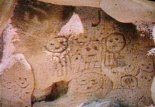
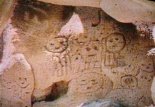
**Photo of Petroglyphs from Las Caritas, Lago Enriquillo, Dominican Republic