Showing posts with label indigenous. Show all posts

8/23/2022

THE UNITED NATIONS COMMITTEE ON THE ELIMINATION OF RACIAL DISCRIMINATION REVIEWS THE UNITED STATES AND QUESTIONS ITS RECORD OF RACIAL DISCRIMINATION AGAINST INDIGENOUS PEOPLES

IITC Delegation includes UCTP Representative, Tai Pelli

Geneva, Switzerland: From August 9 through 13, 2022 four delegates representing the International Indian Treaty Council (IITC) participated in the long-awaited review of racial discrimination in the United States (US) by the United Nations Committee on the Elimination of Racial Discrimination (CERD) during its 107th Session in Geneva Switzerland.  CERD is the Treaty monitoring body for the International Convention on the Elimination of Racial Discrimination (ICERD), to which the US is a State Party.


The CERD’s review will assess US. compliance with its legally binding obligations under the ICERD to eliminate racial discrimination.  This was the first review of the US since 2014 since the previous US administration chose to ignore the due date for submission of its report in November 2019. The current US report was submitted in June 2021, and representatives from 10 US government agencies participated in the review.


On August 9, the CERD provided the opportunity for Indigenous Peoples and Civil Society delegations to make statements about the US lack of compliance with the ICERD and to provide examples of unaddressed and unreported racial discrimination. Summer Blaze Aubrey, IITC Staff Attorney, summarized IITC’s written “Shadow Report” which addressed historic and ongoing violations of the Treaties concluded by the US with Indigenous Nations and the many forms of racial discrimination and human rights violations taking place as a result. There were also two informal breakfast meetings on August 10 and 11 in which Indigenous Peoples and Civil Society again had a chance to speak with Committee members regarding the US’s lack of compliance with the Convention.


The IITC also credentialed Chief Gary Harrison, Chickaloon Native Village Alaska, and IITC Consulting Attorney June Lorenzo, Laguna Pueblo and Diné. IITC Board member Tai Pelli also participated, credentialed under her organization, IITC affiliate the United Confederation of Taino People (UCTP). The Western Shoshone Defense Project and the Changing Woman Initiative were among the other Indigenous delegations represented at the session.


The Committee carried out its formal review and questioning of the US on August 11 and 12. Mr. Mehrdad Payandeh, CERD member from Germany, focused on Indigenous issues for the review.  He questioned the US about key issues that had been raised by the Indigenous Peoples delegations, including:

  • The negative impacts of colonialism on the enjoyment of human rights, highlighting that “human rights violations of Indigenous Peoples are a persistent legacy of colonialism.”
  • The concrete implementation of the January 2021 Presidential memorandum on “Tribal Consultation and Strengthening Nation-to-Nation Relationships,” including efforts to give effect to Tribal Treaties.
  • The US implementation of dialogues with Indigenous Peoples and traditional and Tribal leaders including Indigenous Peoples of insular territories, such as for example, the Taíno, as well as other unrecognized Indigenous Peoples.
  • The failure of the US to implement CERD General Comment 23 regarding the full and non-restrictive implementation of Free, Prior and Informed Consent and the significant and direct impacts on Indigenous Peoples rights and way of life.
  • The question of free, prior and informed consent and rights of Indigenous Peoples in regard to their land, territories, sacred sites, and way of life, including the adverse effects of the activities of the extractive industries including extraction of transition minerals, infrastructure projects, and the construction of border fences and walls.
  • US response to early warning and urgent action procedures submitted by the Lipan Apache, Native Hawaiian, Gwich’in, Anishinaabe, and Western Shoshone Peoples.
  • Concerns over jurisdictional complexities impacting cases of violence against Indigenous persons, especially in cases of sexual violence.
  • Concerns over transnational corporations and private security companies and violations of human rights of Indigenous Peoples.


Based on his questions, it was clear to the IITC delegation that the Committee and Mr. Payandeh in particular had heard the concerns presented by Indigenous Peoples.  IITC looks forward to the CERD’s concluding observations regarding the US which are expected to be released before the end of the current session on August 30th.


Tai Pelli reflected on the power of the Indigenous Peoples delegations’ contributions in Geneva: “The strong and united collaboration of all the Indigenous delegations made a victory out of our participation.  The Committee members took into account all of the issues presented by Indigenous Peoples in their questions to the USA.”


The IITC’s  alternative report submitted to the CERD can be found here.  The United States’ periodic report can be found here.

Press Release courtesy of the IITC

6/22/2022

Native America Calling: Indigenous resistance to gentrification in Puerto Rico

 Today on Native America Calling, 1PM ET, Shawn Spruce speaks with Roberto Múkaro Borrero (Taino), president of United Confederation of Taino People; Gualterio Alomar (Taino), president of the Organization for Culture of Hispanic Origins; and Tai Pelli (Taino), International relations and Human Rights Officer for the United Confederation of Taino People. https://www.indianz.com/News/2022/06/22/native-america-calling-indigenous-resistance-to-gentrification-in-puerto-rico/


10/07/2021

Newton, Massachusetts to celebrate its first Indigenous Peoples Day

Chali'naru Dones and Dr. Darlene Flores, co-founders of Indigenous Peoples Day Newton

Newton, Massachusetts (UCTP Taíno News) - Following a legislative recent action by the Newtown City Council, a committee has been formed to organize and commemorate the first annual Indigenous Peoples Day in Newton, MA. Co-founding the organizing committee are two Taíno women, Chali’naru Dones, a member of the Guainía Taíno Tribe, and Dr. Darlene Flores of the Higuayagua Union. 

“It is very encouraging and a source of pride to see Taíno women taking a lead on Indigenous Peoples Day in Newton” stated R. Múkaro Borrero, President, United Confederation of Taíno People (UCTP). “The Confederation supported Newton’s official recognition of Indigenous People Day and presented testimony during the public hearing process.” 

The United Confederation of Taíno People is an official co-sponsor of the Indigenous Peoples Day, Newton, which will take place on October 11, 2021, at Albemarle Park in Newtown from 12-5:00 PM. Tai Pelli, a representative of the United Confederation of Taíno People, is confirmed as a keynote speaker.  

Indigenous Peoples Day in Newton promises to be a family-oriented cultural and spiritual celebration featuring musical, dance, and spoken word performances. The organizers are also planning a Talking Circle facilitated by Indigenous elders, immersive educational cultural exhibits, and a market featuring Indigenous artists and community groups. 

Donations are being accepted to support the program and its associated costs.

UCTPTN

5/01/2021

Decolonizing Indigenous Grounds

By Nichole Bodin, MPA

The Effect of Indigenous National Parks in Modern History 

The Caguana Indigenous Ceremonial Center in Utuado is one of the Caribbean's most important Taíno archeological sites.


Artifacts created by Indigenous Peoples are an essential part of any basic archaeological research necessary for sociocultural and historic reattachment. In this modern era, there is incredibly limited information in relation to most Taíno historical aspects and our Indigenous ancestor’s circle of life dated before colonial times. Because of that, material cultural studies of Indigenous heritage are underappreciated. In order to understand the history of Borikén (Puerto Rico), which began over 6,000 years ago, worldwide recognition is needed to diffuse the authentic revelation that the so-called New World had an organized and complex society with an enriched culture. 

During the 1950s, the idea of a Caribbean sociocultural evolution intrigued some American archaeologists like Gordon Childe, Robert Redfield, Julian Stewart, and Leslie White. Their works manifested different and diverse points of view. A great number of North Americans traced sequence units of sociocultural development and they called them archaeological epochs, levels, or stages. A decade later, new studies by Herbert Spencer and Lewis Henry Morgan added advanced dimensions with regard to the understanding of the processes involved. For the past 20 years, some evolution and classification models have been deeply criticized, causing investigators to use alternative terminology. These topics related to artifacts (also called material culture) have to help to define educational and intellectual concepts in fields like visual arts, literature, architecture, urban design, and traditional popular culture. 

But somehow, the pre-colonial or pre-Colombian history of Borikén and the Antilles are still a part of practical connections of production styles that are artistic guesses over artifact interpretation. These interpretations are based on research made without any type of verification concerning their social and practical uses within the archaeological findings. As a result, the historic framework used in National Parks during their conceptualization process should have adopted a greater responsible vision to inform, preserve and interpret a more complete structure of the complexity of the human experience. This would assist in the comprehension of the past in a more coherent and intelligent manner that respects our ancestorial community and their legacy. The majority of the scholastic approaches have only allowed moldable flexibility for archaeological researchers for easy identification of a specific region into supposedly appropriate descriptions based on race interaction, ethnicity, class, and genre (in and between topics) within the broader timeline of Caribbean studies. 

The historic designation of Indigenous National Parks in Borikén falls into the same category with regard to their legitimacy in relation to the jurisdictional lines that this colony suffered at hands of Spain and the USA for hundreds of years. For instance, some of the cultural assessments for historic buildings and sites and their designations don't consider the strong relationship that a National Park has with state-sponsored museum projects. Even though these are two different aspects of historic conservation, parks and museums are bound together and their current status with local community involvement is crucial for their sustainability. 

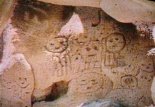
The area that stands out as the most important restored archaeological site in Puerto Rico is located in the Caguana neighborhood of Utuado, formerly known as Capá, a part of a region of important indigenous archaeological remains. The Caguana Ceremonial Center park consists of 10 restored bateys surrounded by a variety of stones with petroglyphs. It was rediscovered as a part of an archaeological project, with a survey done at the beginning of the XX century that was sponsored by academia and its institutional scholars from the Scientific Survey of Puerto Rico and the Virgin Islands. This project was organized by Dr. Franz Boaz. This study was intended to create an inventory site from 1200 AD with different aspects of the recently acquired American colony. Because of that, current ongoing concerns about the possible lack of efforts for investigation, accompanied by the high precipitation conditions that affect the sites located at the mountainous inner center of the Island make preservation efforts deeply overlooked. The progressive deterioration of the remaining material culture found in these areas is an ongoing, unresolved topic. Caguana is an important region because it is considered that it has significant cultural resources that not only could provide clues about the social and political developments, but also it can be eligible for potential recognition within the framework of worldwide historic places. 

On July 25th, 2005, the United Confederation of Taíno People (UCTP) and other local Indigenous groups manifested their cultural concerns with disgust regarding the deteriorating condition and management of the park to the administration of the Caguana Ceremonial Center. The Taíno people called this historic action "El Grito de Caguana" and demanded social justice for the restrictions that were imposed at the Center including their policies related to the restrained use of the site during certain hours. This resulted in a peaceful 17-day protest and hunger strike that brought international attention to the conditions that were perpetuated by maintaining colonial dependency on historic antiquity. As the issues of genocide and dominant colonialism emerged during these firm protests, the real question is why these burial grounds aren't protected from certain development damages while the real descendants of the ancestors fight for the proper preservation and protection of the site. The ideal effort for cultural recognition would be a more active public involvement that fights for constant renewal and strong revival for Indigenous parks in Borikén. But what about the restoration of museums and the historic designation that does not involve any acquisition of resources for reexamining history after colonial genocide? What kind of jobs are created in order to continue and remodel an obsolete model created by an alteration of events that needs recovery and systematic healing? 

Caguana is not the largest ceremonial center, nor the only one to display petroglyphs, but it is undoubtedly unique in the Caribbean. It is located on a small terrace adjacent to the upper reaches of the Tanamá River, in the central-western mountain range, west of Utuado in Borikén. When facing to the South, it borders the igneous-plutonic massifs typical of the area, while to the North it faces unique karst formations with conical tertiary limestone dotted with small details. The 22 petroglyphs of the principal plaza has zoomorphic traits that can symbolize the ancestors of the chiefs and can be related to the sociopolitical activities done there. An in-depth study about the sociocultural aspects of the petroglyphs and artifacts that are at Caguana's museum could reestablish the lost identity of those affected by the everlasting colonialism that has perpetuated through the continuous cultural exploitation that the Caribbean still suffers. 

A way to accomplish real social justice for the victims of slavery, genocide, and racial discrimination in the Caribbean is to create new discussions on Caribbean reparations that approach the problem within the Taíno context due to the ongoing violation of Indigenous rights. How the State responds to its liable responsibility of Indigenous rights matters is more about the obsolete jurisdiction laws of land management. This situation has created a dilemma regarding the genocidal stigma and abusive exploitations, which continue to be committed against Indigenous Peoples by the same States who are alleging to represent them. The concept of national patrimony has to be revisited. The only way that academia can help resolve their ongoing misappropriation within their museum curation is by acknowledging past wrongs with a deeper process that involves ‘cultural reparations’ and community involvement.

Nichole Bodin has a Masters in Caribbean Archelogy from the Center of Advanced Studies of Puerto Rico and the Caribbean. 


10/10/2020

Indigenous Peoples Day Rally


BOSTON, MA - OCTOBER 10: Chali'Naru Dones, with the United Confederation of Taino People, marches past the Old State House while participating in the Indigenous Peoples Day rally and march in Boston on Oct. 10, 2020. The United American Indians of New England organized a demonstration on Saturday to continue the ongoing movement to change Columbus Day to Indigenous Peoples' Day and to demand the City remove the Columbus statue from Christopher Columbus Waterfront Park for good. (Photo by Erin Clark/The Boston Globe via Getty Images)

1/03/2016

Climate Change panel in Hialeah includes Taino representative

Participants of the City of Hialeah's Climate Change panel on December 6, 2015
Hialeah, Florida (UCTP Taino News) - CLIMA, an exhibition by world-renowned artist Xavier Cortada opened in the city of Hialeah on November 30 and will run until January 29, 2016 at the Milander Center for Arts and Entertainment. The exhibition uses art, performances and panels to address the issue of global climate change and sea level rise and how it impacts South Florida. A key component of the exhibit was 12 panel discussions on global climate change during the 12 days of the Paris Talks - from Nov 30 - Dec 11. Each panel concluded with a performance art piece addressing a topic presented in the panel. 


On Sunday, December 6, the guest panel entitled “Moral Nature: Faith in the face of a Global Climate Crisis” included Mildred Karaira Gandia (Taino) along with a diverse ecumenical group. The panelists discussed the faith community’s response to environmental degradation, and particularly its impact on the poor and generations not yet born. 

"The one thing that everyone on the panel agreed on was that in order to protect Atabei (Mother Earth) and our future generations, we all need to work together regardless of religion, color, etc." stated Gandia. 


She continued stressing that "we all have something to contribute and this crises cannot be solved by anyone alone". 

Gandia is a South Florida representative of the United Confederation of Taino People and an elder representative of the Bohio Atabei Caribbean Indigenous Women’s Circle. 

CLIMA is presented the City of Hialeah in partnership with FIU and the Southern Alliance for Clean Energy.

UCTPTN 01.03.2016

10/13/2015

Ramapough Lenape and Taino Declare Unity on Indigenous Peoples Day


Randall's Island, NY (UCTP Taino News) – An historic “Declaration of Unity” was signed between the Ramapough Lenape Nation and the United Confederation of Taino People on Indigenous Peoples Day, October 12, 2015. The treaty signing was a special event held during a daylong gathering of Indigenous Peoples organized by the Redhawk Native American Arts Council; the American Indian Community House; Kichwa Nation; and the United Confederation of Taino People on Randall's Island in New York. 

Ramapough Lenape Sachem Dwaine “Maqua” Perry and Roberto “Mukaro Agueibana” Borrero, the president of the United Confederation of Taino People (UCTP) were the main signatories of the treaty with a number of tribal members acting as witnesses. 

Sachem Perry remarked on the importance of this level of recognition and solidarity between Indigenous Peoples. President Borrero highlighted the spiritual significance of signing the document on October 12. Both leaders looked forward to more Nations and Peoples affirming their solidarity in this way in the near future. 

 UCTP Taino News 10.13.2015

10/22/2014

The Taino Tradition of Generosity Lives in Arizona


Flagstaff, Arizona (UCTP Taino News) - Desire Caballer, a Borikén Taino of the Guainia Tribal community, lives in Flagstaff, Arizona, and began organizing to assist homeless persons in her area in June of this year. Her volunteer efforts have grown from a personal initiative, to receiving food, clothing, and toiletries donations from others; bringing her interactions with Flagstaff’s homeless community up to 3 times per week. 

Desire was inspired to make a difference after seeing a homeless teenager begging on the street for money. The scene touched her personally, as she also experienced life on the streets of Phoenix as a teen before being taken in by a concerned family who treated her as their own child. Once she was able to secure employment, the family urged her to get her on place, which she did. Today, she is married and has two beautiful children, a son - Pedro - and a daughter - Katrina. She really “wanted to give back” and her husband, Lorenzo Lee, and children are supporting her initiative with the area’s homeless. 

Katrina Caballer,  Desire Caballer, and Lorenzo Lee documenting their work in Flagstaff
“All the people [I meet on the streets] have different stories,” stated Desire, who does not have a non-for-profit, is on a fixed income, and is dealing with her own personal health issues. She continued stating, “I believe that we all need not to judge, instead we need to learn how to help, love, care, and give.” When Columbus encountered Taino People throughout in the Caribbean, he continuously remarked on their generous nature. While history is clear on Columbus’ response to this generosity, Desire Caballer is proof that the traditional Taino spirit of giving still lives among contemporary Taino people living far from their island homelands. 

 UCTPTN 10.22.2014

8/08/2014

Peoples Climate March in NYC


Indigenous Peoples’ traditional teachings have long warned that if human beings failed to protect and care for Mother Earth and the natural world, the survival of humanity would be threatened. Today, increasingly severe impacts of climate change threaten ecosystems and food production around the world and Indigenous Peoples are on the frontlines of climate change impacts.
Indigenous Peoples are participating in the People’s Climate March to bring attention to the devastating impacts of climate change and to share our hopes and teachings for living in harmony with Mother Earth.

For more information: 

3/30/2013

R. Mukaro Borrero Special Guest on Two Worlds Indigenous Radio Show


Tampa, Florida (UCTP Taíno News)  – Taíno artist, historian, and community leader, R. Múkaro Borrero is the scheduled featured guest on Alvon Griffon’s Two Worlds Indigenous Radio Show this Sunday, March 31, 2013. The hour long broadcast begins at 10pm at WMNF 88.5 FM or online live at WMNF.ORG.  This show will also be available online for one week at wmnf.org/programs/show/168. Every Sunday night, Two Worlds Indigenous Radio host Alvon Griffon shares the  finest collection of Native American music from traditional Pow Wow style to the latest from contemporary Native artists, NAMMY nominees and winners.  Two Worlds Indigenous Radio Show also features weekly Pow Wow reports, as well as news and views from across the continents.


3/28/2011

U.S. Census Shows Increase in Borikén’s Indigenous Population

Borikén/Puerto Rico (UCTP Taino News) - The 2010 U.S. Census count for Borikén (Puerto Rico) had some significant surprises. The census reveals a 48.8 percent gain over the last 2000 census in the American Indian category, which is a verifiable resurgence of indigenous affirmation among families on the island. With DNA research documenting the continuation of the pre-Colombian indigenous Taino gene-pool and the increasing visibility of active Taino community organizations and cultural manifestations – the myth of extinction is finally being dispelled.

The Director of the United Confederation of Taino People’s Borikén Liaison Office, Roger Guayakan Hernandez attributes the increase in the census count to expansion of information and communications technologies available today.

"We have always been here but recently there has been an explosion of pertinent information regarding Borikén's indigenous heritage. The difference is that now there are more ways to get the information to the people" stated Hernandez.

Hernandez noted that the Confederation, an official Census partner, used the increased focus on Taino heritage as well as new technologies like social networks in its campaign to raise awareness about the census process.

With the 2010 U.S. Census counting 19,839 individuals living in Puerto Rico officially claiming American Indian heritage, the Taino community is indeed becoming visible after two centuries of near invisibility.

Hernandez continued stating that "the whole chapter on the Caribbean's Amerindian history is being reexamined and supports the affirmation of indigenous descendant families on and even off the island”.

A 1790 Puerto Rican Census count in an area called “Las Indieras” documented fewer than 3,000 ‘Indios (Indians)’ on the western side of the island. Since then, with official census terminology changing to discount the indigenous population, a reversal has taken place revealing how Taino families see themselves in the 21st Century.

"Colonial history may have counted us out in Puerto Rico, but today the Taino People have clearly counted ourselves back in" declared Hernandez.

UCTPTN 03.28.2011

7/01/2010

Funding Appeal for Borikén 2010 Peace and Dignity Run


Takahi Guaitiao (Greetings Relatives):

It is our hope that this message finds you well and in good spirit. We are writing to bring your attention to an historic event that will take place on the island of Borikén (Puerto Rico) this July 17-25, 2010. This event, “The Borikén 2010 Peace and Dignity Run: Road to 2012”, is an indigenous led spiritual run that seeks to raise awareness about the condition of sacred sites on the island of Borikén (Puerto Rico) as well as bring together in solidarity local indigenous islanders with mainland indigenous representatives.

The Borikén 2010 Peace and Dignity Run is intricately connected to the ancient indigenous prophecy of the Eagle and Condor. This prophecy mandates that Indigenous Peoples of the Western Hemisphere shall reunite in a spiritual way to bring healing to the Nations and a better future for our children and generations to come.

The Borikén 2010 Peace and Dignity Run provides a unique opportunity for local communities to honor their indigenous spiritual practices and traditions as well as promote the collective responsibilities we all have to Mother Earth, Father Sky, our communities, and ourselves.

The Borikén 2010 Peace and Dignity Run will begin on July 17 in the sacred Yunke Rainforest with a special commencement ceremony. From there groups of runners and supporters will travel to four different points on the island and begin to run toward the center mountain region. Coming from the four directions runners and supporters will finally meet in the town of Jayuya on July 22nd. Once in Jayuya, those gathered with take part in cultural exchanges, workshops, communal meals, and ceremonies until the 25th of July. Participants will be gathered together camp ground style with some elders and visiting indigenous dignitaries being provided other local accommodations from the 22-25th.

As this is a grass-roots initiative, the organizers are seeking funds to assist with the hosting of this historic indigenous spiritual gathering; the first of its kind to be held in Borikén in about 500 years.

We are respectfully seeking your financial assistance, which will provide some travel support for visiting indigenous representatives, logistical support for local runners, and meals at the main gathering and ceremonies.

Your assistance is needed. Donations are tax-deductible.

You can donate to the Borikén 2010 Peace and Dignity Run via Pay Pal at www.uctp.org or by check or money-order made out to the UCTP with the words “Peace and Dignity” in the memo. Checks or money-orders can be sent to: UCTP, PO Box 4515, NY, NY 10163

For more information contact oirrc@uctp.org. Haho (thank you) in advance for your support.

Oma’bahari, nabori wa'ka
(With respect, we are at your service),

Vanessa Pastrana,
Borikén 2010 Coordinator

Roberto Borrero,
President, UCTP – OIRRC

3/19/2010

Taino prepare for change in season

UCTP Taino News - March 20 is recognized around the world as symbolic of the seasonal change. Spring will be welcomed north of the equator while the cooler temperatures of autumn are expected south of the equator. Indigenous Taino throughout the Caribbean and the Diaspora will celebrate this change in season during various ceremonial observances marking the vernal equinox.

The
Consejo General de Tainos Borincanos for example has organized an equinox ceremony in the Trujillo Alto area of Boriken (Puerto Rico) while members of Taino Iukaieke Guainia will hold ceremony at Brook Park in the Bronx, New York. Community member Ana Carmona, a Boriken Taino community member will lead a ceremony in Costa Rica.

Carmona states that “the equinox is a time of beginnings, creativity, and positive changes.” She hopes that community members will “open their hearts to all the opportunities that life has to offer during this sacred time.”


An equinox occurs twice a year -- in March and September -- when the sun shines directly on the equator and the length of day and night are nearly equal in all parts of the world. This year on March 20 at precisely 1:32 P.M. EDT, the Sun will cross directly over the Earth's equator.

UCTPTN 03.19.2010

8/07/2009

Kalinago Carib Elect New Chief in Dominica

Waitukubuli/Dominica (UCTP Taino News) - Elections were held in July in the Carib territory of Dominica, West Indies to choose a Chief for a new 5-year term of office. Former Chief Garnet Joseph won the election over incumbent Charles Williams.

Joseph said his work focus will include health, education and respect for council members in the Territory. The new chief has also pledged to bring more development to the 3,800-acre (1,538-hectare) territory, where Caribs live in greater poverty than the rest of the country. Dominica is home to about 3,000 Caribs, or ethnic Kalinagos.

UCTPTN 08.07.2009

4/11/2009

Indigenous Peoples Global Summit on Climate Change

Anchorage, Alaska (UCTP Taíno News) - The Inuit Circumpolar Council is hosting a Global Summit on Climate Change that will bring together indigenous delegates and observers from April 20-24, 2009 in Anchorage, Alaska.

The purpose of the summit is to enable Indigenous peoples from all regions of the globe to exchange their knowledge and experience in adapting to the impacts of climate change, and to develop key messages and recommendations to be articulated to the world at the Conference of Parties (COP) to the UN Framework Convention on Climate Change in Copenhagen, Denmark in December 2009.

Among those represented at the meeting will be a delegation of Caribbean Indigenous Peoples from Watikubuli (Dominica), Barbados, Suriname, and Borikén (Puerto Rico). Each delegate will prepare a report based on experiences in relation to climate change from their local area and these reports will form the basis of a larger regional presentation.

UCTPTN 04.11.2009