5/04/2012

Inspection of the Jákanas River Section near PO29


May 4th, 2012: Inspecting the  Jákanas (Jacanas) River section near the PO29 Jákana Taino Sacred Site of the Portuguese Dam Project in Ponce, I could hear the roar of the river valley discharging 3 days of solid rainstorm water runoff.

You can see by the photographs taken this afternoon that the river is swollen with runoff water.  This happens often. 

I visited the public access road to the security outpost that prevents unauthorized persons from entering the $ 375 million dollar dam site.  I was stopped and questioned and not allowed to proceed.  The swollen river was contained by the steep riverbank with no obvious flooding.

By accessing internet maps of the area I determined that the sacred site is some distance from the actual dam with a overhead height difference of only 50 feet.  The dam is expected to be 220 feet high for the primary purpose of flood control providing flood protection for 40,000 people and over 13,000 residential structures downstream in the city of Ponce. The dam is the final component of the Portugues and Bucana Flood Protection Project.  (check out youtube video at  http://www.youtube.com/watch?v=xksbMvB7bLA and in English at   http://www.youtube.com/watch?v=n-QFub1fsYQ)

Security Check Point at "Jacanas" (UCTP Photo)
The dam is not finished, it has progressed at a rapid rate but still is only half complete.    The river continues to pass through the dam area thru conduits of the Portugues  Dam outlet works designed to provide for river diversion during construction of the dams.


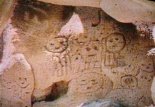
During excavation, a 130 x 160 ft (49 m). A Pre-Columbian era ceremonial plaza, "batey" or ball court used by the ancient Taino was discovered at a disposable site for the Portugues Dam's construction. A 60 ft (18 m). long row of intricately carved stones bearing petroglyphs that appeared to date to the 11th or 12th Century were discovered. Additionally, a burial ground containing at least 40 well-preserved sets of human remains was discovered. 15% percent of the site is believed to be discovered with as many as 400 bodies buried. The site had been initially marked during a cultural resource survey in 1979 but excavation work in 2007 prompted the major discovery.[6]

Report submitted by Roger Guaiakan Hernandez, UCTP Council member and Liaison Officer in Boriken

4/23/2012

CARICOM member states show contempt for Indigenous Peoples AGAIN

Washington, D.C. (UCTP Taino News) - For the 14th consecutive time CARICOM member States of the OAS refused to participate in the meeting of negotiations on the points of consensus on the historic Draft Declaration on the Rights of Indigenous Peoples of the Americas. This meeting was held at OAS headquarters in Washington DC from April 18-20 2012. This noble effort could become even stronger than the United Nations Declaration on the Rights of Indigenous Peoples, and would be a beacon of hope for the entire world - if only certain OAS member states would stop trying to sabotage it at every opportunity they get.

See the full article at:

4/15/2012

Scientists unearth thousand-year old taino agricultural field

KISKEIA (Dominican Republic) - Taino artefacts that according to experts are over one thousand years old, including an agricultural field that was found intact and dating back to the pre-Columbian period, have been found in an archaeological site project in Rio San Juan, on the country’s north coast.

See the full article at:

3/22/2012

World Water Day....


Why is water a key to food security?

Food security exists when all people at all times have both physical and economic access to sufficient, safe and nutritious food that meets their dietary needs for an active and healthy life.

People who have better access to water tend to have lower levels of undernourishment. The lack of water can be a major cause of famine and undernourishment, in particular in areas where people depend on local agriculture for food and income.

Erratic rainfall and seasonal differences in water availability can cause temporary food shortages. Floods and droughts can cause some of the most intensive food emergencies.

Get more facts at:
http://www.unwater.org/worldwaterday/faqs.html


3/05/2012

Taíno Artist Displays Work at Peaceburgh

Taino Artist Miguel Sobaoko Koromo Sague and his work "Invoking the Ancestors"

Pittsburgh, PA (UCTP Taino News) - Miguel Sobaoko Koromo Sague, a Taino artist originally from Cuba exhibited some of his selected works at the Peaceburgh Artist Showcase this past weekend. The works displayed were a selection of posters and prints of his oil and acrylic paintings and drawings. The two-day event was held at the First United Methodist Church in the Shadyside neighborhood of Pittsburgh, Pennsylvania. Sague is a graduate from Columbus College of Art and Design with a BS degree in Art Ed. He taught art in Pittsburgh Public and private schools for 30 years.

UCTPTN 03.05.2012