3/30/2007

Taino Wins Photo Competition in Puerto Rico


Puerto Rico (UCTP Taino News) - Roger Atihuibancex Hernandez Moyet has won the Walgreen's sponsored "Fotomarathon 2006 Nuestras Raices Indigenas" photo contest in Adult Category prize for the “Fideicomiso de Conservacion de Puerto Rico”.

On April 28th Hernandez along with the prize winners in other categories will have their photos presented an exhibition held at the prestigious Jardines de Casa Blanca in Viejo San Juan, Puerto Rico.

Hernandez is the editor for UCTP’s news journal “The Voice of the Taino People” as well as the co-director of Presencia Taina. You can review other his projects at http://www.presenciataina.tv/ and http://www.presenciataina1.org/ . To see more of his photos check out http://www.presenciataina.tv/Fotomaroton.html .

3/29/2007

Editorial: Crises in Guyana - The Exploitation of Amerindian Children

The exploitation of our Children by Barama's employees or by others is a national disgrace that further tarnishes the international image of Guyana.

In a recent letter in Kaieteur News (13th Jan, 2007, Titled: `Protect the children of Guyana from Predators'), I had written: "The children of any nation are its most prized possessions/assets. It is therefore every citizen/parent's responsibility to do everything possible to protect our children from danger." That letter was written in the hope that Guyana would take precautions to avoid one of the most undesirable evils of the tourist traffic, that is, the sexual exploitation of our children. Little did I realize that my warning was already too late for some of our most vulnerable children in Guyana.

Dr Gail Whiteman in her Chapter ((11, pages 180 to 204)titled: "Forestry, Gold Mining and Amerindians: The Troubling Example of Samling in Guyana" (in "International businesses and the challenges of poverty in the developing world." Edited by Bird, Frederick B., and Herman, Stewart W. Published by Houndmills, Basingstoke, Hamshire (England); New York: Palgrave Macmillian, 2004. ISBN 1403921288)) wrote (page 190):

"Direct impacts of Barama (Samling is the parent Company of Barama).

Interviews indicate that the economic benefits for local Amerindians from large-scale forestry were not significant…Moreover, despite community expectations of improved health care, as reported in the Edinburgh Centre for Tropical Forests (ECTF) study, the health situation for Amerindians in Region 1 has remained problematic.

Amerindians also continue to lack proper education facilities. While Port Kaituma did have a school and Amerindian teachers, they were poorly paid and under-utilized. Social problems related to the alleged sexual exploitation of young Amerindian girls by Barama employees also were reported in interviews: `It happened in this community, not with mining but with the Barama Company. They take the young girls and stay over night and bring them back to school.' `I heard that they take rude pictures…'`It's true. It's the Malaysians [from Barama] that do these things… The young girls are kicked out of school… These Malaysians take these young Amerindian girls and leave them pregnant.'"

These actions make a bad situation even worse: Dr. G. Whiteman wrote: - "Extreme poverty follows ethnic heritage, Amerindians being by far the poorest; 88 per cent of Guyana's Amerindians live below the poverty line. In Region 1, the focus of this study, 95 per cent of local Amerindians live in extreme poverty (IMF, 2000). The majority of the Amerindians is illiterate and has limited access to higher education (Government of Guyana, 1996). Amerindian women are particularly susceptible to the impacts of poverty. A report commissioned by the National Commission on Women in Guyana identified Amerindian women as one of the most economically, socially, politically and culturally marginalized groups in Guyana (National Commission on Women, 2001)."

In addition, The Guyana Human Rights Association's (GHRA) reports called "Without Conviction," and its most recent study titled: "Getting Serious: Detecting and Protecting Against crimes of sexual violence in Guyana" revealed that sexual violence against girls is most prevalent among girls under 16 years, and that young Amerindian girls between ages 12 and 16 years are the most vulnerable in the country, especially in Region 1 (with the most reported cases). (That is, sexual violence highest against girls 12 to 16 years - GHRA study finds – is about 3-fold higher in Amerindian Girls of Region 1. Thursday, March 8th 2007, SN)

In the Western hemisphere, if an employee is sexually harassed at the work place, the employer can be held legally responsible. How can Barama not know that children were being exploited by its imported foreign workers? If the company's executives do not know that their employees are breaking the laws of Guyana, then is it not fair to ask what other illegalities they do not know about in their business operations? If they do know what are going on their company's premises, then why were/are these legal, ethical, and internationally abhorrent and illegal practices not stopped? Why are the Barama Company and its executives not being held responsible for violations by their employees of Guyanese law? Why are Barama's employees allowed to violate the most sacred laws of any modern country - the sexual and physical abuse of its children?

In addition, these are clear violations of the Forestry Stewardship Council (FSC) principles: For example - Principle #1: Compliance with Laws and FSC principles: Forest management shall respect all applicable laws of the country in which they occur, and international treaties and agreements to which the country is a signatory, and comply with all FSC Principles and Criteria. (Guyana is a signatory to the Convention of the Rights of the Child (CRC), and therefore, Guyana also has an international obligation to take preventative action in regard to preventing the abuse and exploitation of its children.)

Secondly, FSC Principle #4: Community relations and workers' rights. Forest management operations shall maintain or enhance the long-term social and economic well being of forest workers and local communities. How do the abuse and sexual exploitation of local Guyanese children, build community relations? Is this not the beginning of a most destructive cycle of our children?

From the abovementioned research of Dr Gail Whiteman and recent revelations in the local press, not only does Barama Company Ltd exploit the forests, but its employees exploit our children for their gratification and entertainment – leaving the devastating social and health consequences, personal tragedies, etc. for this impoverished nation to correct. What kind of a nation is Guyana that allows this to happen in this day and age? Have we sunk so low that we cannot even protect our children from predators?

I remember reading (during my childhood days) some work of Dr. C. Jagan, where he mentioned that the "Indian women/indentured servants" were good enough to be used to warm the beds/bodies of the plantation overseers, but were not good enough to be made wives or given legal standings. The situation is worse here, these are children being used, abused, and discarded. How can this be right? I cannot see how the late Dr. C. Jagan, Hon Ms. Janet Jagan, and the PPP of yesteryear would condone these current violations of our children, especially when they stood up so valiantly on the side of the victims of abuse in the aftermath of the Rupununi Uprising. In my humble opinion, that was one of their finest hours of the PPP of yesteryear. They always stood up for the underprivileged and the downtrodden. Where is the PPP of today, and why does it fail to address these issues? The allowing of this disgraceful exploitation of children will probably be recorded as one of the current PPP Govt.'s most shameful acts.

Similarly, previously the female slaves were called in to gratify the sexual lusts and pleasures of their owners, and then discarded. Today, we rightly condemned these heinous acts of yesteryear, why are our voices silent now on the current acts of evil? Should our voices not be raised in protest? We proudly claim our ancestry to those who fought the battles of yesteryear, but are silent and/or ignore the battles against the injustices of our own time. Where are the voices of protest by the current PNC? Where are the young vibrant voices of the GYSM? Are the exploited children (Amerindian) not youths and students? Or is that they are now being viewed as Children of a lesser god like our own ancestral mothers?

Dr Gail Whiteman's work continues to document the abuse, exploitation, degradation, and impoverishment of Guyanese women and children with impunity (by foresters and miners) in their own country. Her work supports and extends the findings of Dr Marcus Colchester. It is a must read for all Guyanese who should know what is going on in their home country. I can quote more of this work, but the readings are so depressing that it may not be suitable for a family newspaper. We might be too embarrassed to hear the questions of our children – e.g. Daddy/Mommy, how can we allow this to happen here?

If we cannot find common ground and speak up for vulnerable children, then we are not worthy of being a nation and deserve the disrespect we get from our own Caricom community brethren and also from the International Community. I expect that all the various groups that speak for children to take up this challenge and speak out. We can no longer be silent. I also expect all those (local and foreign) organizations and individuals who support SN in its struggles to also do the same for even more vulnerable victims - children. Our leaders are busy fighting for power, and in the mean time our resources and children are being plundered and ravaged!

This is a human rights issue - the abuse and exploitation of Children. Our religious groups (Churches, Mosques, Temples), Civil Rights groups, Human Rights groups, Lawyers, Judiciary, Parents, Students, Labour leaders, Citizens, etc., should all protest against the exploitation of our children in our own country. These perpetrators should feel the full force of the law. The officials who should be aware of this and have done nothing should also be charged with negligence or dereliction of duty. The sign must be up that no one is allowed to exploit any of our children anywhere in this country!

Dr. Bertrand Ramcharran (Chancellor of the University of Guyana) is a distinguished Human Rights scholar on the world stage (United Nations). We hope that Dr B Ramcharran tells the Guyana Govt. that Guyana must respect the human rights conventions that were signed – in this case, the Rights of the Child (ROC). We hope that the Foreign Embassies and Consulates, and UN agencies also remind the Guyana Govt. of its international obligations. The care of our children (and all the children of the world) is a sacred responsibility of any society and all humanity.

Seelochan Beharry
7th March, 2007

3/28/2007

Taino Naming Ceremony and Spring Equinox Ceremony


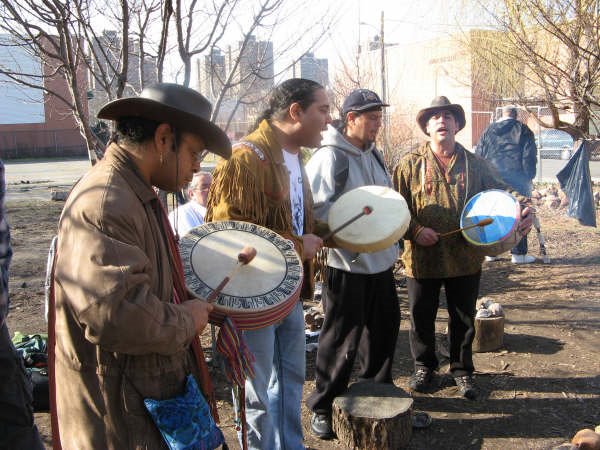
Bronx, New York (UCTP Taino News) - Over a hundred Taino and other community members gathered for the “Taino Naming Ceremony and Spring Equinox Celebration” held on Saturday, March 25th 2007. The event was organized by the Kukarey Spiritual Circle and Yukayeke Tanama Taino and took place at Brook Park in the Bronx.


Photo: Taino singers at 2007 Spring Equinox Ceremony held at Brook Park. From left to right: Ferdinand Uaian Bruno, Roberto Mucaro Borrero, Jorge Morales, and Roman Guaraguaorix Perez.

3/23/2007

Remembering Puerto Rico's Ponce Massacre

Still struggling after 70 years
Remembering Puerto Rico's Ponce Massacre


By Yénica Cortés

March 21 marks the 70th anniversary of the Ponce Massacre in the southern city of Ponce, Puerto Rico. The anniversary serves as a reminder to the Puerto Rican people of the true nature of the island's relationship with their colonial oppressor, and of the continued struggle for independence.

The 1937 Ponce Massacre

Puerto Rico has been a colony of the United States since U.S. troops invaded the island in 1898. Before then, the island was a colony of Spain. Spanish invaders brutally conquered the indigenous Taíno population beginning in 1493.

Spain was forced to give up Puerto Rico, Cuba, the Philippines and Guam to the United States in the Treaty of Paris after losing the Spanish-American War.

During the Great Depression in the 1930s, the conditions of workers throughout the capitalist world were declining. Unemployment, poverty and starvation were spreading.

Like the rest of the colonized world, these effects were sharply felt in Puerto Rico. Puerto Rico was a mainly agrarian country at the time, relying heavily on the export of sugar, coffee and tobacco.

In 1934, U.S. corporations attempted to impose wage cuts on sugar workers. In response, workers organized a nationwide strike that paralyzed the industry.

Leaders of the growing movement for independence played an important support role in that historic general strike.

The Puerto Rican Nationalist Party had been formed in 1922. But it was after 1930, under the leadership of Pedro Albizu Campos, that the party became a truly mass movement for independence. Albizu Campos, who became the attorney for the sugarcane workers, was able
to give leadership to the radicalized working class, linking the struggle for independence to the demands of the workers.

The period following the sugarcane workers strike was marked by growing clashes between pro-independence groups and colonial troops and police. In 1935, police opened fire on Nationalist Party supporters at the University of Puerto Rico in Rio Piedras.

In 1936, two Nationalists—Hiram Rosado and Elias Beauchamp— assassinated Col. E. Francis Riggs, who had commanded the police who carried out the Rio Piedras massacre. Cops arrested the two and executed them on the spot in the police station. No officers were ever convicted of their deaths.

For his leadership during this period, Albizu Campos, like many Puerto Rican independence fighters, became a target for imprisonment. In 1937, he was sentenced to federal prison in Atlanta for "seditious conspiracy to overthrow the U.S. government in Puerto Rico."

On March 21, 1937, the Nationalist Party in Ponce planned to demonstrate against the incarceration of Albizu Campos and to demand independence. For the days leading up to the demonstration, colonial police prepared for slaughter.

Juan Antonio Corretjer, a former Nationalist Party leader and contemporary of Albizu Campos who became a leading voice of Puerto Rican socialism, described the buildup in his pamphlet "Albizu Campos and the Ponce Massacre": "On March 21st, and for some days before, a significant concentration of police was taking place in Ponce. They were well-armed: rifles, carbines, Thompson sub-machine guns, tear gas bombs, plus the usual police clubs, etc.; a force of 200 men in addition to the routine Ponce police garrison."

Corretjer described the opening of the march: "At about 3:15, the Cadets lined up for the march in columns of three abreast. Behind them was the Nurses' Corps in white uniforms. Trailing the Nurses was the band, which consisted of only four musicians. The band played the National Anthem, La Borinqueña, and Cadets and Nurses stood at attention."

But what began as a peaceful demonstration quickly turned hostile when colonial governor-general Blanton Winship revoked the organizers' permits shortly before the march was scheduled to begin.

When protesters insisted on exercising their right to march in spite of having their permits withdrawn, the huge police force positioned themselves on all four sides of the march. As protesters began to walk, they were fired on from all directions for over 15 minutes by
the police.

Twenty-one demonstrators and passers-by were killed that day, including a seven-year-old girl. Another 200 were wounded. Witnesses recalled people being chased and beaten by the police in front of their homes. Others were taken from hiding and killed. Physicians assisting the wounded testified that many were shot in the back while trying to run away. None of the wounded or dead was found with weapons.

Word of the day's events reached every town and city throughout the island.

The message that the colonial forces meant to send to every Puerto Rican was that if they dared to stand against the colonial masters to fight for independence, violent repression would await them.

A few months later, Nationalist Party youth were arrested and convicted for the attempted shooting of Governor Winship during a military parade.

Continued struggle

To this day, Puerto Rico remains a colony of U.S. imperialism. Puerto Rico's location in the Caribbean has served the Pentagon as a base for military intervention against revolutionary struggles in the region, particularly against Cuba.

Since the end of World War II, the U.S. military has directly controlled 14 percent of Puerto Rican territory. Sixty percent of Vieques—Puerto Rico's sister island—and the coastal shore around the Bay of Lajas were also seized to carry out weapons and intelligence experimentation.

All economic, social and political decisions for the island are still made in the Oval Office. Periodic sham referendums give the appearance of consultation, but they are carried out in a political
climate of economic blackmail and threats against independence activists—like the 2005 assassination of Boricua Popular Army (EPB) leader Filiberto Ojeda Rios in his home. They never have a binding character on U.S. imperialism. For that reason, national liberation
in Puerto Rico has been impossible to attain through the electoral process.

The illusion of a kind and gentle colonial relationship was exposed as a fallacy during the 2006 fiscal crisis in Puerto Rico. The colonial government, backed by Washington, attempted to remedy the crisis by imposing steep taxes on the people and cutting services.

And every year, some $26 billion is drained out of the island by U.S. corporations.

But the spirit of the Nationalists who stood up against colonial repression on March 21, 1937 is still felt today. It was felt in the 1998 People's Strike against the pro-statehood governor's plan to privatize Puerto Rico's telephone company. It was felt during the same year's massive protests against the 100th anniversary of the U.S. invasion. It was present in the mass struggle to evict the U.S. Navy from Vieques, led by pro-independence and socialist forces. Eviction was finally achieved on May 1, 2003.

The example of Albizu Campos and the later Puerto Rican revolutionary socialists and nationalists points the way to the future of a free and socialist Puerto Rico.


*Articles may be reprinted with credit to Socialism and Liberation magazine. http://socialismandliberation.org/mag/index.php?aid=773
Even the Government Devestates DR's Protected Areas


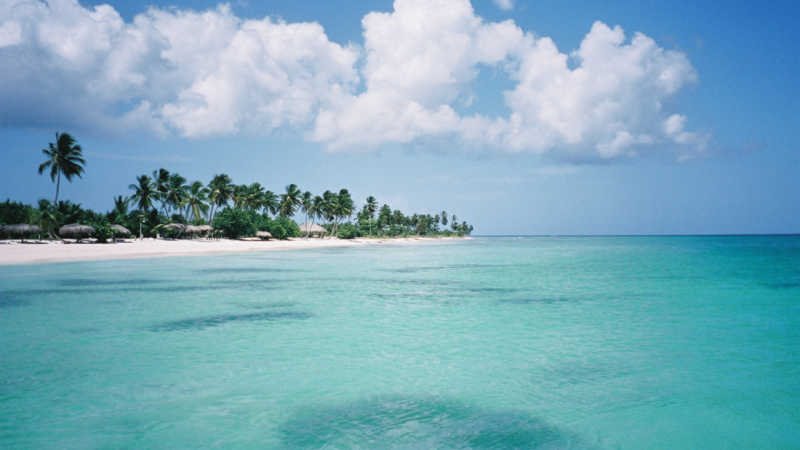
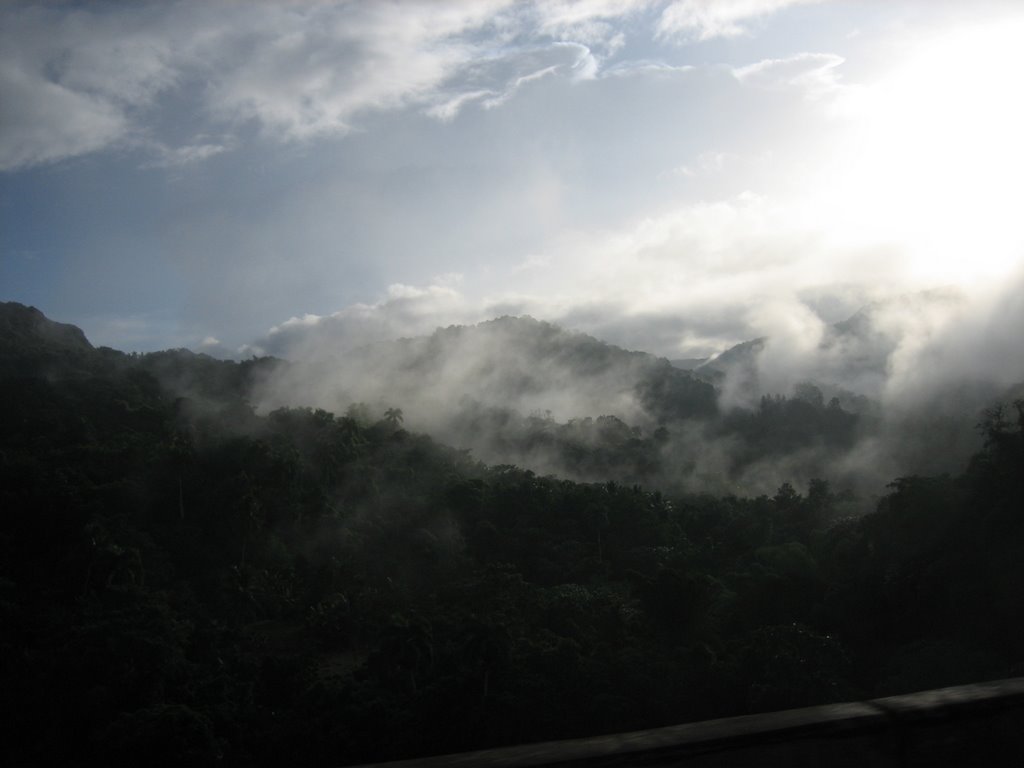
SANTO DOMINGO - In recent days heavy equipment of the Government’s Public Works Ministry has caused considerable ecological damage in the National Park of the East, to build a vehicular access of some two kilometers, where environmentalists denounced the destruction of forest areas.

According to the newspaper Hoy, a trail is being blazed in the forest in order clear a swath until the zone known as La Palmilla, in that National Park and it is fact not the first assault on that natural area located the island’s southeastern tip, some 165 kilometers from this capital, reports Hoy.

The first of those attempted invasions disguised as legal took place in the 1990s, when a French designer firm tried to “lease” Isla Saona from the Dominican Government, to build a resort which would have included several hotels in one of the Park’s most coveted zones.

The second assault took place in 1998, when a large portion of Catalinita Island –in the middle of the straits of Catuano- was occupied and a trail of some 600 meters was opened in the islet which is less than one kilometer in length.

The one recently is the 3rd occurrence of devastation against the National Park of the East, and each one of them destroys a part of the ecological reserve’s natural and cultural heritage.
The first incursion ravaged a lagoon, inhabited by an important variety of aquatic birds and various types of mangroves. It also destroyed a large Taino Indian settlement, where thousands of pieces of earthenware were visible.

The incursion into Catalinita Island eliminated from 15 to 20 percent of its vegetation, considered a bonsai forest given the aspect and age of its plants. The damage to the fauna has never been tallied.

This third invasion threatens to be of most destructive, because to reach La Palmilla it will be necessary to destroy several square kilometers of forest, whereas the archaeological damage could still not be estimated because of the lack of studies of that zone.

But it is known that the area of La Palmilla was a point of entry to the sea of a native establishment near the coast, the experts say.