THE Jamaica Environmental Advocacy Network (JEAN) has expressed concern about the proposed building of a 6,228-room development resort on 361 acres of land on the Negril Peninsula.
The proposed development will cover a large parcel of land on Negril's west end, and the environmental network, in a statement this week, said irreparable damage would be done to secondary and primary forest of the most threatened kind in the Caribbean and Jamaica if construction of the resort goes ahead.
"This tropical dry forest includes small, highly specialised ecosystems, which are unique to Jamaica and the rest of the world. Negril Hill was an island for extended periods of time; hence its very special evolutionary history of which little is known," the statement said.
The group said an environmental impact assessment (EIA) conducted by consultants hired by the development company failed to provide a complete assessment of either the plants and animals on the site.
"The section of the EIA that deals with environmental impacts and mitigation is wholly inadequate, failing to address sewage or drainage impacts sufficiently," the environment group said.
JEAN also bashed a proposal by the consultants that coral be relocated to other sections of the coastline.
"The EIA proposes coral transplantation as a mitigation measure, but fails to provide any information on the success of coral relocation. In fact, according to experts, this is a risky and costly approach with a spotty record of success," said the group.
JEAN claims that the proposal to construct a marina and alter the shoreline, by dredging and building five sandy beaches, is a recipe for disaster and would result in negative effects on air quality, allow invasive species to take over the area, hazardous waste management, oil spills and storm water management.
The group was also concerned about the impact on Negril's cultural heritage.
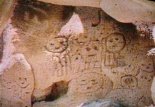
"According to the journal of the Archaeological Society of Jamaica, there are five Taino cave sites in Negril, four of which are burial caves, and one of which had a petroglyph (carving)," the release stated.
JEAN also urged the National Environment and Planning Agency to call for a new EIA to be conducted and for sections of the site to be declared as conservation areas as well as the immediate stoppage of cutting and bulldozing.
Source: The Jamiaca Observer
Showing posts with label caves. Show all posts
Showing posts with label caves. Show all posts


4/22/2007
Caves in Taino Mythology*

Caves are an important part of Taino mythology and the Taino believed the first peoples of Hispaniola came from two caves in a mountain named Cauta. The ancestral Taino emerged from one cave, Cacibajagua, while the ancestors of the non-Taino peoples came out of another, Amayauna. The Taino [of Hispanola] also believed the Sun and the Moon emerged from a cave called Iguanaboina. Caves were intimately associated with the spirits of Taino ancestors, whose worship was a central element of Taino religion. They believed their universe consisted of three layers united by a vertical axis. The earth’s surfaces lay in the middle, with the celestial vault above. The bottom layer was a watery underworld known as Coaybay or dwelling place of the dead. Access between the earth’s surface and the underworld was by way of sacred caves. These were portals to Coaybay and the ancestors.
The Taino also believed that the island of Hispaniola was a monstrous living beast. The head of the monster was at the eastern end of the island, in the chiefdom of Higuey. Two caves in Higuey were seen as the beast’s eyes. Another connection between caves and the ancestors is that caves are homes to colonies of bats. The Taino believed that the spirits transformed themselves into bats. They would hide during the day and come out at night to eat the fruits of the Guava tree. These spirits of the dead were called opias and the bat is one of the most frequently depicted animals in Taino art.
Article source: http://lisahopwood.com/chicho.html
*UCTP Taino News Moderator's Note: The above information is presented for educational purposes only. The views and opinions expressed within “Caves in Taino Mythology” are not necessarily those of The Voice of the Taino People News Journal, The Voice of the Taino People Online or the United Confederation of Taino People.
The Taino also believed that the island of Hispaniola was a monstrous living beast. The head of the monster was at the eastern end of the island, in the chiefdom of Higuey. Two caves in Higuey were seen as the beast’s eyes. Another connection between caves and the ancestors is that caves are homes to colonies of bats. The Taino believed that the spirits transformed themselves into bats. They would hide during the day and come out at night to eat the fruits of the Guava tree. These spirits of the dead were called opias and the bat is one of the most frequently depicted animals in Taino art.
Article source: http://lisahopwood.com/chicho.html
*UCTP Taino News Moderator's Note: The above information is presented for educational purposes only. The views and opinions expressed within “Caves in Taino Mythology” are not necessarily those of The Voice of the Taino People News Journal, The Voice of the Taino People Online or the United Confederation of Taino People.
Subscribe to:
Posts (Atom)