THE Jamaica Environmental Advocacy Network (JEAN) has expressed concern about the proposed building of a 6,228-room development resort on 361 acres of land on the Negril Peninsula.
The proposed development will cover a large parcel of land on Negril's west end, and the environmental network, in a statement this week, said irreparable damage would be done to secondary and primary forest of the most threatened kind in the Caribbean and Jamaica if construction of the resort goes ahead.
"This tropical dry forest includes small, highly specialised ecosystems, which are unique to Jamaica and the rest of the world. Negril Hill was an island for extended periods of time; hence its very special evolutionary history of which little is known," the statement said.
The group said an environmental impact assessment (EIA) conducted by consultants hired by the development company failed to provide a complete assessment of either the plants and animals on the site.
"The section of the EIA that deals with environmental impacts and mitigation is wholly inadequate, failing to address sewage or drainage impacts sufficiently," the environment group said.
JEAN also bashed a proposal by the consultants that coral be relocated to other sections of the coastline.
"The EIA proposes coral transplantation as a mitigation measure, but fails to provide any information on the success of coral relocation. In fact, according to experts, this is a risky and costly approach with a spotty record of success," said the group.
JEAN claims that the proposal to construct a marina and alter the shoreline, by dredging and building five sandy beaches, is a recipe for disaster and would result in negative effects on air quality, allow invasive species to take over the area, hazardous waste management, oil spills and storm water management.
The group was also concerned about the impact on Negril's cultural heritage.
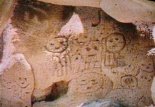
"According to the journal of the Archaeological Society of Jamaica, there are five Taino cave sites in Negril, four of which are burial caves, and one of which had a petroglyph (carving)," the release stated.
JEAN also urged the National Environment and Planning Agency to call for a new EIA to be conducted and for sections of the site to be declared as conservation areas as well as the immediate stoppage of cutting and bulldozing.
Source: The Jamiaca Observer
6/09/2007
Caribbean‘s reef-building coral at risk
By DANICA COTO,
Associated Press Writer
SAN JUAN, Puerto Rico - Six species of reef-building coral could vanish from the Caribbean due to rising temperatures and toxic runoff from islands` development, according to a study released Thursday.
The species — about 10 percent of the 62 varieties capable of forming reefs in the region — include staghorn and elkhorn corals, which were once among the most prominent.
Peter Edmunds, a biology professor at California State University-Northridge, said the study provided a broad perspective that is "terribly important" but does not indicate how close a particular species is to dying off in the region.
Researchers have blamed rising temperature, disease and pollutants for damage to the coral reefs, which host countless marine plants and animals.
The team also reported significant damage to mangroves, which filter pollutants, reporting the plants cover 42 percent less area in the Caribbean than they did 25 years ago.
The study was sponsored by the Caribbean Biodiversity Initiative, along with the nonprofit World Conservation Union in Switzerland and the Royal Caribbean Cruises` Ocean Fund.
6/07/2007
Chichen Itza Among the Leaders of New 7 Wonders contest

LISBON (UCTP Taino News) - Mexico's Mayan city center of Chichen Itza is among the leaders in a competition, ending in one month, to choose the New Seven Wonders of the World, the campaign organizers reported on Thursday.
The winners will be chosen through a global online and phone vote, organizers of the New 7 Wonders of the World (http://www.new7wonders.com/ ) competition. Among the 21 “wonders” selected to the finalist list, three represent ancient indigenous cultural heritage including the Inca city of Machu Pichu in Peru, the monolithic Moai statutes of Rapanui (Easter Island), and Chichen Itza located in the Yucatan peninsula.
Over 50 million people have voted so far in this global competition to produce a 21st century list of the world's greatest man-made heritage sites. The original seven wonders of the ancient world were chosen by the Greeks more than 2000 years ago.
The winning list will be announced in Lisbon on July 7, 2007.
6/02/2007
Taino Artist Featured at Tampa Museum of Art

Tampa, Florida (UCTP Taino News) - Selected master works of Taino Artist John Brown Ayes are appearing in an important group exhibition at the Tampa Museum of Art. The opening was May 18, 2007 and the exhibition runs through June 24, 2007.
Ayes has written a small page in the history books because he is the first documented Taino to exhibit at the museum as well as the first Puerto Rican. The Ayes works featured are Don Quijote de la Mancha, An Altar to Dali and PHI.
6/01/2007
Taino and Other Caribbean Indigenous Peoples Engage the United Nations System
United Nations, NY (UCTP Taino News) – After a two week working session from May 14-25, the Permanent Forum on Indigenous Issues came to a close at United Nations headquarters in New York. Over a thousand participants from around the world participated throughout the session, which concluded in the form of a report containing recommendations to governments and United Nations agencies.
Highlighting the session’s theme “territories, lands, and natural resources,” the Permanent Forum recommended that Governments adopt, in relevant national legislation, the principle of “free, prior and informed consent” of indigenous peoples regarding potential development projects or other activities carried out on their lands.
“It is […] clear that most local and national indigenous peoples’ movements have emerged from struggles against policies and actions that have undermined and discriminated against their customary land tenure and resource-management systems, expropriated their lands, extracted their resources without their consent and led to their displacement and dispossession from their territories,” the Forum stated in one of eight sets of draft recommendations and three draft decisions approved by consensus at the close of its sixth session.
The Permanent Forum, a 16-member subcommittee of the Economic and Social Council, is mandated chiefly to provide expert advice on indigenous issues to the Council and the United Nations system; raise awareness and promote the integration and coordination of activities relating to indigenous issues with the United Nations system; and prepare and disseminate information on indigenous issues.
Amid the diverse delegations of Indigenous Peoples highlighting the complex issues associated with land, territories, and natural resources, Caribbean Indigenous Peoples were actively presenting sound advice to Governments and intergovernmental organizations about how to meet their needs for survival. Working together in the form of the Indigenous Caucus of the Greater Caribbean (IPCGC), indigenous representatives from throughout the region presented their collective views on such topics as urban Indigenous Peoples and migration, the Second Decade of the World’s Indigenous Peoples, and future work of the Forum.
Chief Reginaldo Fredericks of the Lokono Arawak Community of Joboshirima noted the importance of the session and looked forward to receiving more Indigenous delegates from the Caribbean at next year’s session, which will focus on climate change. “We need to be at these sessions to support each other and highlight what is happening in our communities” stated Chief Fredericks. “We need to strengthen our ancestral connections and working together as a Caucus can help us achieve these goals.”
Mildred Gandia, a Boriken Taino and a representative of the United Confederation of Taino People (UCTP) stated “We, Caribbean Indigenous Peoples made a big impact on this session and there were Taino here from Boriken, Kiskeia (Dominican Republic), and even Jamaica as well as Lokono Arawaks from Venezuela and Guyana and Garifuna from Honduras .”
Gandia continued stating “Our views were presented at the plenary sessions via the IPCGC, on panel discussions focusing on climate change, our artists were highlighted in the United Nations Art Exhibition, and we stood in solidarity with other Indigenous Peoples in supporting the Declaration on the Rights of Indigenous People.”
The Permanent Forum strongly urged the General Assembly adopt during its sixty-first session the Declaration of the Rights of Indigenous Peoples, the fate of which remains unclear some six months after it was approved by the Geneva-based Human Rights Council. The Declaration, which was initially opposed by countries such as Australia, Canada, New Zealand, and the United States, is now being further endangered by proposed amendments submitted a group of Africa countries. The African Group’s proposal was roundly rejected by Indigenous leaders as “unacceptable and inconsistent with international human rights law”.
With the exception of Dominica and Haiti, countries from the Caribbean region including Guyana, Belize, and Suriname are expressly supporting the African Group’s amendment proposals, which will in fact critically weaken the Declaration adopted by the Human Rights Council after 20 years of negotiation.
Why Caribbean countries that in the past have seemingly been supportive of indigenous rights would promote a proposal inconsistent with international law is related to politics and trade arrangements. Caribbean Community leaders have recently announced that a significant new “Unity Alliance” for trade, economic, and political co-operation between Africa, South America, with Caribbean involvement, has been established. One of the highpoints of the “Abuja Declaration and Plan of Action on Peace, Security, and Development” include the creation of a permanent “Africa-South America Co-operative Forum that is to meet every two years. According to news sources the summit leaders are “anxious to demonstrate the seriousness of their collective commitment”. In light of these relations, it would appear that opposition to the rights of Indigenous Peoples is a pre-requisite for demonstrating Caribbean solidarity with Africa.
“Considering that Indigenous Peoples are mentioned in the Abuja Declaration only in the context of cultural cooperation and tourism, it is clear that Caribbean governments still do not understand the aspirations of the region’s first nations” stated Roberto Mucaro Borrero, the President of the UCTP Office of International Relations. Borrero noted that the IPCGC’s third plenary presentation at the Permanent Forum highlighted the Abuja Declaration and called for the inclusion of Caribbean Indigenous Peoples in its follow-up mechanisms.
Summing up the Permanent Forum’s work this year, Johan Schölvinck, Director of the Division for Social Policy in the Department of Economic and Social Affairs called the Forum a “celebration of the world’s cultural diversity”, in that it had seen extremely rich participation from some 1,500 representatives from indigenous peoples’ organizations, non-governmental organizations and academia, some 30 United Nations system and other intergovernmental organizations, about 70 Member States and some 30 indigenous parliaments. The Permanent Forum was not just an event; rather “a tribute to our human efforts of partnership” that offered the opportunity for inspiration, he said.
As per the recommendation of the final draft report, the Forum’s 2008 session will focus on the theme of climate change and there will also be sessions devoted to the Pacific region and to the protection of the thousands of threatened indigenous languages.
------------------
To review the Abuja Declaration visit:
http://www.africa-union.org/root/au/Conferences/Past/2006/November/SummitASA/doc/en/DECLARATION.doc
To review statments of the IPCGC visit: http://indigenouscaribbeancaucus.blogspot.com/


Subscribe to:
Posts (Atom)